Palestinians split over UN Gaza vote, Ben-Gvir issues threats
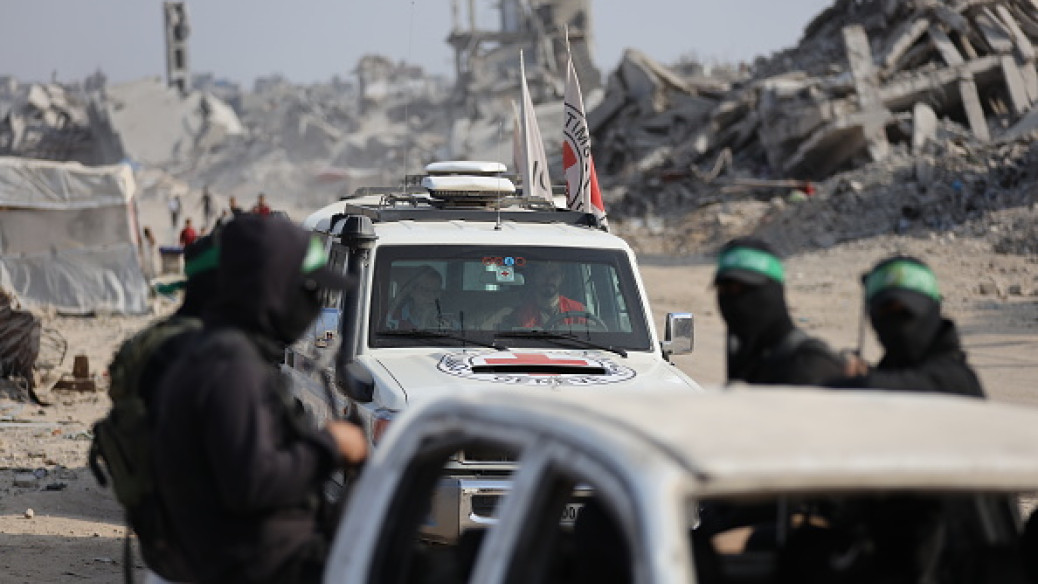
Palestinians are deeply split over a UN Security Council vote endorsing a US-backed plan in the Gaza Strip that would see the deployment of a multinational peacekeeping force in the devastated territory.
The Monday vote effectively approved President Donald Trump's Gaza 'peace plan'that includes the deployment of an International Security Force (ISF) and the creation of a "Board of Peace" to run Gaza personally headed by Trump.
The resolution also mentions the possibility of a future Palestinian state and has been attacked by Israeli Prime Minister Benjamin Netanyahu's extreme-right coalition partners, with Public Security Minister Itamar Ben-Gvir threatening to kill Palestinian leaders in response.
The motion was backed by 13 members, while US rivals Russia and China abstained.
The ceasefire in the Gaza Strip has held despite repeated Israeli violations which have killed hundreds of Palestinians since it went into effect on 10 October.
The West Bank based Palestinian Authority (PA) welcomed the Security Council resolution, saying in a statement that it "consolidates a permanent and comprehensive ceasefire in the Strip, ensures the unhindered delivery of humanitarian aid, and affirms the Palestinian people's right to self-determination and the establishment of their independent state".
The statement added that the resolution’s adoption, "requires its immediate implementation on the ground, in a manner that guarantees the return of normal life for the residents of the Strip, the protection of civilians and prevention of displacement, the complete withdrawal of occupying forces, reconstruction, and an end to undermining the two-state solution and preventing annexation".
The PA said it was ready to cooperate with the Trump administration and the international community to end "the suffering of the Palestinian people in the Gaza Strip, the West Bank, and East Jerusalem, and opens a political path leading to peace, security, and stability between Palestinians and Israelis, in accordance with the two-state solution based on international law."
Israeli far-right threats to kill Palestinian leaders
Israel’s far-right government, headed by Prime Minister Benjamin Netanyahu, who is wanted by the International Criminal Court (ICC) for alleged war crimes in Gaza, has outright refused any Palestinian state.
Netanyahu and his allies condemned several Western countries in September that recognised Palestine, vowing that Palestinian statehood will "never" happen.
Palestinians have been trying to establish a state in the Gaza Strip and the West Bank, with East Jerusalem as its capital, ever since the now-moribund Oslo peace process began in 1993.
But Israel has refused to withdraw from the West Bank or lift its siege of Gaza, making this impossible. It has also continued its expansion of illegal settlements in the West Bank and East Jerusalem.
In a speech on Tuesday, Israel’s extremist National Security Minister Itamar Ben-Gvir reiterated his opposition to establishing a Palestinian state following the Security Council vote, threatening to kill Palestinian leaders.
Ben-Gvir, who has a history of violent incitement, urged Netanyahu to detain PA President Mahmoud Abbas and if measures are taken to realise a Palestinian state.
"Israel must order targeted eliminations of senior Palestinian Authority officials, who are terrorists in every sense of the word, and order the arrest of Abu Mazen himself. There’s already a cell ready for him in Ktzi'ot Prison," he said.
Hamas and Islamic Jihad reject vote
In contrast to the PA, Hamas and Islamic Jihad, two Palestinian groups directly involved in fighting with Israel during the Gaza War, slammed the Security Council resolution.
In a statement Tuesday, Hamas said the US-backed resolution "falls short of meeting the political and humanitarian demands and rights of our Palestinian people, especially in the Gaza Strip, which for two full years faced a brutal genocidal war and unprecedented crimes committed by the terrorist occupation before the eyes and ears of the world.
"The effects and consequences of these crimes continue despite the announcement of the end of the war under President Donald Trump’s plan."
The group added that the resolution imposes "an international guardianship mechanism over the Gaza Strip, which our people, its forces, and factions reject.
"It also sets up a mechanism to achieve the occupation’s objectives that it failed to accomplish through its brutal genocidal war. The resolution further separates the Gaza Strip from the rest of Palestinian territory and seeks to impose new realities that contradict our people’s principles and legitimate national rights, depriving our people of their right to self-determination and the establishment of their Palestinian state with Jerusalem as its capital."
The second phase of Trump’s Gaza ceasefire agreement is still in the works. It would see the establishment of the ISF as well as the "Board of Peace" governing authority and seek to disarm Hamas.
"Assigning an international force tasks and roles inside the Gaza Strip – including disarming the resistance – strips it of neutrality and turns it into a party to the conflict in favour of the [Israeli] occupation," Hamas added.
Islamic Jihad echoed Hamas' remarks, condemning the use of humanitarian aid for political pressure and criticised the resolution for ignoring accountability for Israeli war crimes, the blockade, and the territorial fragmentation of Palestine.
Israel has continued to stop aid deliveries into the devastated coastal enclave, and the amount of aid entering is far short of the bare minimum Gaza's inhabitants need to survive.
Widely recognised to be a genocide, the war killed more than 69,000 Palestinians and displaced the vast majority of Gaza’s 2.3 million inhabitants.