IOF ethnically cleansing West Bank refugee camps; 44,000 displaced
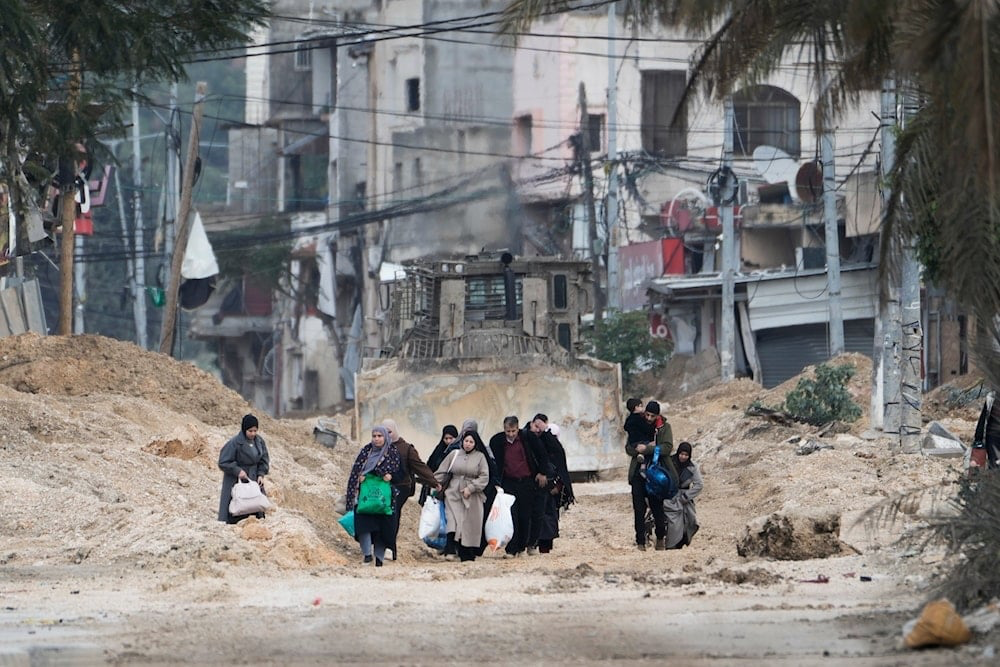
"Israel" has come under international scrutiny over allegations that its military operations in the occupied West Bank constitute a campaign of ethnic cleansing, displacing tens of thousands of Palestinians, according to a report by Israeli newspaper Haaretz.
Since January 2024, Israeli occupation forces have carried out “Operation Iron Wall,” forcibly evacuating over 44,000 Palestinians. The largest displacements occurred in Jenin and Tulkarm, including the Nur Shams camp, where residents and aid organizations say the actions go beyond alleged security measures.
Local officials and humanitarian agencies argue that the demolitions are aimed at rendering key refugee camps uninhabitable, effectively undermining the right of return for generations of displaced Palestinians. Multi-storey buildings have been flattened and essential infrastructure destroyed. UNRWA’s West Bank director, Roland Friedrich, said 48% of homes in Nur Shams have been damaged or destroyed, making return impossible without full-scale reconstruction.
1,514 families lost their homes
Jenin Governor Abu al-Rub told Haaretz that roughly 800 buildings, nearly 40% of the camp’s structures, have been leveled. “Thousands of families have been living in complete uncertainty for months, scattered across villages and towns, unable to return,” he said.
In Tulkarm’s Nur Shams camp, at least 9,000 people have been displaced, according to Governor Abdallah Kamil, with 1,514 families losing their homes entirely and 2,200 homes partially damaged. Kamil described the actions as “an intentional policy by the Israeli government to eliminate the camps and prevent the displaced from returning,” rather than genuine security operations.
Israeli authorities continue to issue demolition orders, with plans announced this month to raze 25 more buildings, some outside official camp boundaries. Reports indicate that access has been blocked for displaced residents attempting to protest the demolitions, while Israeli flags have been raised inside the camp, a move perceived as deliberate provocation.
Residents describe the destruction as collective punishment. Abu Anas, displaced from Nur Al-Shams, said, “There’s no explanation for the destruction except collective punishment,” noting that no armed fighters had been present in the camp for months.
'Israel' aiming at demographic engineering
Observers and Palestinian officials suggest "Israel’s" goal is demographic engineering, aiming to erase the Palestinian refugee presence in strategic areas. Kamil warned that the operations are intended to “alter the geographic and demographic reality” and eliminate the refugee question entirely.
Human rights advocates have drawn parallels to the 1948 Nakba, when over 750,000 Palestinians were forcibly displaced and more than 500 villages destroyed during the establishment of the Israeli state. Critics argue that "Israel’s" current military strategy is part of a broader apartheid policy, justifying displacement to maintain “demographic balance".
UNRWA’s Friedrich cautioned that, unless halted, the demolition campaign could lead to permanent displacement for tens of thousands. “This is not about security,” he said. “This is about long-term control.”
Abu Ahmed, displaced from Jenin, summed up the situation: “This is not just a war on buildings. It’s a war on our right to exist.”