The biggest story the past week has been Russia’s strikes on the Odessa and Nikolayev region. These have targeted both energy grid infrastructure as well as—most surprisingly—the transport and rail infrastructure, in what appears to be an attempt to cut Odessa off from logistics from the west.
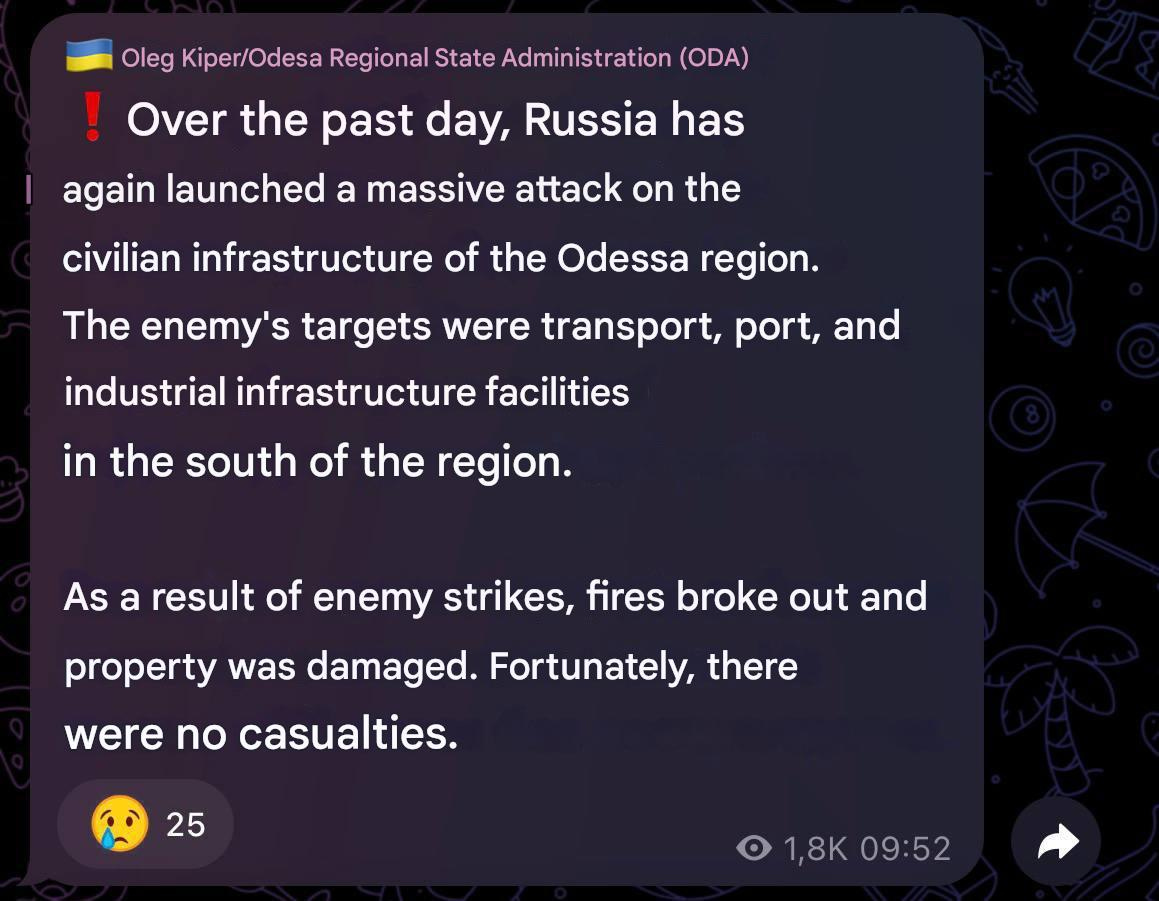
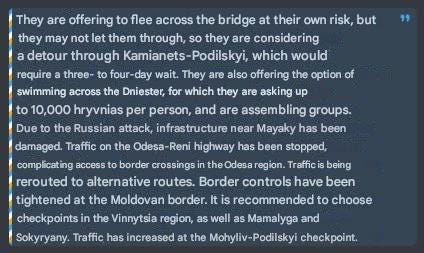
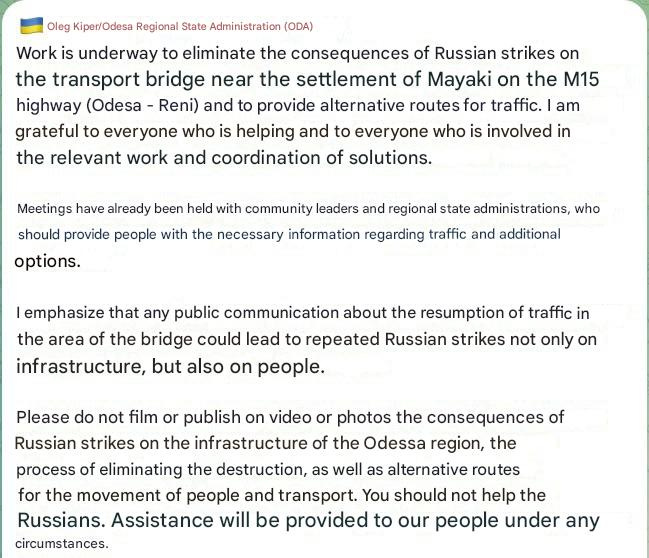
Panic in the Odessa region after the attacks on the bridge over the Dniester near the village of Mayaki. The attacks on the bridge and the bridge in Zatoka have been ongoing for 9 days in a row. The south of the region may be cut off from the last functioning ports, through which gasoline is supplied to the central part of Ukraine and the Odessa region. Local entrepreneurs are already offering to transport people to the other side for 10,000 hryvnias.
Panic is spreading on both sides of the bridge, with people buying up fuel and food, and long queues at gas stations in Odessa. Other sources report that the "fever" will last for 1-2 weeks, until logistics are reorganized through Moldova and Romania. By that time, pontoon crossings may appear in Mayaki.
A few more Ukrainian reports:
This footage is from last week and shows Russian Gerans accurately striking either the Sarata or Zatoka bridges and other rail crossings in the Odessa region:
Russian jet assisted glide bombs and Geran-2 drones striking the Zatoka bridge in the Odessa region.
Other two videos are from other rail crossings in the Odessa region. Russia is stepping up its pressure on the region following Ukrainian strikes on Russian vessels in the Black Sea.
Keep in mind the purpose of such strikes is not to bring down the bridge, which Gerans are not strong enough to do, but rather pervasively disable the railway over and over even after it is repeatedly repaired.
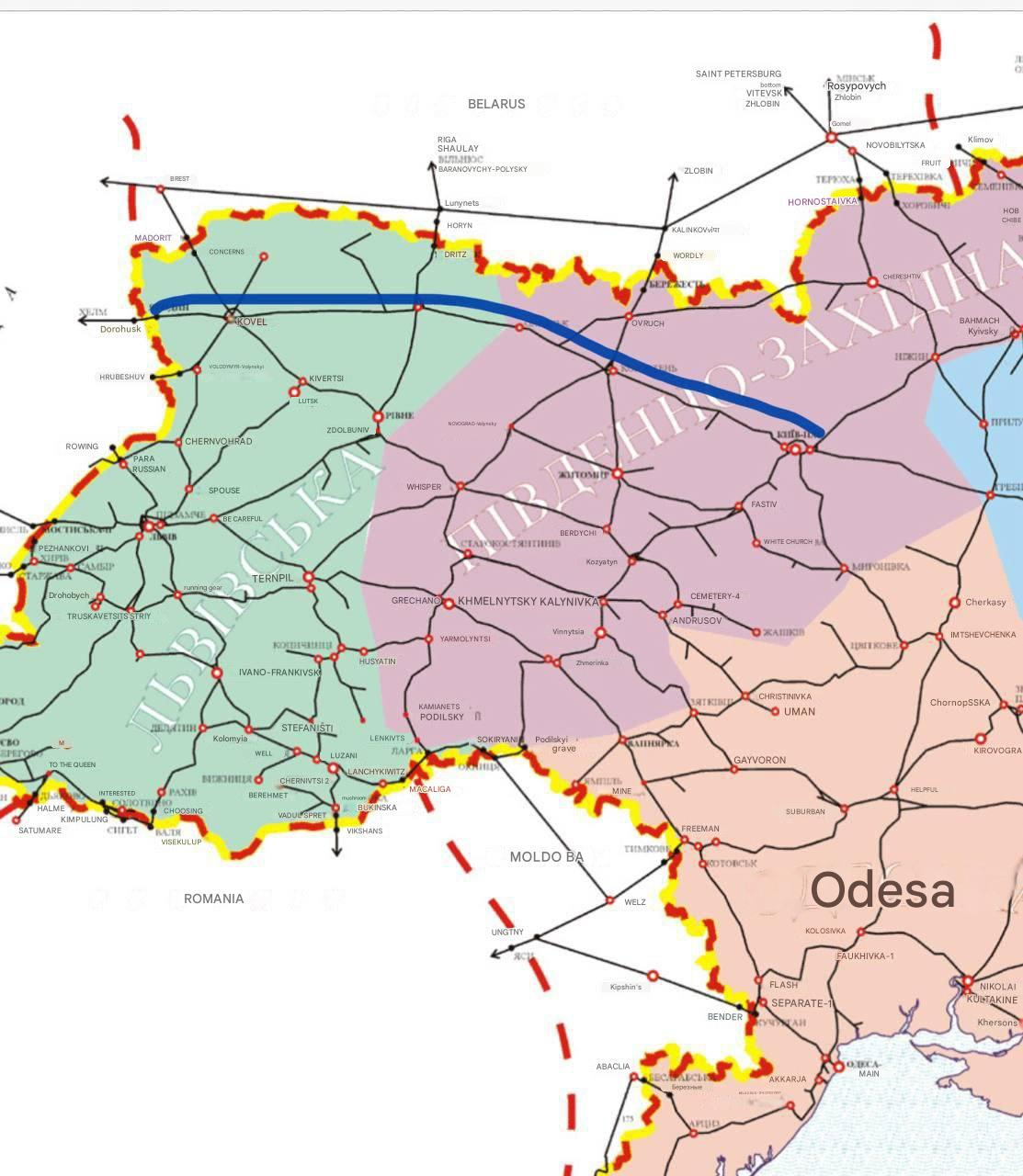
Just earlier today top AFU expert Serhiy “Flash” Beskrestnov wrote this urgent update on the situation, mentioning the strikes on repair crews and providing the following map:
Russia is trying to shut down the Kovel-Kiev railway to disrupt travel between Ukraine and Poland, according to drone expert Flash.
Two days ago, Geraniums attacked a train, then a repair crew; the day before yesterday, a railway bridge; and last night, a locomotive depot.
Videos have emerged of massive traffic, lines, fuel shortages, and even protests about the power outages. But we can only speculate at this point why exactly the Russian MOD has decided to begin targeting the transport infrastructure just now. The main reason for the strikes overall—particularly on the energy grid—appears to have been the tit-for-tat ‘response’ for Ukraine’s strikes on Russian “shadow fleet” tankers in both the Black Sea and Mediterranean; but Russia’s retaliation seems to go beyond even just that.
Strikes of bridge on Odessa-Reni highway could block 60% of fuel imports to Ukraine, which will lead to price increases and a shortage of gasoline, — founder of Prime group of companies, Dmitry Levushkin.
Russian analysts sought an explanation as to why such wide-scale strikes on bridges and transport infrastructure in the region did not occur long ago, which I agree with and have written at length on before:
Many people wondered what prevented them from attacking these bridges in 2022.
As of 2022, the Russian Armed Forces did not have any Geran or FABs with UMPK, which are cheap weapons. It is extremely expensive to strike bridges with Kalibrs and Kh-101 missiles. Each missile costs at least 130 million rubles, and there are many of them needed. A large bridge requires several dozen missiles, which is equivalent to almost six months of production at that time.
Currently, it is possible to launch 10-20 Gerans per day against these bridges, although they do not cause critical damage. FABs with UMPK can be launched in dozens with great effect, but this is dangerous for aircraft that enter the enemy’s air defense zone.
The last part is true about the danger of getting Su-34s close enough to unleash FABs with UMPK glide-bomb kits. However, Russia has been rolling out the new FABs capable of 200-300km. As can be seen below, this would allow striking Odessa from well beyond the safety of even Crimea itself:
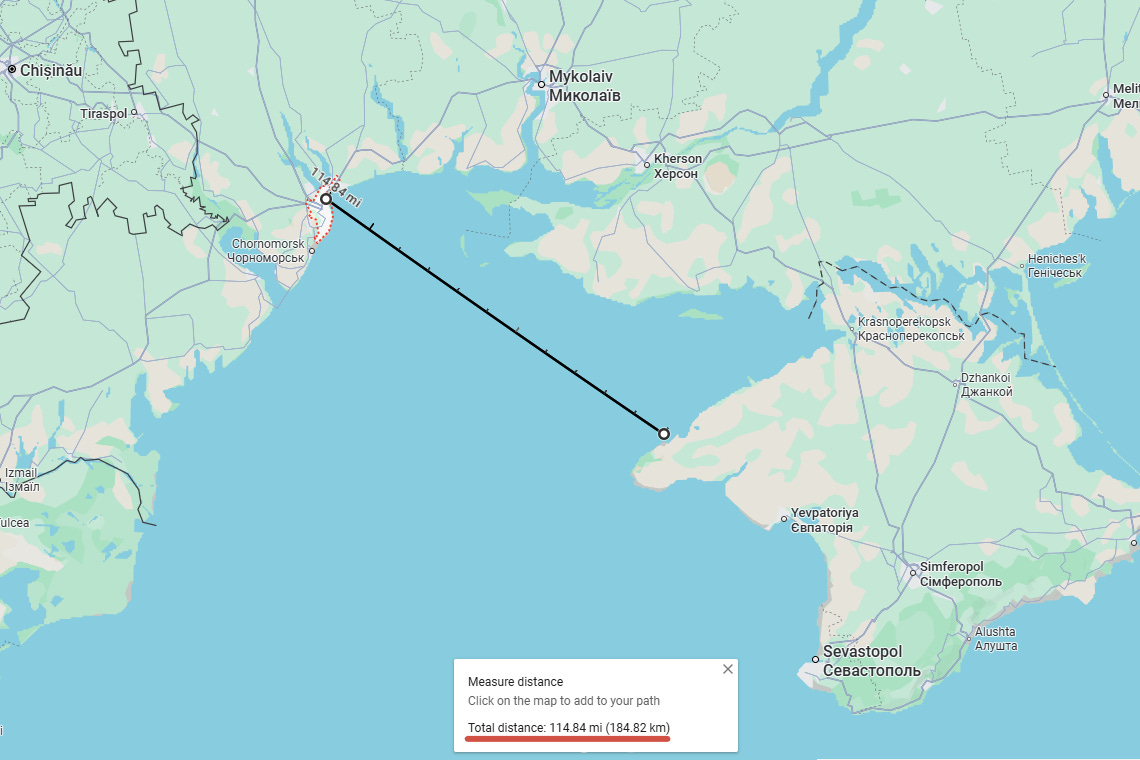
The only problem is, we don’t know in what number Russia has yet manufactured these extended-range kits, and we can only assume the number is not yet high.
One of the other explanations for what Russia has been doing recently in general all over Ukraine is partitioning Ukraine into multiple disconnected regions, at least in terms of the electric grid. That said, we should not over-exaggerate things: a cursory search of Odessa’s energy situation even from late 2024 showed some of the same “urgent” and “panicked” articles about how the entire region was being disconnected by strikes. It should not be expected that Russia will magically win the war by somehow bringing Ukraine to its knees via these energy grid strikes alone; at the end of the day, only battlefield advances can guarantee true victory.
And with that said, let us take a look at the frontline situation.
The other biggest news item has been Russia’s surprising continued collapse in the Kupyansk direction:
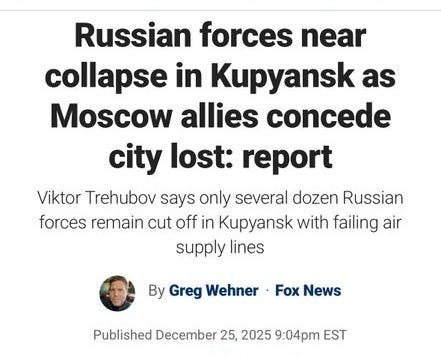
What first started as ‘uncertain’ tactical retreats has now apparently turned into a major defensive collapse on the Russian side, with the Ukrainian counter-attack having reportedly retaken most of western Kupyansk on the right bank of the Oskol river.
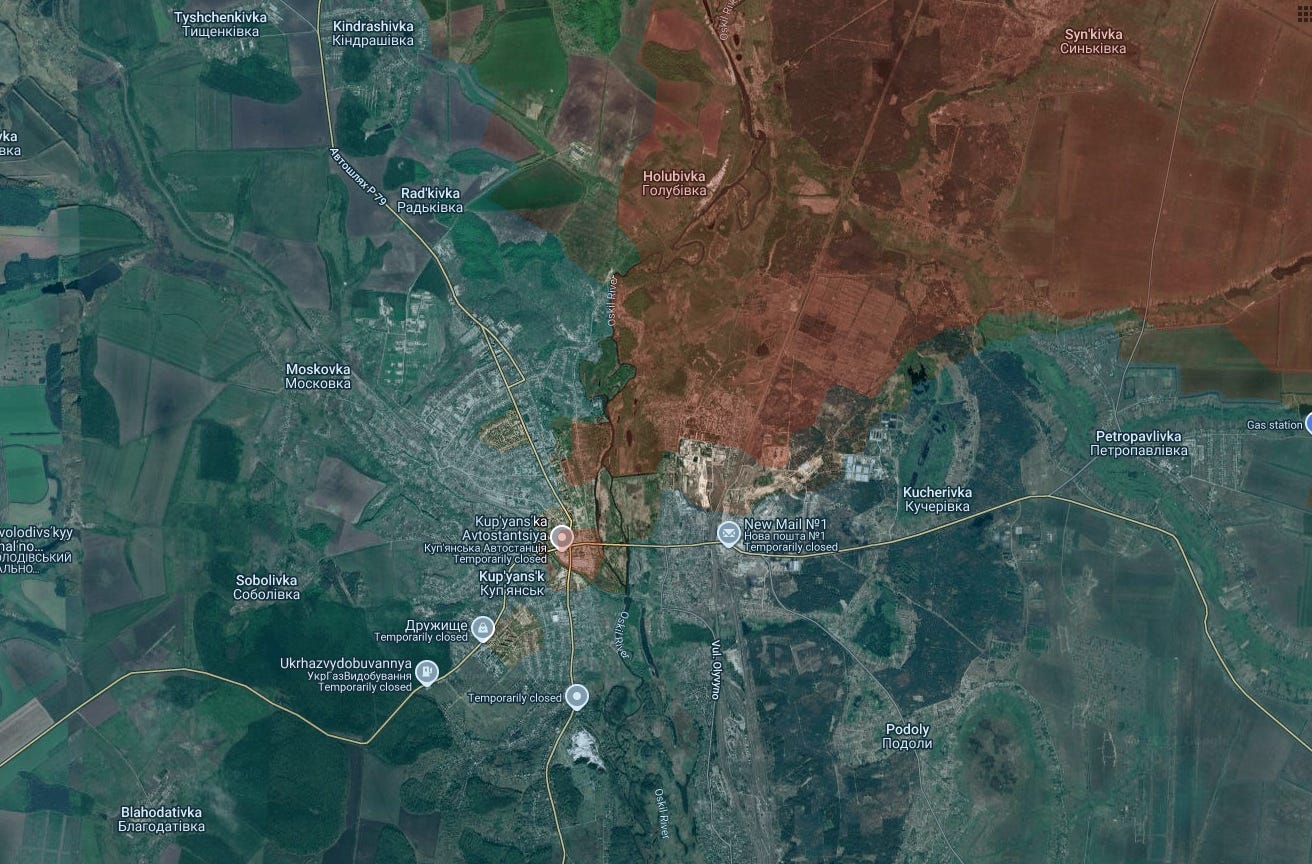
Granted, sources on both sides are in disagreement over the precise situation. Many Russian military-linked sources still claim Ukraine’s “ghost advances” have done nothing more than create a vast gray zone in the western part of the city, with only pockets of Russian resistance remaining but no real consolidation by Ukrainian troops either.
Video claiming to show Russian troops evacuating their wounded commander as they retreat from Kupyansk:
Many Russian sources claim that Zelensky threw everything into this ‘meat grinder’ similar to Kursk in order to create a huge PR moment. Tons of elite AFU units plus mercenaries have been dispatched there, and the Russian side claims they are dying in droves. If this is true, then the situation is likely very similar to the Kursk one, however it still does not explain Russia’s inability to prepare for or anticipate such an attack. Only the very difficult terrain provides apt explanation, given that Russia’s “bridgehead” survived on the western side of the Oskol via pontoons and other dubious crossings, and once the main force was threatened, Russians most likely tactically retreated with a safety-first mindset so as not to get trapped.
One more ‘positive’ Russian report states:
“📌In Kupyansk
We are maintaining our presence in the city. The enemy is constantly attacking. The guys are steadfastly holding the defense. The situation is extremely difficult, but not critical yet.
Our UAV crews are working at full capacity, both in the city and along the entire Kupyansk line of contact. We are doing our best to disrupt enemy reinforcements and rotations.
In Kupyansk itself, the 68th Motor Rifle Division has already amassed a large number of Ukrainian Armed Forces personnel.
In Kupyansk-Uzlovoe, Novoosinovo, Kovsharovka, and Kurilovka, there is also ongoing work on heavy equipment, pickups, and anti-tank missile systems every minute.
In Glushkovka, the enemy’s UAV control point and air defense system have been destroyed. I will publish all the footage when it’s possible.
Keep your fingers crossed for our guys.”
Another top Russian military analyst writes about the situation:
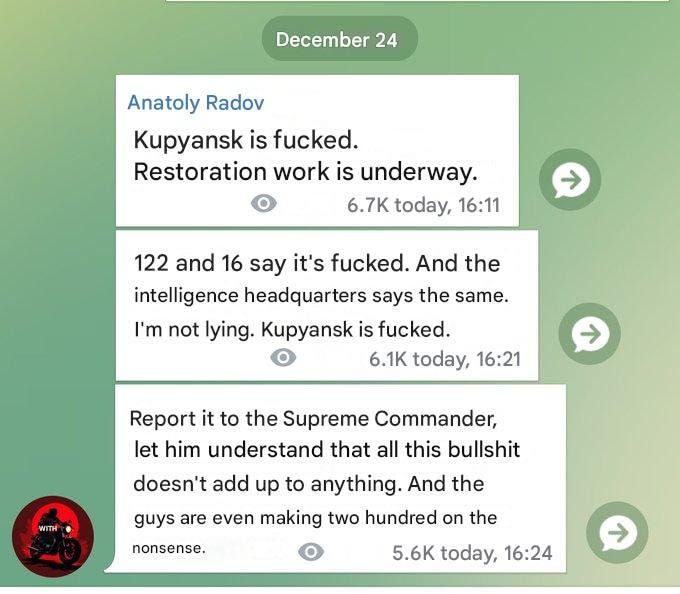
122nd here refers to the 122nd Motor Rifle Regiment of the 68th Guards Motor Rifle Division of the 6th CAA from the Leningrad Military District.
Radov went on to list the tactics responsible for the AFU’s success in this counter-attack, stating that Ukrainian units used Russia’s own novel “seeping” tactics against it; i.e. they infiltrated gradually in tiny groups aided by drones. This was primarily facilitated by the fact that Kupyansk is also surrounded by a lot of forests, which allowed AFU units to build up a strong covert presence just outside the city under cover. This was actually the primary reason behind the Kharkov collapse in general around Izyum and eastward in ‘22—this northern region is filled with forests which gives Ukrainian units many advantages of accumulating forces covertly.
An example of the heavy forested zone just on the city’s western outskirts, precisely from which direction Ukrainian forces infiltrated:
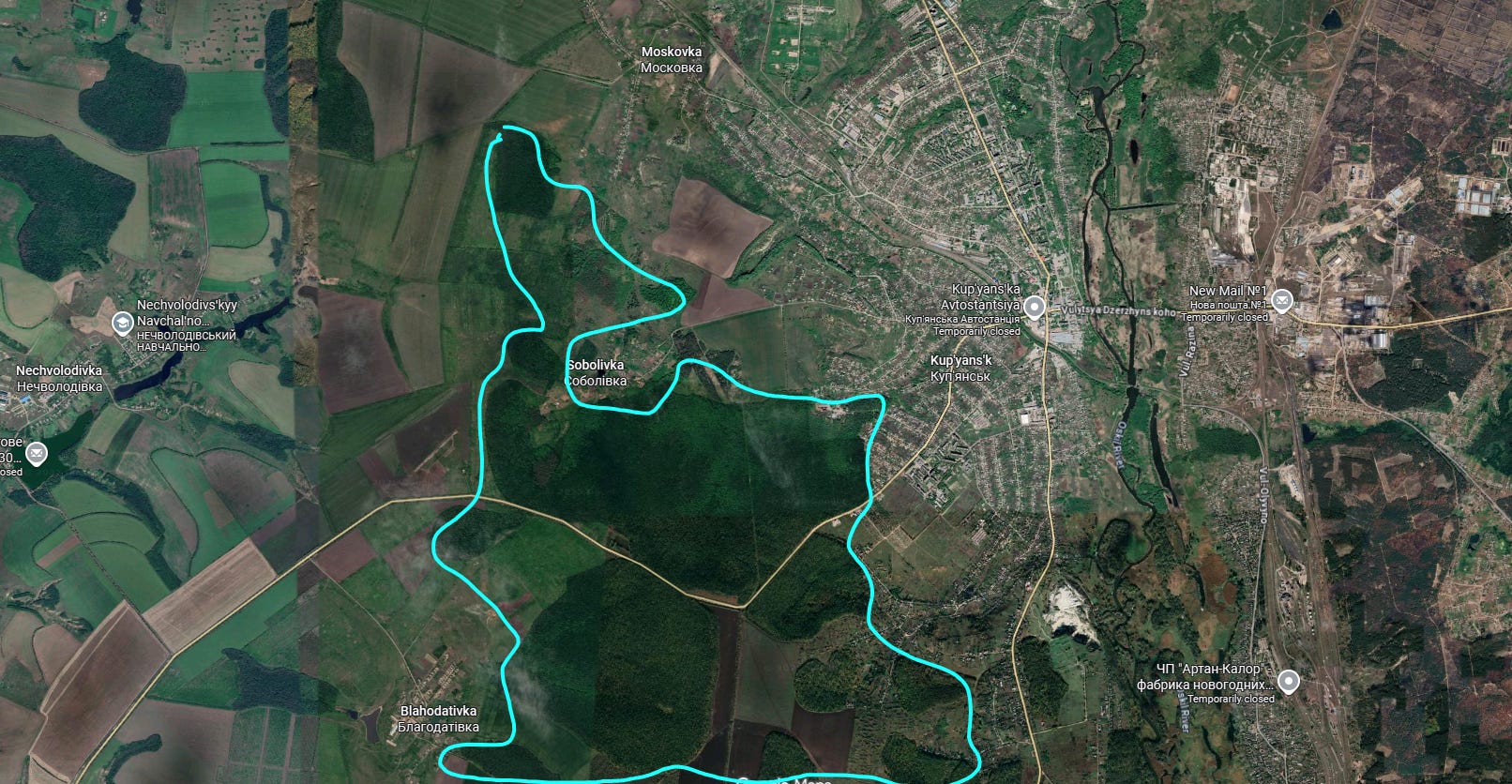
There are many strong echoes here of the Kharkov counter-offensive of 2022, and Russians will now be forced to recapture Kupyansk for a third time.
Rybar has written up a report blaming the “false reports” of Russian commanders in this region as being responsible for what happened. I have said before the northern grouping here has seen some of the worst blunders and in general performed the poorest of any of the other groupings. While the southern and center grouping were capturing huge swaths of Zaporozhye and Donbass regions over the past year or two, this northern grouping has essentially been stuck in the Kupyansk surrounding area the entire time, with little advancement.
From Rybar:
A Russian fighter reportedly on the Kupyansk front chimes in:
“Kupiansk. The city has not been surrendered. It may have to be taken a third time.” The situation in Kupiansk is a fighter’s perspective from this direction. It is generally accurate. Our forces are cut off, and the situation is dire.
Another reported Russian soldier chimes in from the Kupyansk front:
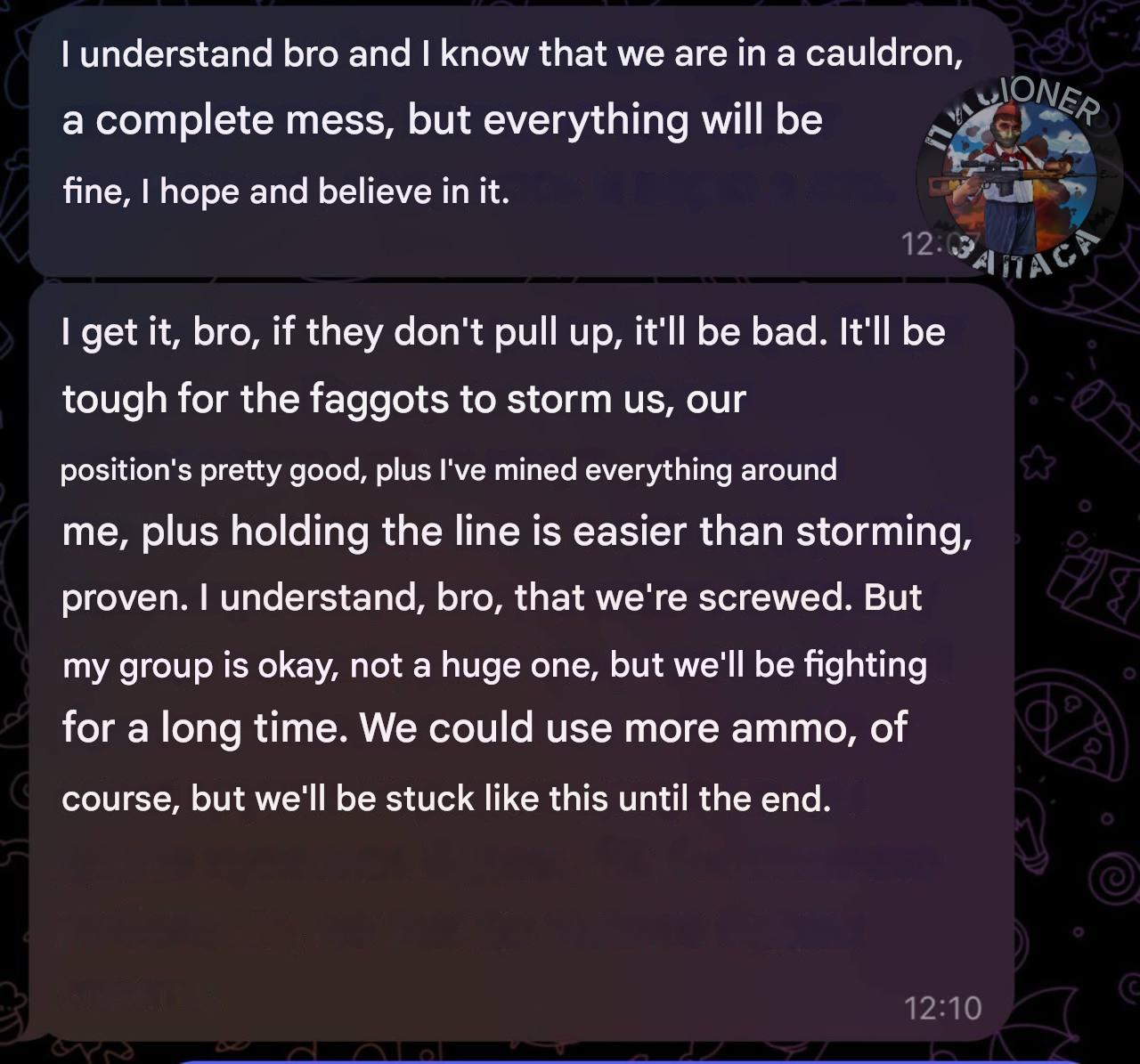
With Russian military channel which published the above commenting:
Kupyansk... Probably everything is described in these reports. To be honest, reading the lines from my combat comrade, I feel a lump in my throat. He never complains, but he’s full of courage, heroism, and bravery. The situation, to put it mildly, is not very good. But these guys there won’t retreat, and unfortunately, no one knows their names, and they didn’t receive any awards for taking Kupyansk. And all the problems are related to the fact that they reported back, but the reserves weren’t reinforced, and the guys are now repelling wave after wave of attacks with the same forces that remained there! But someone is already proudly wearing the Hero of Russia medal!
They’re holding the defense, not demanding awards, not complaining about the lack of reinforcements. They’re just doing their duty.
And somewhere there, in warm offices, people who’ve never seen combat are sharing the glory and appropriating others’ achievements. They don’t care about those who are fighting for every inch of land at the cost of their own lives. The main thing is reporting and personal ambitions.
Reserve Pioneer🇷🇺
The irony of that is, this region is administered by one of Russia’s most elite armies, the 1st Guards Tank Army of the Western and now Moscow military districts. This was the creme-de-la-creme of Russia’s army groupings prior to the war, which included the 4th Guards Tank Division and 47th Tank Division, which were essentially meant to be Russia’s strongest tank groupings, tasked with defending Moscow itself from western NATO incursion. They were historically equipped with the best gear, including T-80Us, and were the first and only units to receive the T-90Ms.
Meanwhile, the most successful current grouping which is blazing through Zaporozhye and Dnipro regions near Gulyaipole is dubbed the ‘Eastern Express’, and corresponds to the ‘lowly’ far Eastern Military District. Specifically, this includes the 35th Combined Arms Army from far eastern Amur Oblast, 36th Combined Arms Army from Buryatia, 29th Combined Arms Army from Chita, Siberia, and the 5th Combined Arms Army from Ussuriysk, Primorsky Krai—at the furthest edge of the Pacific.
Thus, we have the irony that the pampered Moscow boys with the best equipment are getting routed, while the fightin’ Buryats, Siberians, and Far Easterners are breaking every land speed record for advancement. Sound familiar to anyone?
At the end of the day, Zelensky appears to have strategically launched this counter-offensive in order to humiliate Putin who had just announced the “complete capture” of Kupyansk. Zelensky has succeeded here, to an extent, and the Russian MOD has again lost credibility by proudly announcing this “total capture”. That being said, if Russian reports of disproportionate AFU casualties for a PR goal are true, then we can expect the same ending as in Kursk and Sumy, with Russian forces eventually re-establishing control after allowing a period of time for the overzealous AFU to exhaust themselves. This is particularly the case if Russian reports are true that much of the AFU advances are nothing more than the creation of gray zones rather than true control over any part of the city.
Lastly on this count, we can’t expect Russia to succeed everywhere at all times. It’s a game of four steps forward, one step back. Russia has just seized Seversk, Pokrovsk, Mirnograd (for the most part), and soon to be Gulyaipole within the next day or two. Many other smaller settlements fall each day, so a single setback in one area is not nearly catastrophic but simply points to weaknesses and reaffirms that this is still a war where some battles could be lost due to blunders amidst the overall scheme of ongoing victories.
If it were not for the tricky situation with the Oskol river bisecting the city and the region in general, this would likely not even have happened to begin with.
Elsewhere, Russia continues its successes, most notably in the Gulyaipole direction.
You’ll recall that a few reports back I had predicted for Russia to capture the next major zone past the Haichur river to the next defense line running north of Orekhov. The ‘Eastern Express’ forces have already breached the Haichur in full and are speeding westward as we had foreseen.
Note the yellow line running north of Gulyaipole (circled in yellow). This road was the previous Russian LoC, and Russian forces are now breaching far past it, with the main salients being on the Dobropillya and Andriivka lines:
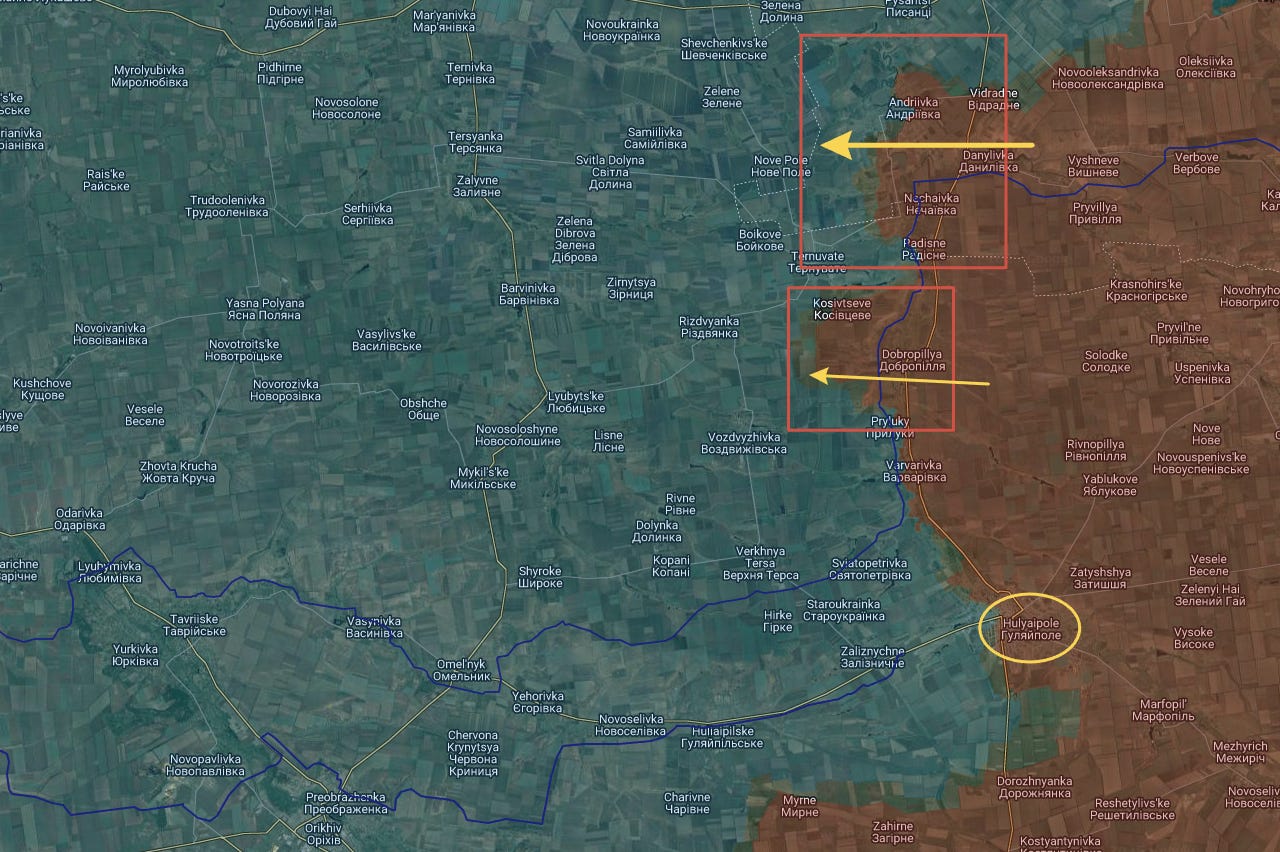
On the bottom left of the map you can see Orekhov with the main supply route running north from it toward Zalyvne, Ternivka, and eventually Novomykolaivka, which can’t be seen on this map. As you can see, Russian forces in the above salients are already nearly a quarter of the way to this next defense line and MSR.
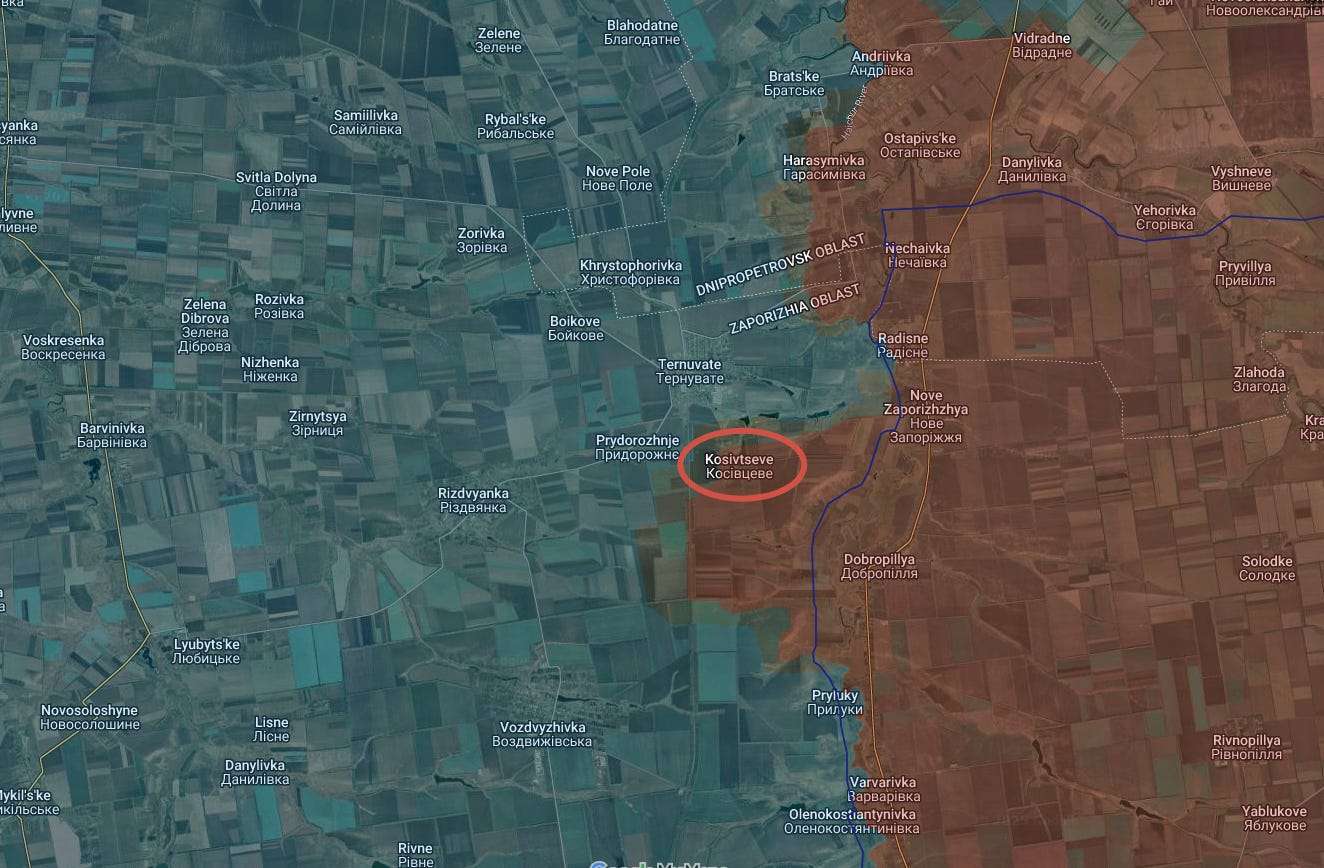
The “Far Eastern Express” is heading towards Zaporizhia. The 37th Separate Guards Motor Rifle Brigade has taken the village of Kosovtsevo in the Zaporizhia region.
In the city of Gulyaipole itself, the AFU has completely collapsed. As of this writing there are reports of the total capture of the city, with Russian forces reportedly being geolocated planting a flag at the furthest western edges of it, though this has yet to be fully confirmed by the top cartographers.
From top Russian map maker Creamy Caprice:
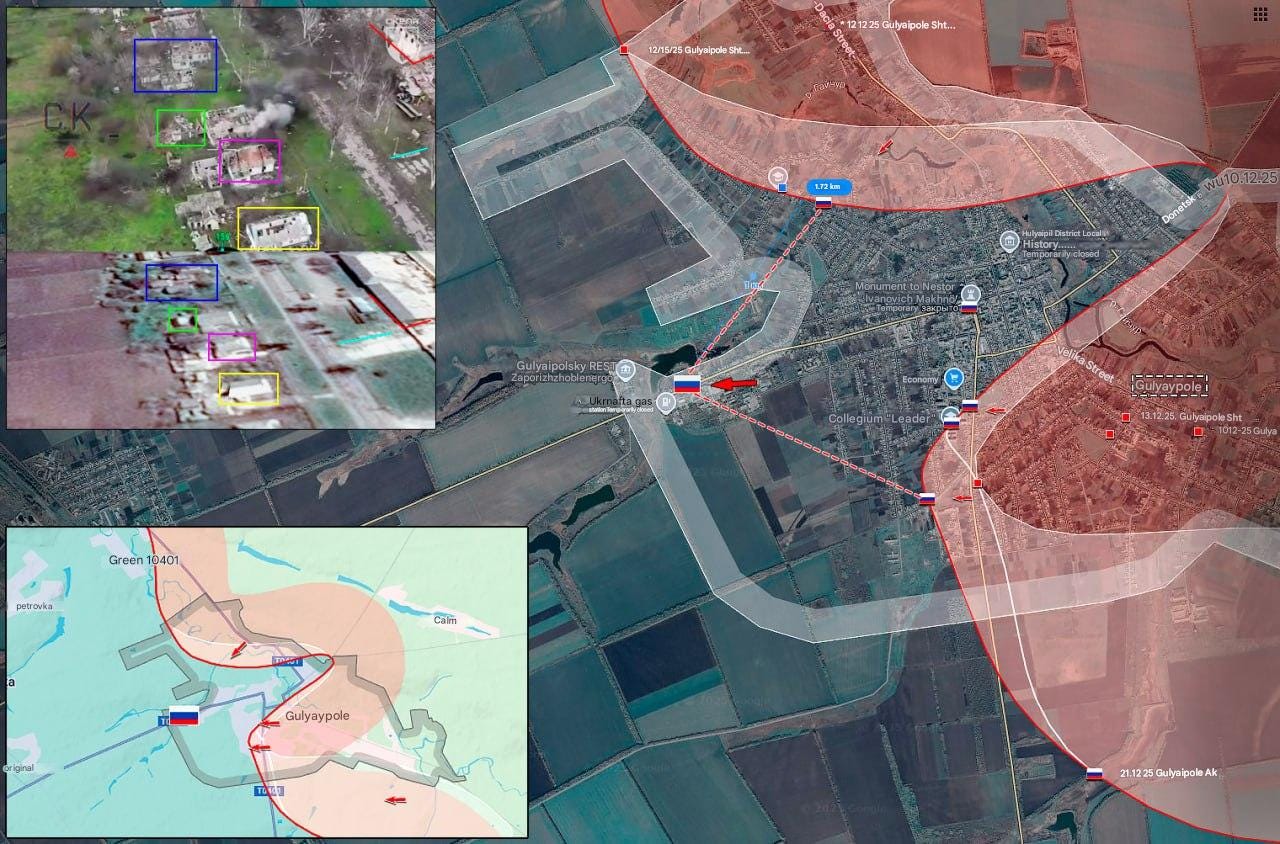
26.12.25 Gulyaypole
Storming of Gulyaypole.
Russian Armed Forces units are advancing in residential areas for more than 1.5 km and taking new positions on the western outskirts of the city under fire from the Ukrainian Armed Forces.
Geolocation: 47.660768, 36.224185
To use a better map, this would put them here and essentially mark the full capture of the city:
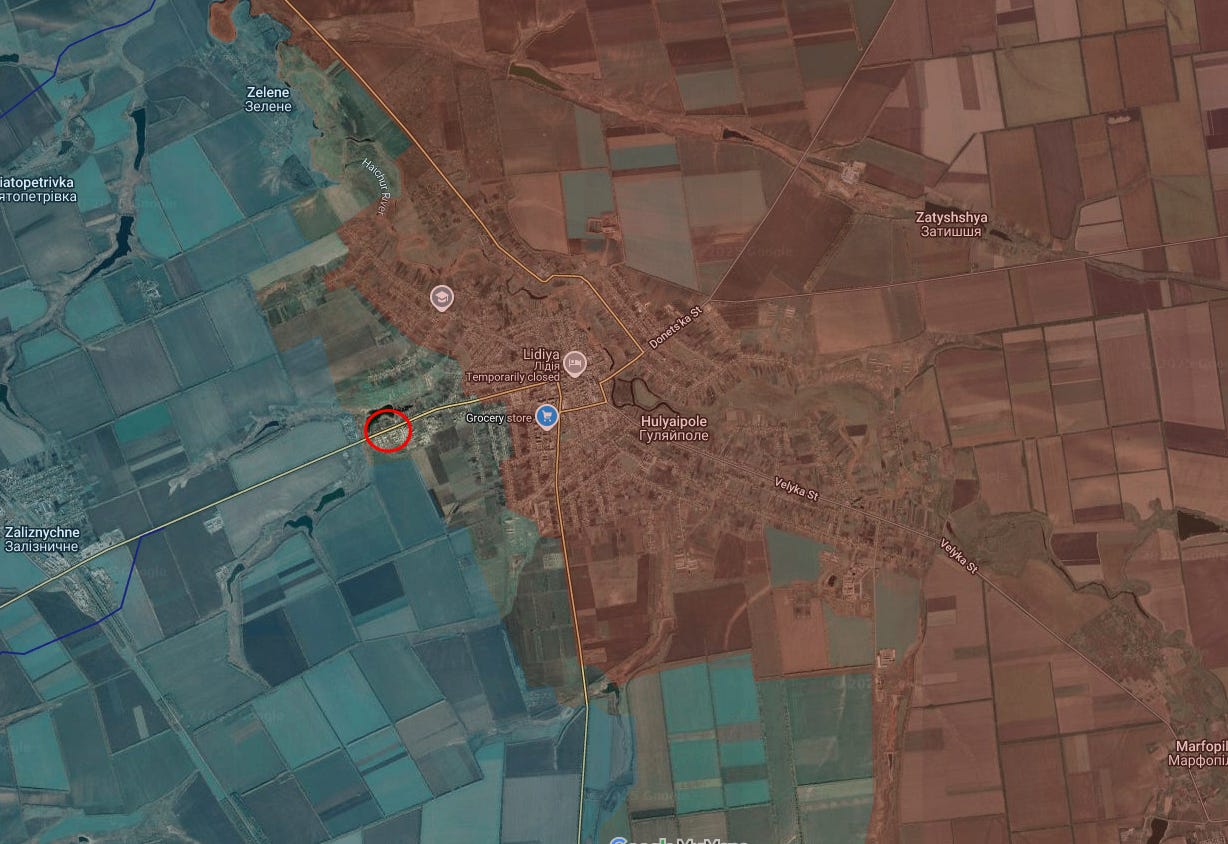
Enemy channels are reporting a crisis in the management of the Armed Forces of Ukraine's units in Gulyai-Pole. In the 102nd Separate Troops Brigade, some officers are encouraging their subordinates to leave their positions without permission, retreat, or surrender. There is a lack of coordination in the city, and there have been instances where the positions of the 102nd Brigade have been attacked by their own troops.
In an attempt to hold on to the city, assault units of the 1st, 225th and 33rd and BTG 154th mech brigade are sent to the city.
In fact, the Ukrainian troops are retreating so quickly that Russia has apparently for the first time ever captured a full active battalion headquarters of the AFU, with all its attendant paraphernalia and gear:
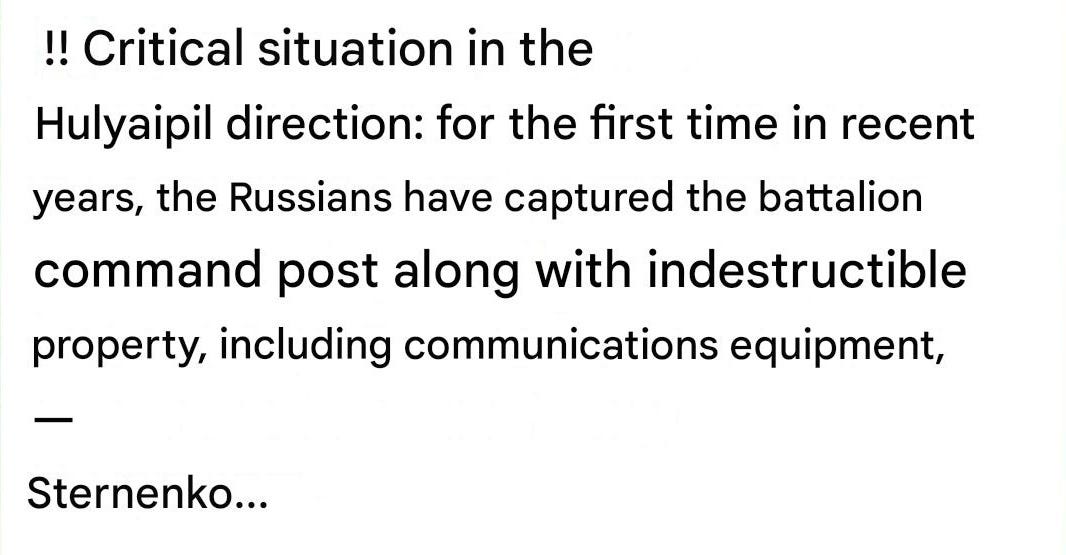
Russian forces captured the command post of a Ukrainian territorial defense battalion on Sobornaya Street in Guliaipole.
The building housed the headquarters of the 1st Line Battalion of the 106th Territorial Defense Brigade, which was transferred to the command of the 102nd Territorial Defense Brigade.
Ukrainians officially admitted to the loss but made various excuses.
There were many other smaller Russian advances but we’ll keep it to the main actions for now as the article is already over-long.
Just one exception. Russian forces apparently carried out a large scale armored assault north of Pokrovsk on the Dobropillya line (not the earlier-mentioned Dobropillya on the Gulyaipole line, which is unrelated).
The AFU claims high losses and released this video, though it’s uncertain as always due to their ‘creative editing’. But since large armored assaults are becoming rarer and rarer, it is still interesting to see for historical reasons; of particular interest is seeing the different types of new cages and anti-drone additions to the armored vehicles:
Russian commentary:
Under enemy fire, our marines are landing troops in the direction of Shakhova-Sofiyivka-Dobropil, on December 22. We will learn the details. There have been partial or complete losses of 6 tanks, 9 BMPs, 5 BTRs, 1 BREM, and 10 ATVs. Despite the nightmare of such armored group attacks, it is the only way to immediately deploy large infantry groups for a decisive assault and advance, rather than sending 2 people per day.
For instance, several Russian tanks apparently sporting shipping containers as anti-drone cages were spotted elsewhere:
Though Ukrainian channels laughed, some people cleverly suggested this could be an ingenious defense against the now-proliferating AI-guided drone threat. Shipping containers break up the tank “profile” which would confuse AI systems trained on classic tank profiles from being able to target the vehicles in automatic mode. That is no different to how Russians painted strange shapes on their planes, covering them with rubber tires, etc., in order to break up the AI-assisted detection by NATO satellites.
Here Sladkov showcases another of the recent ‘Dandelion’-style protections for Russian tanks:
Another recent look at the steel monstrosities now going into battle on the Russian side:
—
A last few items:
Speaking of the Zaporozhye offensives, here a Ukrainian video demonstrates the massive new main defensive line that is being built in the region:
State Special Service of Ukraine's transport published the results of its work: 2130 platoon strongholds were built, more than 3000 km of anti-tank ditches were constructed, more than 1000 km of "pyramids" were installed, 16000 km of the "Egoza" barrier line were installed, and 4.3 thousand km of low-visibility obstacles were installed.
It is said to be somewhere on the Zapo-Dnipro border area, precisely where the ‘Eastern Express’ troops are pushing past Gulyaipole.
Budanov gave some revealing intel on Russia’s 2026 plans for conscription—from the official Ukrainian source:
Russia's mobilization plan for 2025 was to recruit 403 thousand people — this number was reached there in early December. So, the Russians in 2025 will exceed the plan for recruiting people to the troops.
He said that the main source of replenishment of the Russian army is contract soldiers.
According to Budanov, for 2026, the mobilization plan of Russians is to recruit 409 thousand people. When asked whether Russia faces problems in the process of recruiting people for the war, Kirill Budanov said::
“Of course. Therefore, they periodically increase the level of one-time payments: it varies depending on the region, but these are significant amounts. This is how they lure people to join the army, “ he said.
Lastly, as of this writing another massive Russian cruise missile and drone attack has occurred on Ukrainian power stations, prioritizing Kiev, with reports claiming that Kiev has lost power.