Swift Retaliation: Putin Launches Oreshnik Strike on "Largest Gas Storage Site in Europe" in Ukraine's Lvov Region
It has happened for only the second time of the war: the Russian Intermediate Range Ballistic Missile dubbed the Oreshnik was launched from the Kapustin Yar range toward Lvov, again providing the world with an eerie spectacle:
Zoomed footage:
It is being reported that Europe’s largest underground gas storage facility was hit:
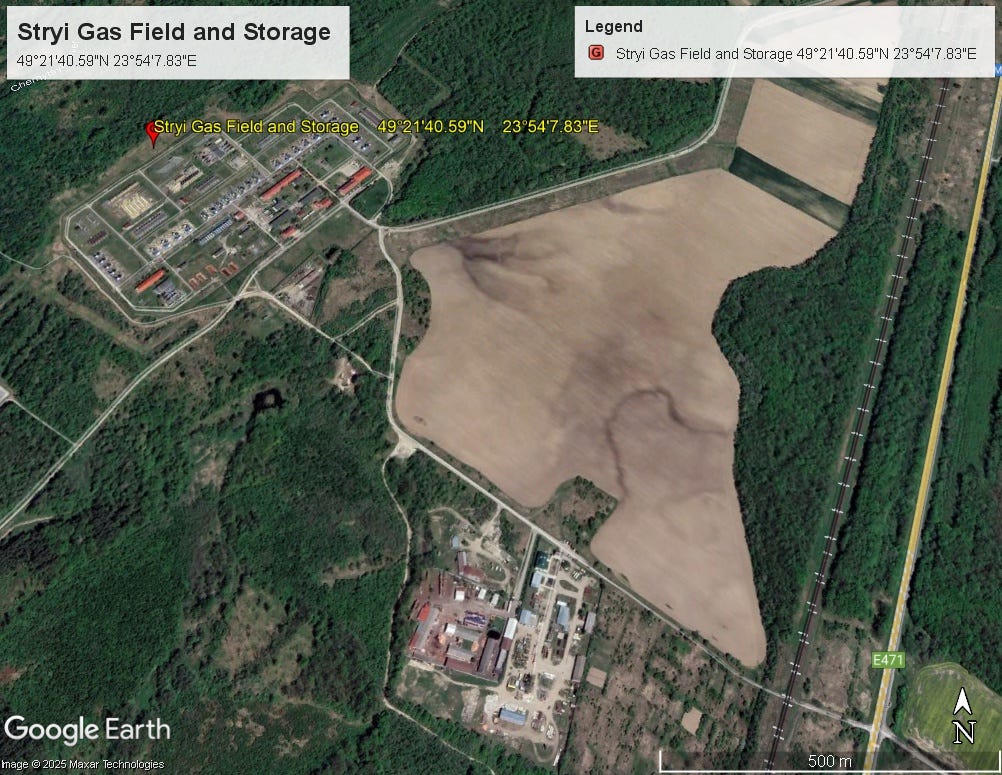
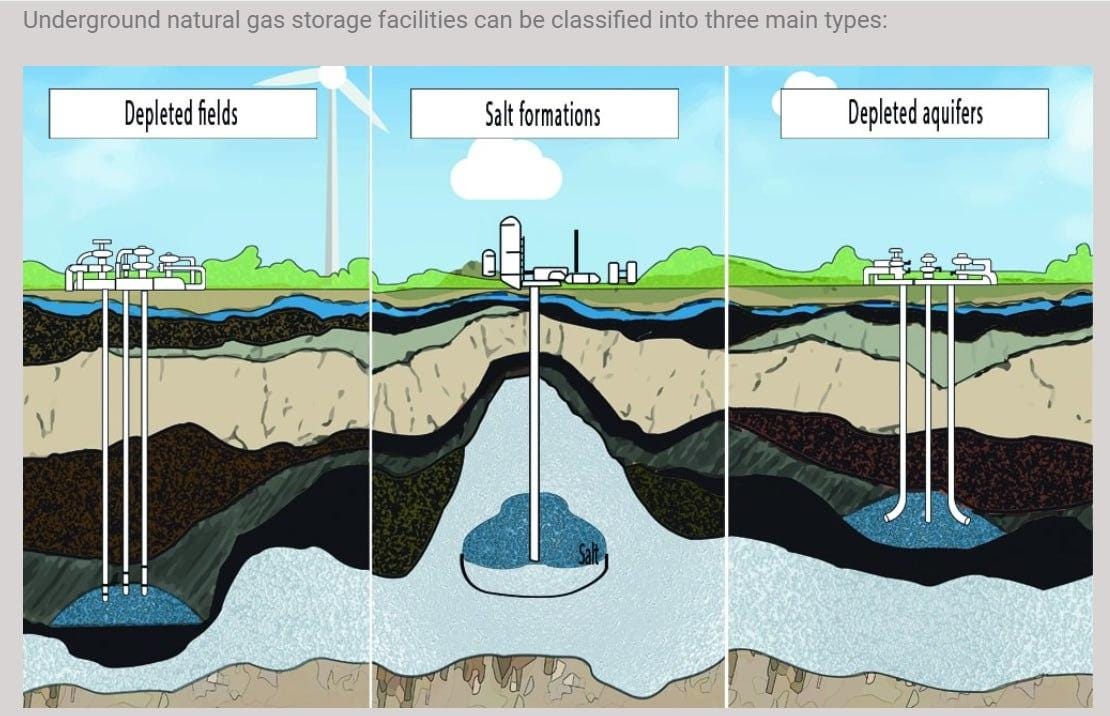
According to preliminary data, the main target was the strategic underground Bilche-Volytsko-Uherske gas storage facility in Stryi — its capacity accounts for over 50% of all Ukrainian gas storage facilities.
It is assumed that the "Oreshnik" (or another missile) flew from Astrakhan to Lviv in 10–15 minutes — covering about 1,800 km at a speed of 10,000 km/h
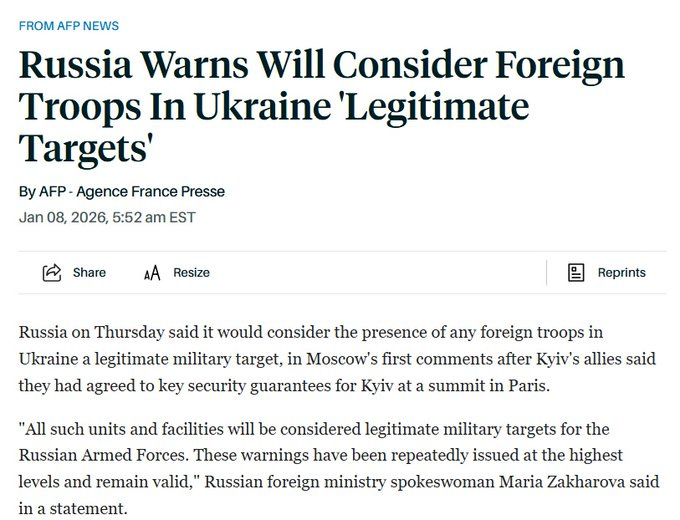
The timing obviously suggests that this is a “retaliation” attack meant to send a strong message to the West. Retaliation for what, precisely? Likely for several of the recent provocations and escalations together: the attempted drone attack on Putin’s dacha, the US seizure of an allegedly-‘Russian’ oil tanker, and don’t forget—the European summit’s signing of commitments to deploy both troops and military bases on Ukrainian soil in the event of a ceasefire. Russia had just warned they would become legitimate targets, and a strategically placed Oreshnik strike in western Ukraine could certainly be construed as a message for that:
However, there is one counter-argument, which is that this could simply be part of Russia’s systematic campaign to destroy Ukraine’s energy infrastructure and Oreshnik just happens to be the most effective weapon for that particular site, which no other weapon could potentially destroy.
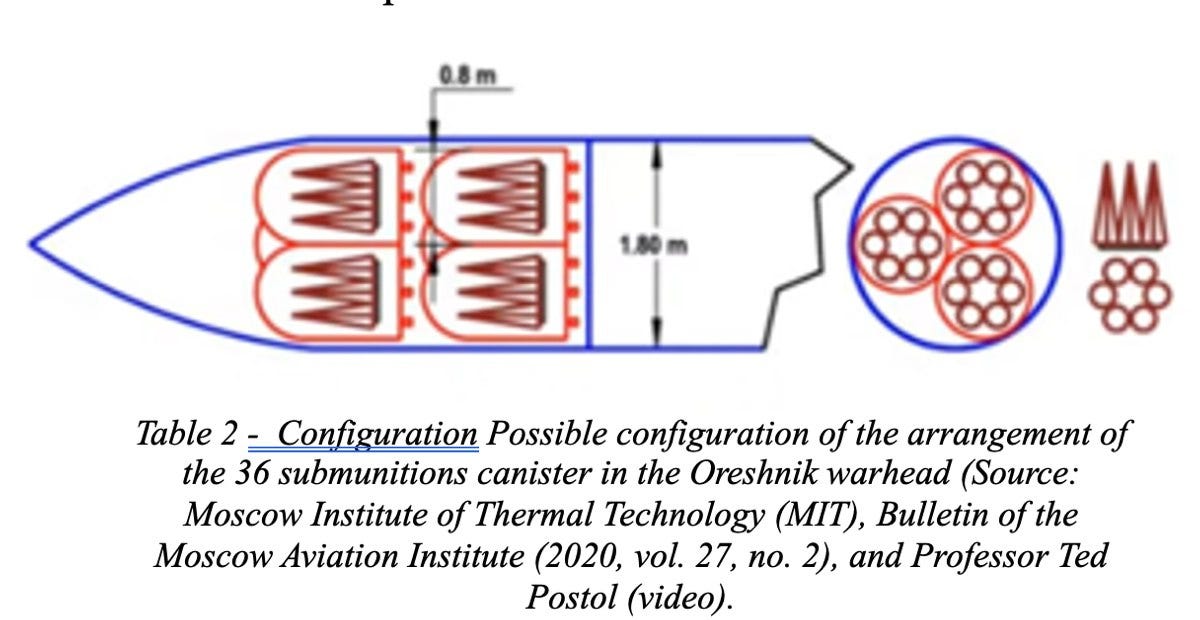
The reason is, Lvov is out of range of Iskanders and Geran drones and Kaliber missiles do not have the penetrative ‘bunker-buster’ capabilities to pierce deep underground storage sites. The Oreshnik—by virtue of its Mach ~10+ kinetic inertia—just happens to be the only weapon capable of penetrating a deep underground site at that long range of a distance in western Ukraine, at least theoretically speaking.
The other major consideration from the aspect of the strikes being a message to the West is that it was right on the Polish and NATO border. Many called for Russia to strike Kiev with the Oreshnik as part of the retaliation but it is pointless to hit a place only a few miles from the Russian border with an intercontinental-style missile. The far greater message is to strike right near NATO’s borders to send a message that all of Europe is put on notice, with the Lvov gas site being merely 160km from Poland’s critical Rzeszow base.
Interestingly, the official Ukrainian Air Force account announced that at 11:30pm the launch was detected:
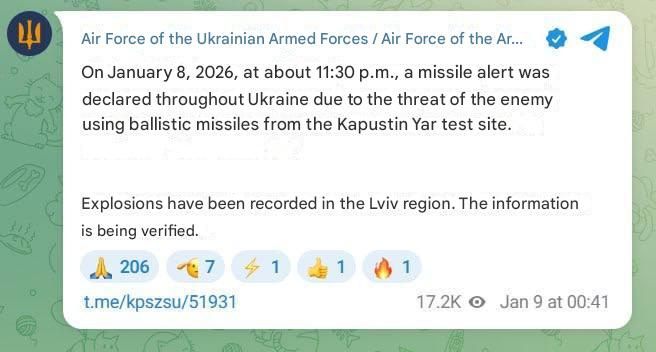
If you notice in the video of the strikes posted at the beginning, the timestamp shows 23:46, which means the Oreshnik struck precisely 16 minutes later. It has been estimated that it takes 15 minutes for it to get to Lvov from Kapustin Yar, which means that the Ukrainians were apparently aware of its launch via American real-time satellite ISR.
However, even knowing when it will launch, they will not have been able to know the target, as the missile flies too quickly to properly triangulate the trajectory and notify the target in time to take any actual effective countermeasures, such as simply hiding. Local reports said that there was no forewarning of the strikes at all, which means—though Ukrainian authorities knew when the missile was launching—they likely had no clue which region it would actually hit.
The other thing is, some reports stated Russia notified the US three hours prior to the launch, which makes sense because the launch of an ICBM-like vehicle could be interpreted by early warning missile detection systems as a nuclear first strike. It’s clear the US knew well in advance given there was “unusual activity” reported in Kapustin Yar literally days ago, with the US Kiev embassy already issuing this call earlier:
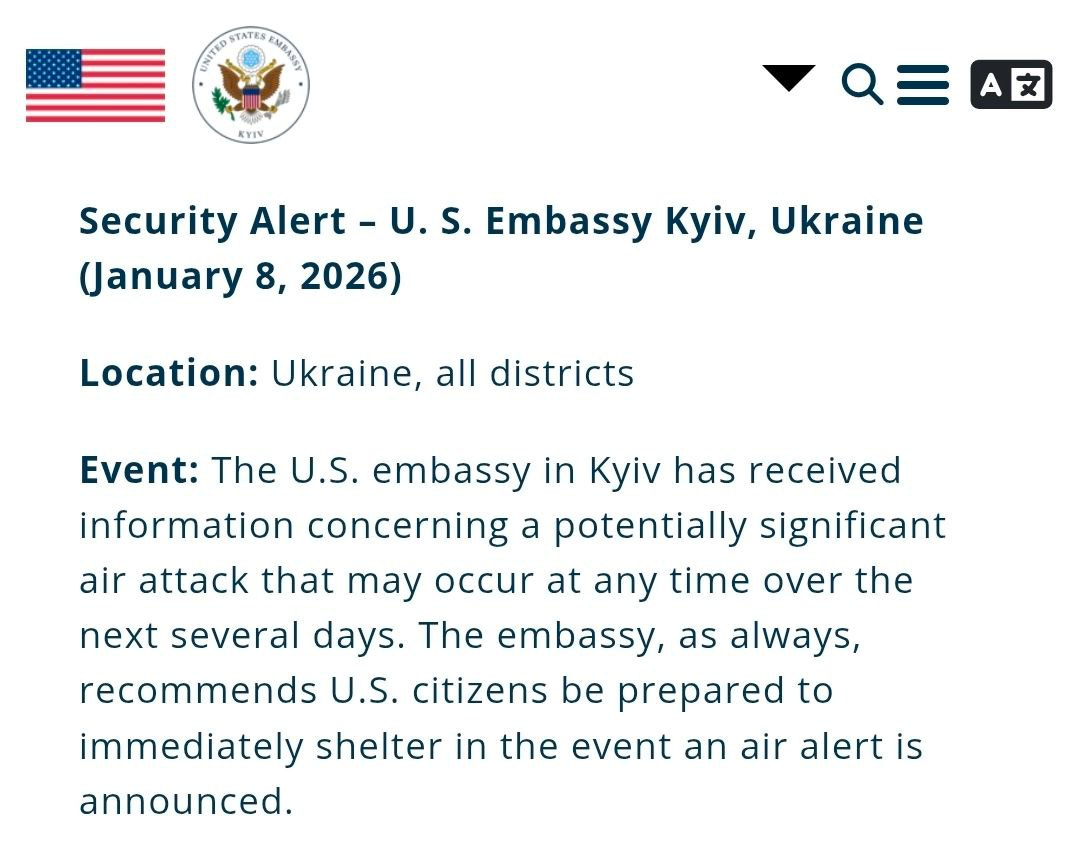
That being said, the Oreshnik was just one part of a major ongoing aerial attack now striking Kiev and other regions with Kalibers, Kinzhals, Iskanders, Gerans, and everything in between—and so it’s possible the above warning was in regard to that, although it was unusual.
What else was unusual was the odd ‘afterglow’ which was seen for dozens of miles all around the Lvov region after the Oreshnik strike:

Reports claimed local authorities conducted radiation readings and found the background radiation to be normal, with the glow assumed to be the gas storage facilities burning out, though we do not have any corroboration on that yet.
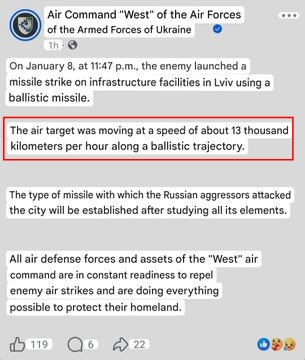
Official Ukrainian authorities had clocked the Oreshnik at a whopping 13,000km/hr, which should be roughly Mach 10.6:
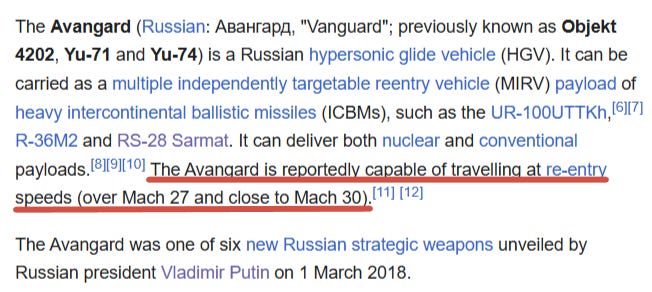
Recall that the Avangard cuts a few leagues above that, at Mach 30:
Perhaps Russia will be inclined to test that next, should Zelensky or the West continue their naughty provocations.
Though Oreshnik stole the show, the much larger attack on other Ukrainian cities was in reality far more devastating, with Kiev’s thermal power plants said to be violently hit by Russian strikes as various Ukrainian cities experienced major to total power outages.
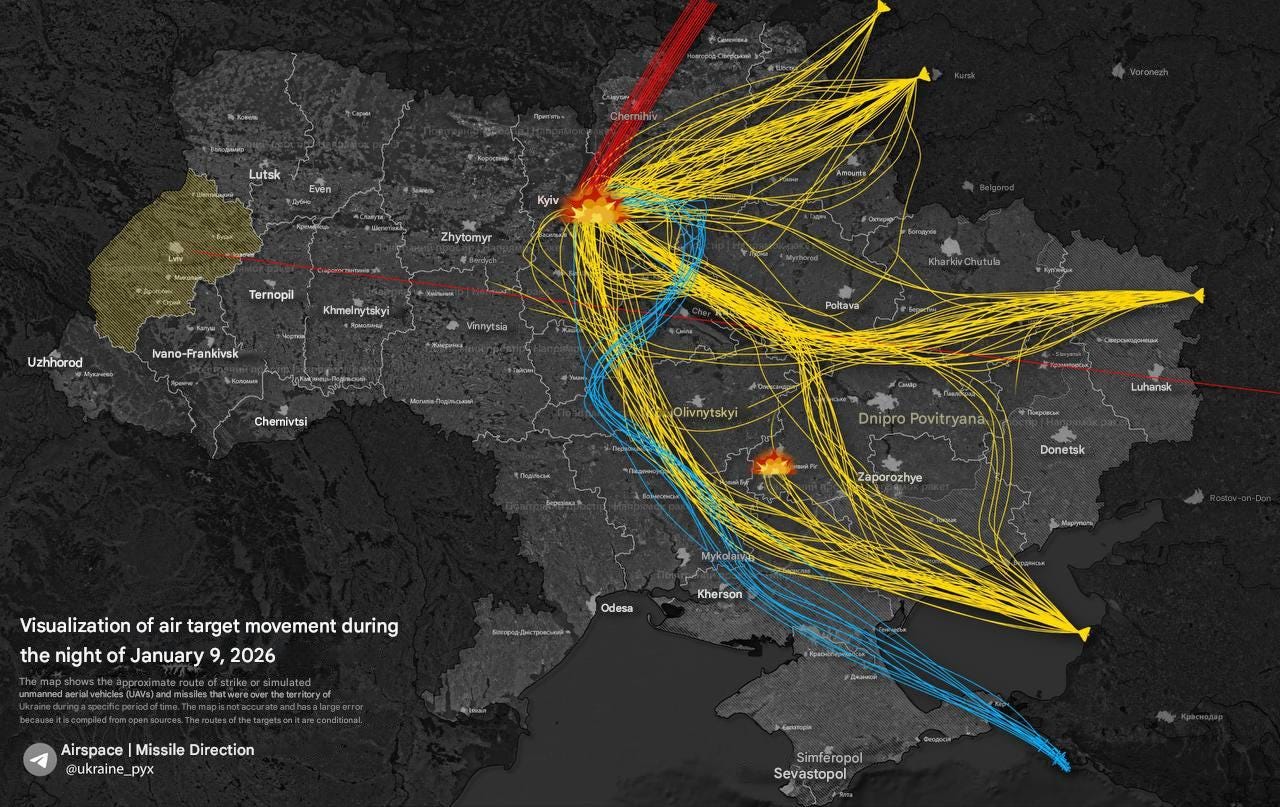
💥— Large-scale missile-drone strikes on the energy infrastructure in Kiev have taken place, resulting in damage to 3 x Power Plants: TPP-4, TPP-5, and TPP-6.
Acc to local monitoring channels, up to 12 Ballistic Missiles, 25 x Caliber Cruise Missilies and around 200 x Drones took part in the attacks
After a wave of missile attacks, Kyiv is experiencing serious problems with electricity, water supply, and heating. There are communication outages. Problems on the railway have also begun, but they were already observed yesterday, they have just worsened now.
The even bigger story is the fact that Dnipro and Zaporozhye—both cities of nearly one million people, have reportedly been without power for days:
One Russian channel writes on the attacks on Dnipro and Krivoy Rog in particular:
A clearer picture is gradually emerging of the attacks in Dnepropetrovsk and Krivoy Rog. Judging by the nature of the damage, it’s no longer just about knocking out a generation, but rather about a targeted attack on distribution facilities.
At the current stage, it’s clear that Russia has managed to gradually, with relatively limited resources, create localized but persistent and noticeable power outages. Moreover, the change in approach and the redistribution of attack resources to a specific region disrupt (at least temporarily) DTEK’s usual maneuvering and backup schemes. For the central industrial region along the Dnieper, the existing mechanisms are gradually becoming insufficient.
Dnepropetrovsk is a good training ground in this regard. Due to its importance, the city has a complex, multi-redundant power grid designed precisely to bypass damage and redistribute flows. If prolonged outages can be achieved here, it means that the approach is working and can be scaled.
In the future, this opens up the possibility of turning energy attacks into a “on-demand” deployment tool - disconnecting specific regions without the need for massive fire campaigns, as has been the case, say, over the past three years.
The key question here is not whether this can be done, but the race for speed. On the one hand, there’s a well-honed mechanism for attacking power grid nodes, on the other hand, there’s emergency services that used to take a week or two to restore power. Who will be faster and more resilient in this confrontation will become clear soon.
“Military Chronicle”
As stated before, while the Oreshnik ‘stole the show’ and provided a flashy spectacle, the much bigger story is Russia’s ongoing systematic campaign of taking out Ukrainian infrastructure in general. This is putting major strain on Europe, as it faces increased isolation from “daddy” US, forcing Europe to divest more and more of its citizens’ funds to up-keeping Ukraine. This pursues a simultaneous Russian strategy of destroying Ukraine while greatly weakening Europe, particularly its political leaders, who face increased pressure at home for their disastrously mismanaged public finances.
A prominent Ukrainian analyst had recently written on X that Russia has been “weakened” more than ever of late, to which I had replied:
Actually, Russia is becoming more powerful than ever. That's because the US has weakened the only geopolitical mechanisms that acted as "checks" on Russia in the region (namely Europe and "int'l law" in general) which greatly increases Russia's power and influence disproportionately
As Europe grows ever weaker, both domestic-politically, economically, and from the standpoint of geopolitical influence (for instance in Africa and elsewhere, with France and other countries getting the boot), Russia gains outsize power. This stands to facilitate a situation where in a few years, Europe will be squeezed between the two giants of the US and Russia dictating everything to a hapless, weakened, and fractured European continent.
Particularly after the Ukrainian war is over—should Russia win decisively enough—the balance of power will have shifted so drastically in Russia’s direction that Europe will essentially be at its absolute weakest relative to Russia in all of history. Of course, the only way to prevent that is to make sure Russia loses—someway, somehow—in a spectacular enough fashion as to collapse this trajectory entirely, and this is why the Europeans are forced to continue doubling down on this Sunk-Cost sinking ship, wagering their entire futures on that remotely tiny possibility that the Russian bear could be dislodged from his newly-found footing.
That being said, don’t celebrate too early, as there is much work to be done for Russia to cement such a trajectory. The war must be won decisively, and as of the moment, despite the ongoing fireworks of the big strikes, the front itself has been relatively static for the past week or more, with little Russian movement. Though this is presumably the result of bad weather and possible regrouping for the next wave of assaults, it still stands as reminder that things are not exactly “easy” and victory is not yet precisely “obvious” or directly visible and imminent.
From the standpoint of the battlefield, there remains a long slog ahead, but the systematic work on Ukraine’s infrastructure is only just hitting its most vicious stride, and that should have major compounding secondary effects on Ukraine’s ability to resist in the coming months.