With his attack on Venezuela and capture of that country’s president, and his ongoing threats to invade and occupy Greenland, Donald Trump has captured the world’s attention. A wary world wonders what he’ll do next. Lost amidst the angst, however, is the question of why the president of the United States, the country that led the creation of a global rules-based order over the past decades, would now be on what appears to be a quest to dismantle it. Understandable, given the damage he can cause, but it’s still worthwhile to explore what motivates the man.
During my thirty years as a diplomat, I found it useful, especially when dealing with authoritarian personalities, to understand the psychological basis for their beliefs and actions. This is based on something I learned from twenty years in the army—know your enemy.
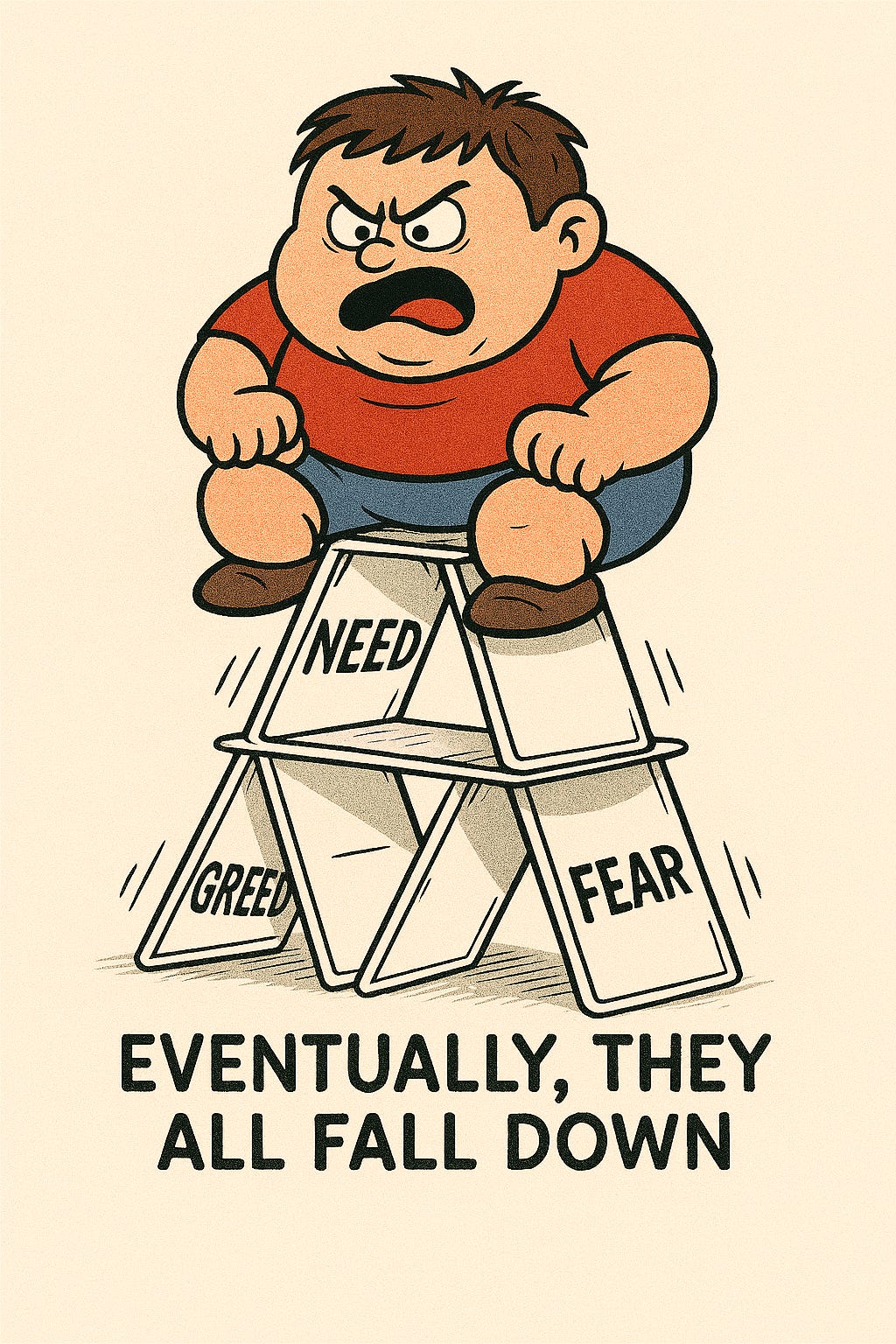
So, what motivates Trump to be the dog poop in the punchbowl that he is? After poring over reams of material about him, I’ve concluded that three main things motivate his actions. Greed, Need, and Fear. He is a man who, no matter how much he has, it’ll never be enough, while, at the same time, he has an obsessive need for adulation, loyalty, and dominance. Overlaying these two motivators, though, is a fear that he’s not what he tries to convince everyone he is, and that he’ll one day be found out.
This is an unscientific, untested hypothesis, but there is substantial evidence to support it.
Trump’s greed was on display during his first administration, as he and his family business profited from his presidency. This included his ownership of the Trump International Hotel in Washington, DC, which hosted events and people that had business before the government, and the Trump Organization’s business deals in foreign countries, including China and Russia. In his second administration, it’s been more of the same, if not more. This has included accepting a $400 million jet from Qatar, and hints that the raid on Venezuela was more about oil than drugs. It’s the precious metals in Greenland that he wants more than national security guarantees.
There is also an element of neediness in his demeanor and actions. He’s stated, for instance, that he has a psychological need to own Greenland. Even more bizarre was his letter to the Norwegian prime minister linking his quest for Greenland to his not being awarded the Nobel Peace Prize, which he’s coveted ever since Barack Obama received his. Though not conclusively proven, there is a belief among some, including Trump’s niece, that his relationship with his domineering father, who had Alzheimer’s late in life, created in him a need for acceptance and dominance over others. This can also be seen in his televised cabinet meetings, which are mainly staged productions of his cabinet toadies falling over themselves complementing their ‘dear leader.’
Finally, in all that he’s done since taking the oath of office just over a year ago, one can see the use of fear as a method of control in almost everything this administration has done. From mass firings of employees at certain agencies to deadly attacks on small boats suspected of drug smuggling to ICE raids on homes, cars, and public properties in Democratic-led states and cities, he has sought to throw people off balance and instill fear. It’s not been just fear of physical harm either. He’s used the courts to go after political rivals and those who disagree with him. Fear is a main driver of policy in his second administration.
While he wants to display an image of strength, what he exhibits are the hallmarks of a cowardly bully who strikes out, fearing that his weaknesses will be exposed. Like most bullies, he will eventually be found out, and his house of cards will come tumbling down. The danger, though, is how much of the rest of the country will fall with him, and how long it will take to restore everything that he will have destroyed.