With growing opposition, how viable is Trump's 'Board of Peace'?
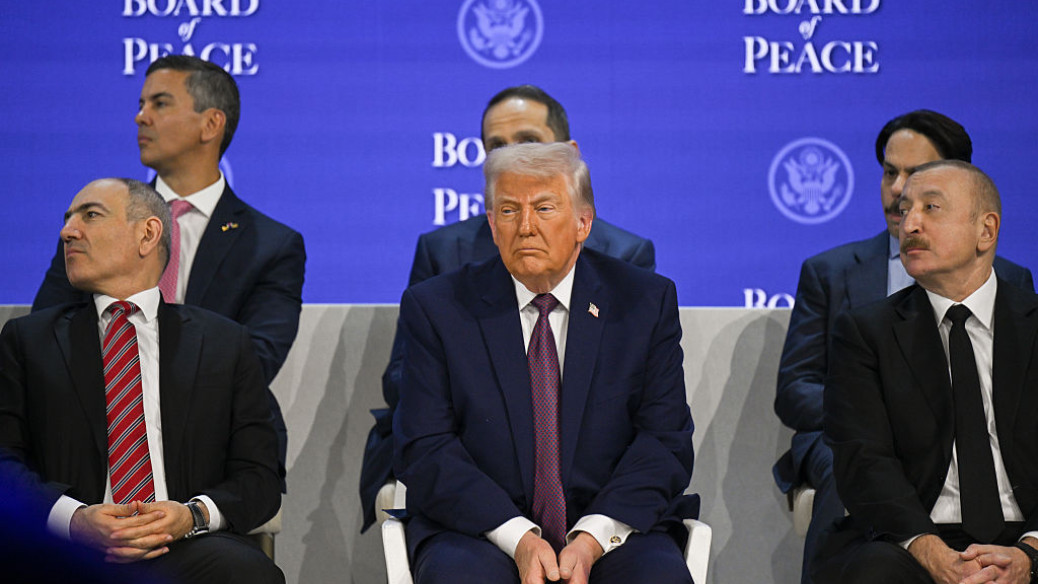
When US President Donald Trump established an organisation called "the Board of Peace" for the reconstruction of Gaza, and possibly to replace the United Nations, it was widely met with scepticism for its lack of basic norms.
Despite an official ceasefire, Israeli attacks on Gaza continue, a few major world leaders have signed on to the Board (which requires $1 billion for a lifetime membership), and Trump has appointed himself as the lifetime chair.
"It's a farce. There is no ceasefire. 'The Board of Peace' is a ridiculous proposal. Even people who have casually reviewed its structure know that it's doomed to fail," David Frank, a professor of political communication and rhetoric at the University of Oregon, told The New Arab.
To bring about sustainable peace for Israelis and Palestinians, he believes countries in the region should play a stronger role in any post-conflict plan for Gaza, pointing to an Egyptian plan proposed last year that would allow Gaza's 2.3 million residents to stay in the enclave—as opposed to Trump's plan to depopulate the area for reconstruction.
"Even though it's officially recognised, there's no legitimacy," he said. "This is not a way to create a stable environment for Israelis and Palestinians. There's no guaranteed transition to political stability for the Palestinians. The war continues, Palestinians are dying, and [the Board] is resting on false grounds."
"The Board of Peace" was announced in September, a month before the latest ceasefire agreement. In August, former British Prime Minister Tony Blair suggested placing Gaza under an international administration. This then led to Trump's "Board of Peace," which was mandated in November and charted in January on the sidelines of the annual World Economic Forum summit in Davos.
So far, around 20 countries have accepted Trump's invitation to join the Board, including Argentina, Bahrain, Hungary, and Saudi Arabia, and around 7 other countries, including Israel and Egypt, have said they intend to accept the invitation.
Canada (which Trump has repeatedly threatened to invade) was invited, but its invitation was revoked after Mark Carney, the country's prime minister, made a bold speech saying the world was entering a new era amid growing US aggression, suggesting a different approach to international relations. The approximately 10 countries that have declined to join include France, Germany, and the United Kingdom. Around 25 countries have not responded to the invitation. No countries from Sub-Saharan Africa were asked to join.
"Many of the countries that declined participation did so out of concern for the broader international order," Anwar Mhajne, a professor of political science at Stonehill College, told TNA. She noted that major world leaders, such as France, raised concerns about the Board replacing the UN, while other countries have expressed unease with the organisation’s structure.
"These responses reflect a shared discomfort with an initiative that lacks legal grounding, transparency, and institutional accountability," she said.
Just as important, she added, is the lack of legitimacy for those most directly impacted by Trump's proposal.
“This absence reinforces a broader pattern: peace is imagined as something negotiated about Palestinians rather than with them. The result is a top-down model that reproduces existing power asymmetries instead of challenging them,” said Mhajne.
"Taken together, opposition from states committed to multilateralism and rejection by affected populations reveal a deeper flaw in 'the Board of Peace'. It lacks legitimacy both from above—international institutions—and from below—those living the conflict."