“Epstein and ‘Our age of unreason.’”
Monsters of boundless subjectivity.
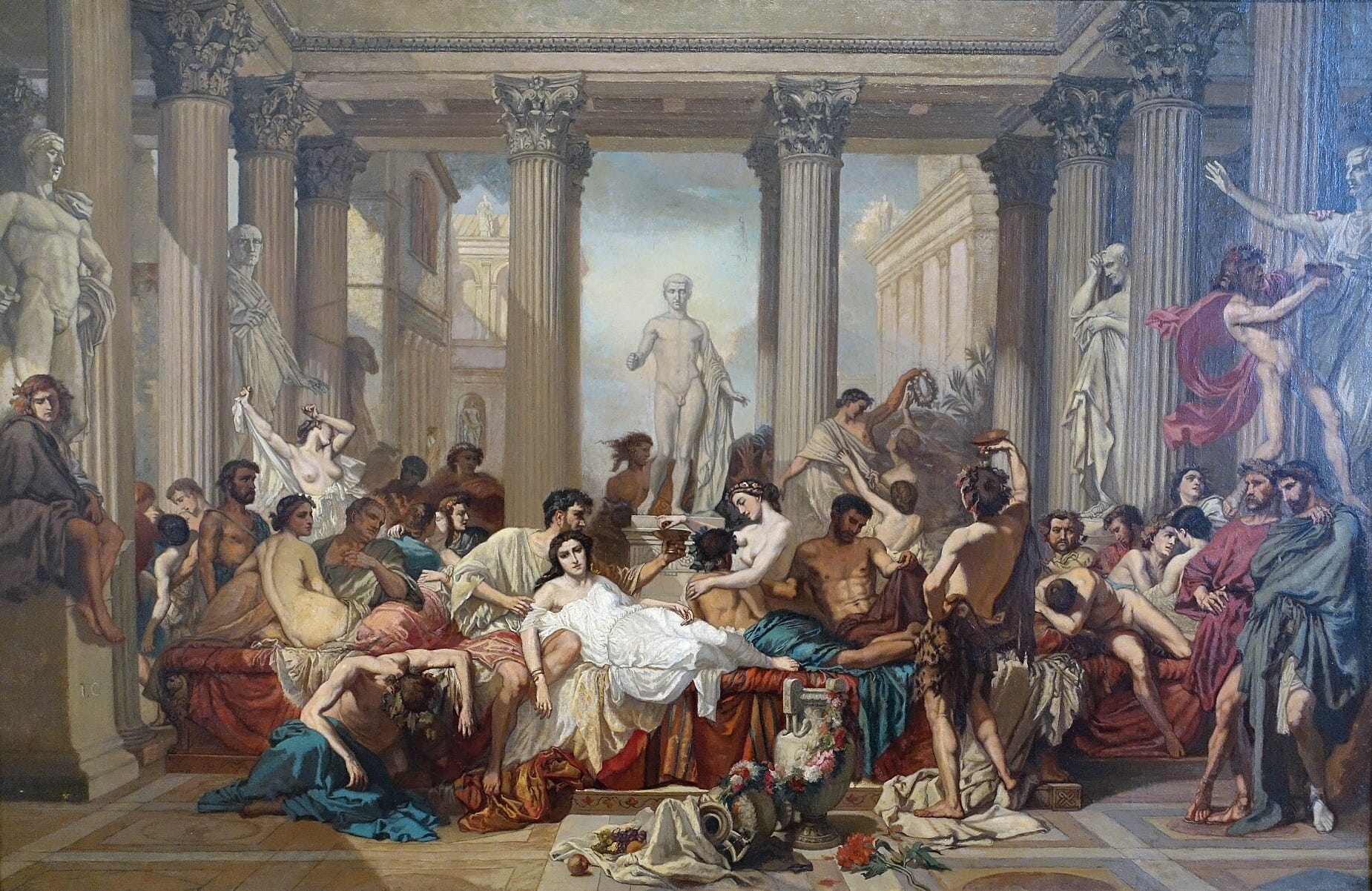
11 FEBRUARY—As we read revelations of the sordid, bottomlessly rank doings of Jeffrey Epstein and the vast circle of elites with whom he managed to surround himself—and god knows how immense the inventory of “redacted” material, how many the names and crimes that will never come to light—we read of the collapse of our world, nothing less. Our world: the Western world, the Atlantic world, the world wherein humanity began, in the eighteenth century, to bring modern democracies and republics into being.
Yes, much has been written over many years of the decline of the West. We have remarked upon this countless times in these pages. But we are confronted now with more, far more, than questions of national power, shifting geopolitics, the rise to prominence of the non–West, and the new world order these nations, their turn now come, are intent on bringing into being. Questions of power and politics figure prominently in the Epstein affair, certainly. But even the partial release of the Epstein files takes us well beyond such matters, large as they are. As the rock is lifted, we find beneath it the rot of our foundational institutions and the beyond-belief nihilism of those who control them—altogether the worms that have eaten into any semblance of order, law, or justice to which the West’s democracies and republics may once have had a purchase.
Toynbee warned of this in A Study of History, the 12 volumes of which he produced from 1934 to 1961. Civilizations decline and fall, he asserted in his most famous thesis, not primarily due to external forces but in consequence of internal decadence and lapses of spirit among societal elites. What had served as “creative minorities” devolve into “dominant minorities” that no longer believe even in themselves. They then take to glorifying what elites once were but are no longer. Toynbee is out of fashion now, but I find in the books a mirror of our circumstance as we have them all these years later.
Meaning, truth, reason, language, purpose, social relations of all kinds: What is left of these in this, our post–Epstein era? Tomorrow will give the appearance of today and yesterday, but no, Toto, we are very far from Kansas now. And the point to be grasped as we manage the shock of the Epstein revelations is that there is no longer any going back to Kansas. Kansas is gone. As others have remarked in recent days, for Americans, and by extension all those who have thought of themselves as citizens elsewhere in the West, there is nowhere else to turn now but to themselves.
On 17 September 1787, a prominent Philadelphia salonnière named Elizabeth Willing Powel put a blunt question to Benjamin Franklin. The Constitutional Convention drew to a close that day, its business complete; Franklin was 81 and infirm. “Well, Doctor, what have we got, a republic or a monarchy?” Willing Powel asked.
“A republic, if you can keep it,” was Franklin’s famous reply.
We have failed to keep it: This is the truth of our moment. Now what? This is the question of our moment.
“There has always been a privileged class, even in America, but it has never been so dangerously isolated from its surroundings,” Christopher Lasch wrote as he began The Revolt of the Elites and the Betrayal of Democracy (Norton, 1995). It was the great social historian’s last book, published posthumously. I wonder if Lasch, prescient as he often was, could have imagined the dangers with which these elites have since come to confront us. A refusal to accept limits of any kind, the abandonment of all notions of moral conduct, indifference to all others not of their status, the rejection of any of the responsibilities attaching to positions of influence and power: These manifest now as grave dangers across the Western post-democracies.
As Lasch wrote in the just-noted book, the elites of the past understood that their places in society imposed upon them “civic obligations”—Lasch’s term. There were social contracts, in plain language. With privileges came duties, and a certain pride was taken in fulfilling these duties. Hold Epstein and those around him up to this light and you instantly recognize a fundamental change of ethos among the elites of our time: Arrogance has replaced any such pride. This, too, we can count a danger.
How do we account for the depravity to which the West’s elites have sunk—their endless derelictions, their celebrations of a shared narcissism, the strange absence of any kind of order within the bubbles, the many-gated cities, inside of which they live and move?