Israeli officials believe US, Iran at unbridgeable impasse as they near open conflict
Report says US might allow Tehran ‘token’ nuclear enrichment, but gaps between sides widely seen as irreconcilable; Congress may vote on curtailing Trump’s ability to strike
It would be the second time the US and Israel have attacked Iran in less than a year, following US and Israeli airstrikes against military and nuclear facilities last June.
Regional officials say oil-producing Gulf countries are preparing for a possible military confrontation that they fear could spin out of control and destabilize the Middle East.
Two Israeli officials told Reuters they believe the gaps between Washington and Tehran are unbridgeable and that the chances of a near‑term military escalation are high.
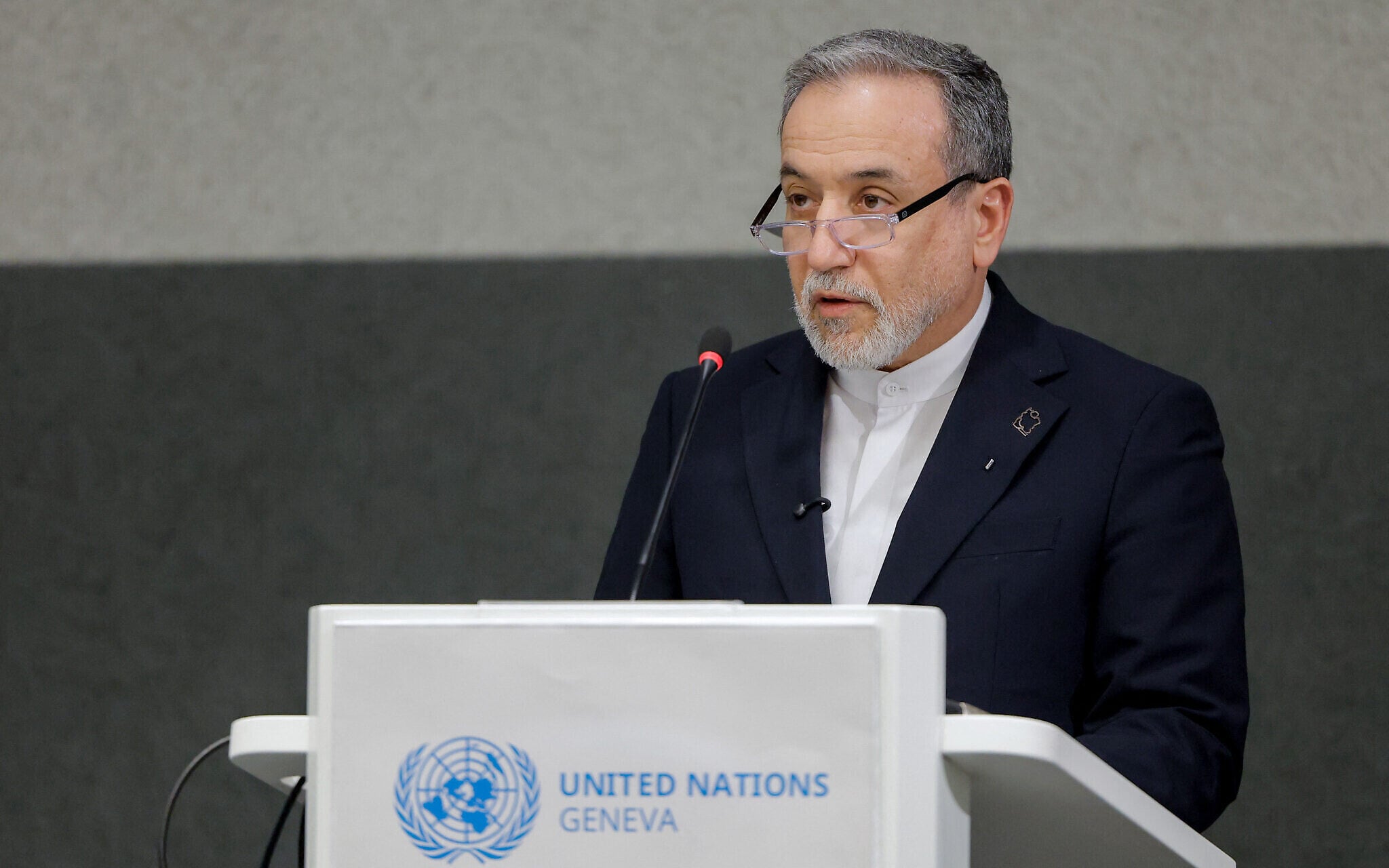 Iran’s Foreign Minister Abbas
Araghchi delivers a speech during a session of the United Nations
Conference on Disarmament, on the sidelines of a second round of
US-Iranian nuclear talks, in Geneva, Switzerland, on February 17, 2026.
(Valentin Flauraud / AFP)
Iran’s Foreign Minister Abbas
Araghchi delivers a speech during a session of the United Nations
Conference on Disarmament, on the sidelines of a second round of
US-Iranian nuclear talks, in Geneva, Switzerland, on February 17, 2026.
(Valentin Flauraud / AFP)
Some regional officials said Tehran was dangerously miscalculating by holding out for concessions, with US President Donald Trump boxed in by his own military buildup — unable to scale it back without losing face if there is no firm commitment from Iran to abandon its nuclear weapons ambitions.
“Both sides are sticking to their guns,” said Alan Eyre, a former US diplomat and Iran specialist, adding that nothing meaningful can emerge “unless the US and Iran walk back from their red lines — which I don’t think they will.
“What Trump can’t do is assemble all this military, and then come back with a ‘so‑so’ deal and pull out the military. I think he thinks he’ll lose face,” he said. “If he attacks, it’s going to get ugly quickly.”
Two rounds of Iran-US talks have stalled on core issues, from uranium enrichment to missiles and sanctions relief.
When Omani mediators delivered an envelope from the US side containing missile‑related proposals, Iranian Foreign Minister Abbas Araghchi refused even to open it and returned it, a source familiar with the talks said.
After talks in Geneva on Tuesday, Araghchi said the sides had agreed on “guiding principles,” but the White House said there was still distance between them.
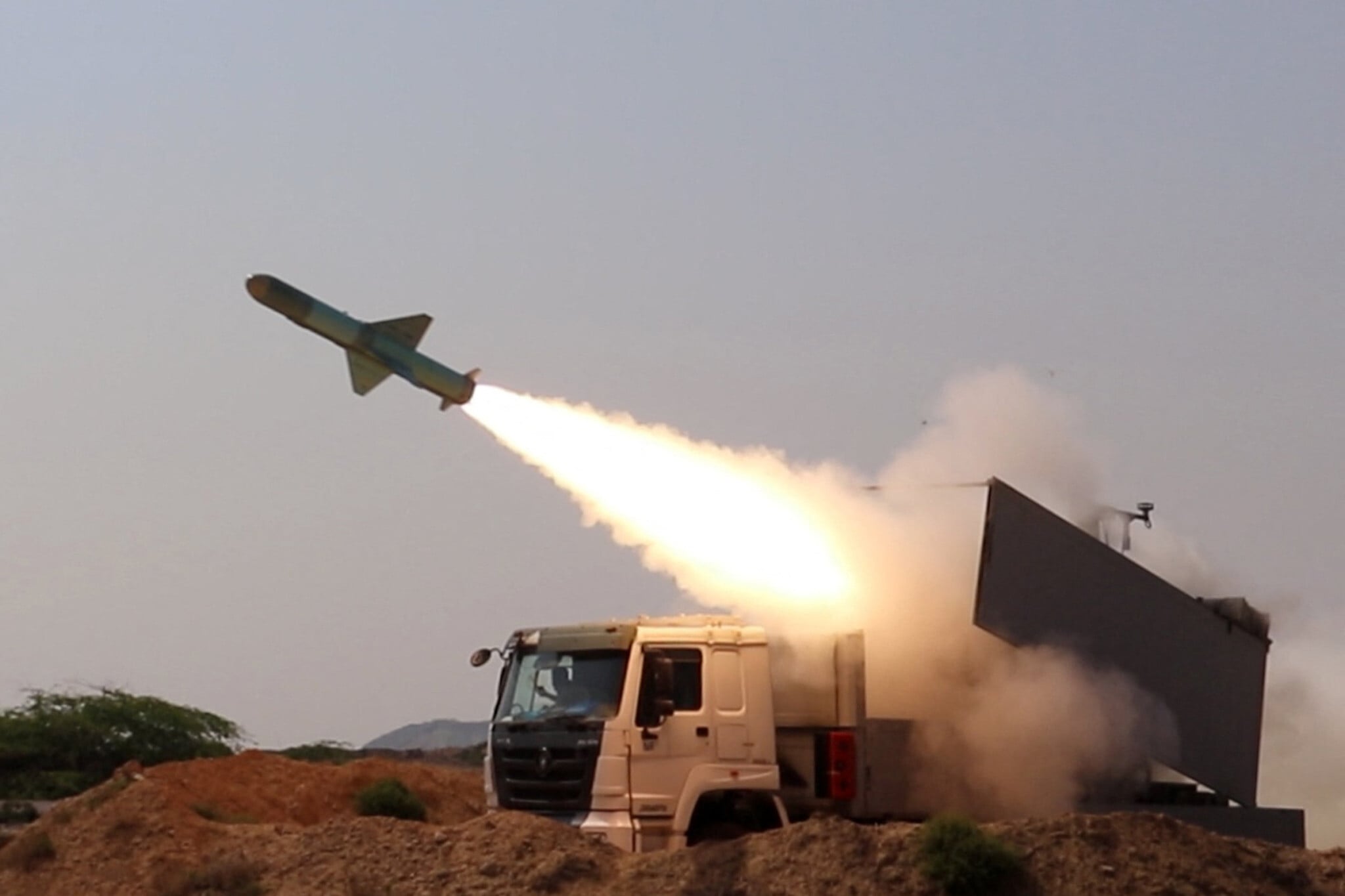 This handout photo released by
Iran’s Revolutionary Guards Corps’s official website Sepanews on
February 17, 2026, shows a rocket being fired during a military exercise
by members of the IRGC and navy in the Strait of Hormuz. (SEPAH NEWS /
AFP)
This handout photo released by
Iran’s Revolutionary Guards Corps’s official website Sepanews on
February 17, 2026, shows a rocket being fired during a military exercise
by members of the IRGC and navy in the Strait of Hormuz. (SEPAH NEWS /
AFP)
Iran is expected to submit a written proposal in the coming days, a US official said, and Araghchi said on Friday he expected to have a draft counterproposal ready within days.
But Trump, who has sent aircraft carriers, warships and jets to the Middle East, warned Iran on Thursday it must make a deal over its nuclear program or “really bad things” will happen.
He appeared to set a deadline of 10 to 15 days, drawing a threat from Tehran to retaliate against US bases in the region if attacked. The rising tensions have pushed up oil prices.
US officials say Trump has yet to make up his mind about using military force, although he acknowledged on Friday that he could order a limited strike to try to force Iran into a deal.
“I guess I can say I am considering that,” he told reporters.
The possible timing of an attack is unclear. US Secretary of State Marco Rubio is due to meet Israeli Prime Minister Benjamin Netanyahu on February 28 to discuss Iran. A senior US official said it would be mid-March before all US forces were in place.
Two US officials told Reuters that US military planning on Iran had reached an advanced stage, with options including targeting individuals as part of an attack and even pursuing leadership change in Tehran, if ordered by Trump.
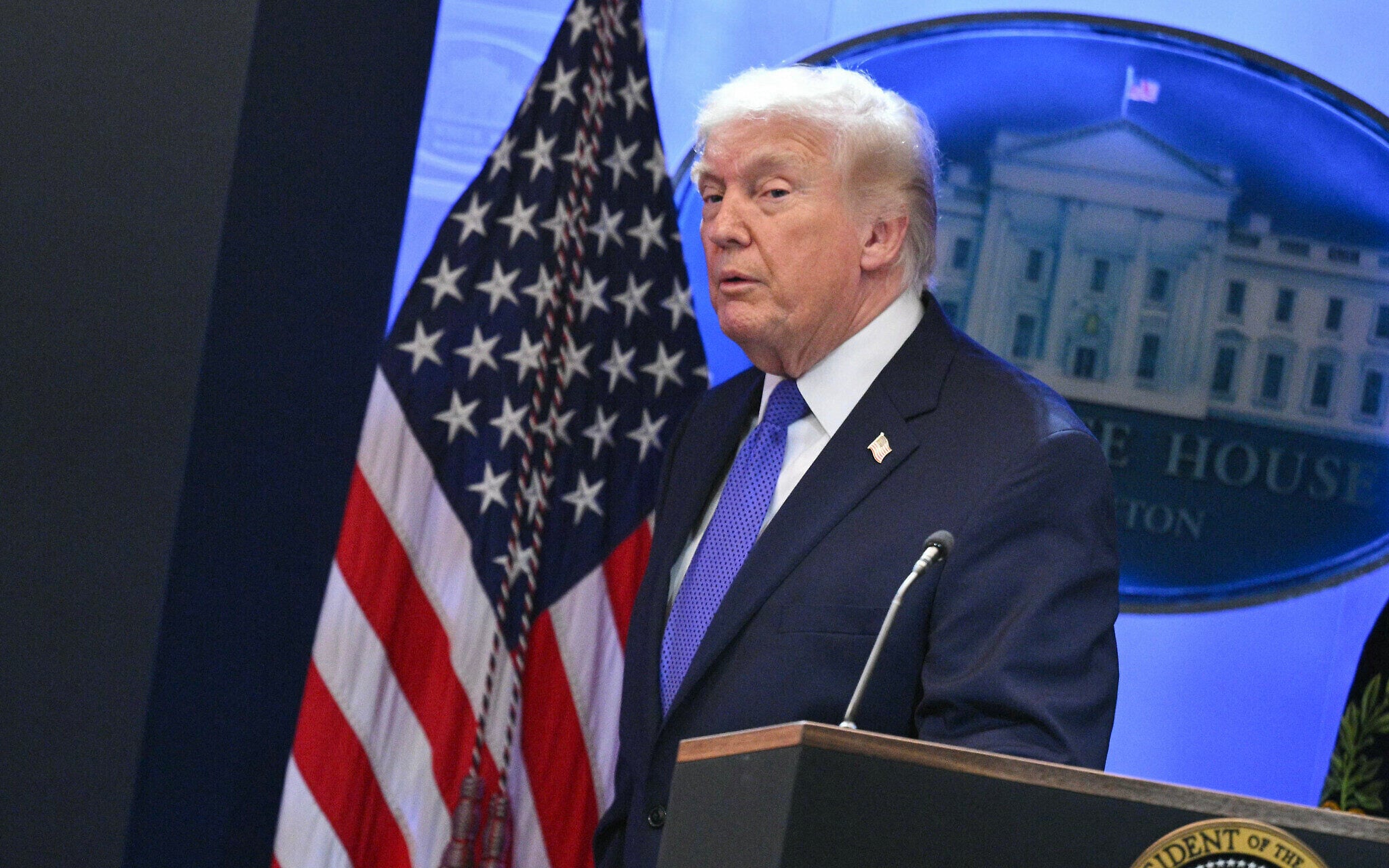 US President Donald Trump departs
after speaking during a press conference in the Brady Press Briefing
Room of the White House in Washington, DC, on February 20, 2026. (Mandel
NGAN / AFP)
US President Donald Trump departs
after speaking during a press conference in the Brady Press Briefing
Room of the White House in Washington, DC, on February 20, 2026. (Mandel
NGAN / AFP)
“Thirty-two thousand killed”
After the US and Israel bombed Iran’s nuclear facilities and some military sites last June, Trump again began threatening strikes in January as Tehran crushed widespread protests with deadly force.
Referring to the crackdown on Friday, Trump said there was a difference between the people of Iran and the country’s leadership. He asserted that “32,000 people were killed over a relatively short period of time,” figures that could not immediately be verified.
Time Magazine and opposition outlet Iran International have reported such numbers, citing information from officials in the Islamic Republic. The US-based group HRANA, which monitors the human rights situation in Iran, has so far recorded 7,114 verified deaths and says it has another 11,700 under review.
“It’s a very, very, very sad situation,” Trump said, adding that his threats to strike Iran had led the leadership to abandon plans for mass hangings weeks ago.
“They were going to hang 837 people. And I gave them the word, if you hang one person, even one person, that you’re going to be hit right then and there,” he said.
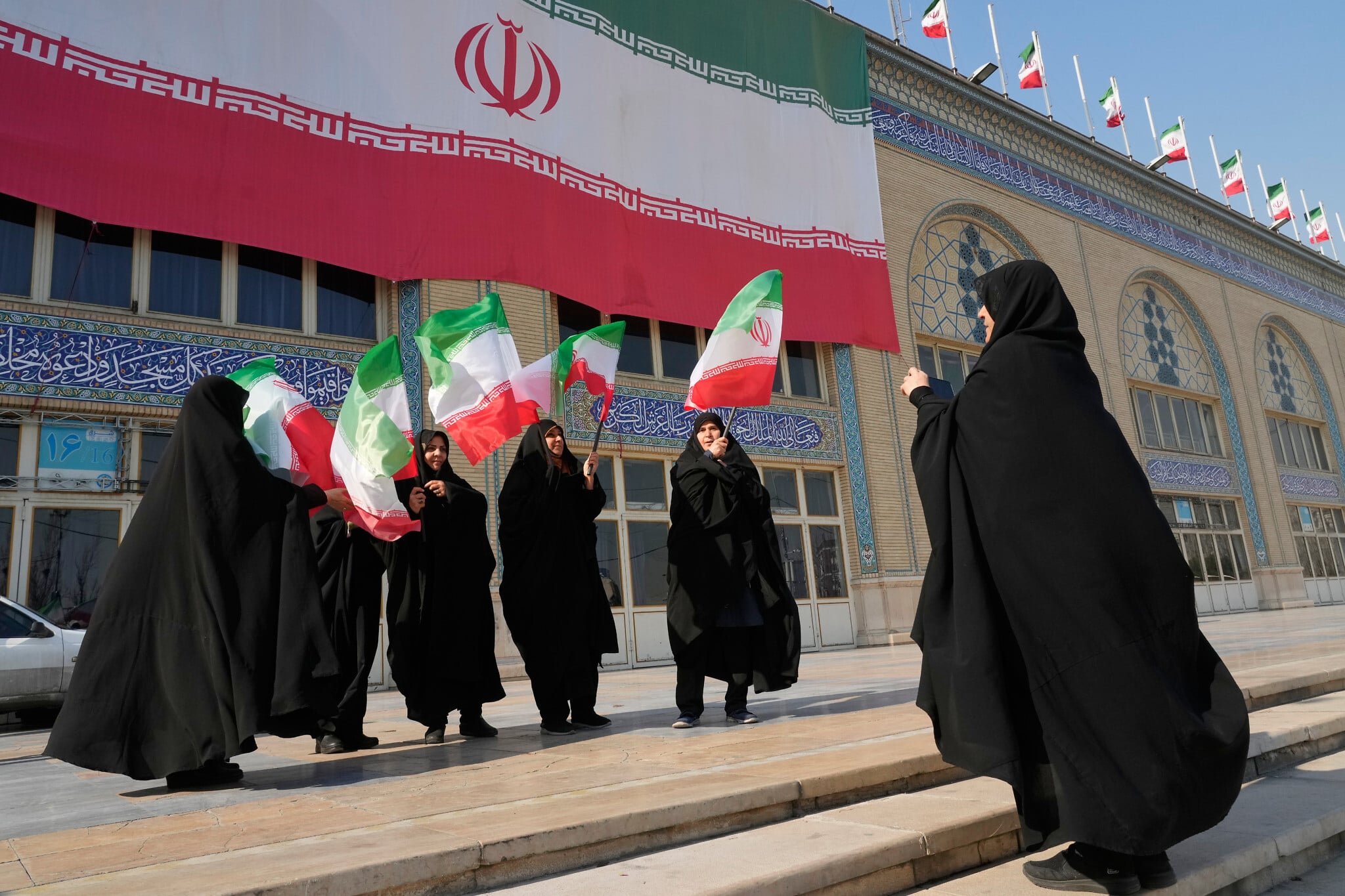 Women with Iranian flags take a
group photo during a state-organized memorial ceremony for those killed
during January’s anti-government protests, at the Imam Khomeini Grand
Mosque in Tehran, Iran, February 17, 2026. (AP/Vahid Salemi)
Women with Iranian flags take a
group photo during a state-organized memorial ceremony for those killed
during January’s anti-government protests, at the Imam Khomeini Grand
Mosque in Tehran, Iran, February 17, 2026. (AP/Vahid Salemi)
Hours after Trump’s statements on the death toll, Araghchi said that the Iranian government has already published a “comprehensive list” of all 3,117 killed in the unrest.
“If anyone doubts the accuracy of our data, please speak with evidence,” he posted on X.
Token enrichment
On Friday, a senior US official was quoted by Axios as saying the Trump administration was open to considering a proposal that would allow Iran to retain a “token” nuclear enrichment capability if Tehran’s route to an atomic bomb is fully sealed off.
The news site said that while there could be a small opening for a deal, US officials say the proposal that Iran is expected to submit in the coming days must clear a very high bar to win over skeptics in the administration and the Middle East.
“President Trump will be ready to accept a deal that would be substantive and that he can sell politically at home. If the Iranians want to prevent an attack, they should give us an offer we can’t refuse. The Iranians keep missing the window. If they play games, there won’t be a lot of patience,” the senior US official says.
Another senior Trump adviser quoted in the report stressed that the US president “hasn’t decided to strike yet. I know that because we haven’t struck. He might never do it. He might wake up tomorrow and say, ‘That’s it.'”
According to the adviser, Trump has been presented with a range of military options for Iran.
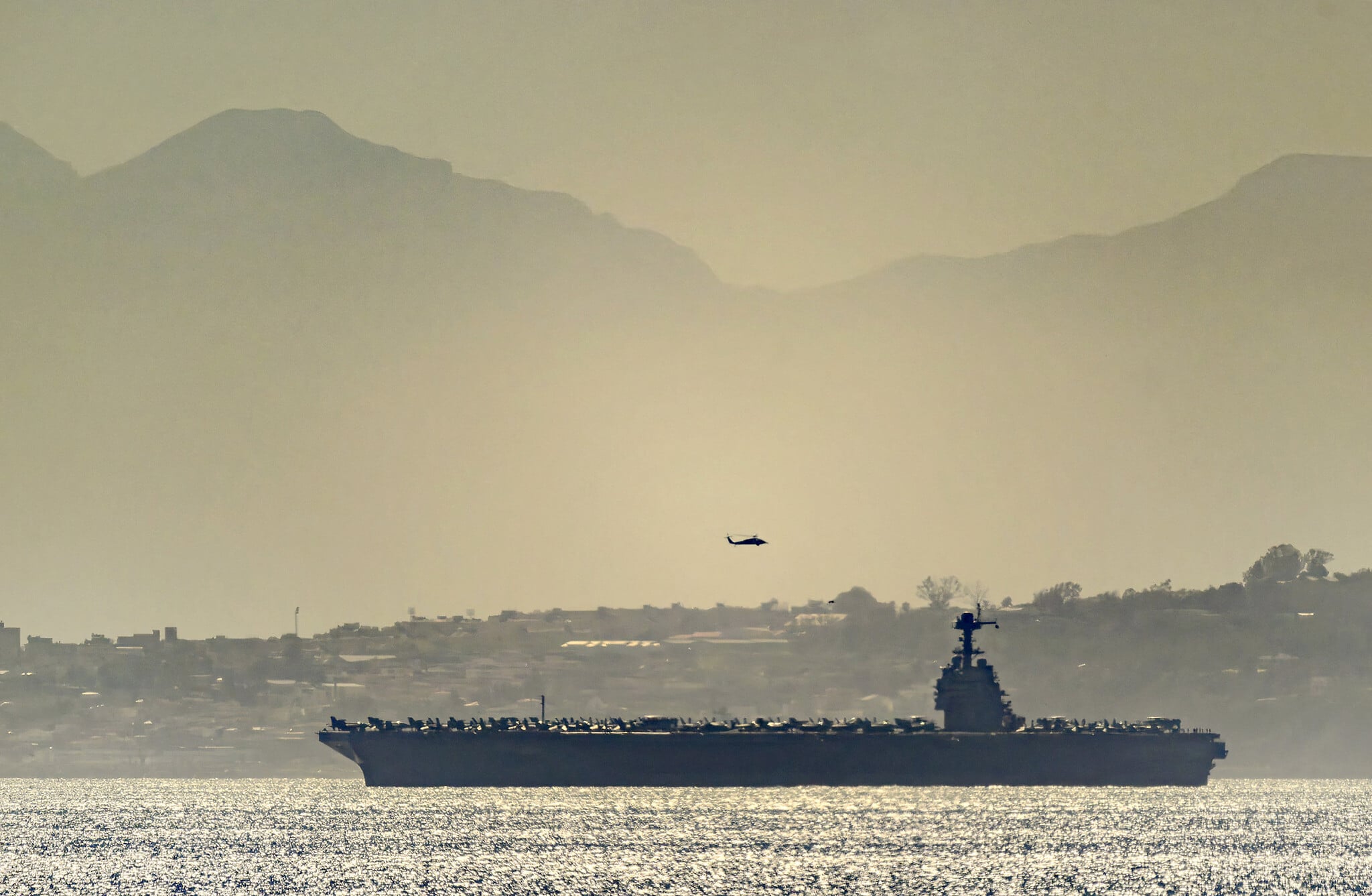 This handout image, released and
taken by David Parody on February 20, 2026, shows the US aircraft
carrier USS Gerald Ford heading through the Strait of Gibraltar as seen
from Gibraltar. (David PARODY / DM Parody / AFP)
This handout image, released and
taken by David Parody on February 20, 2026, shows the US aircraft
carrier USS Gerald Ford heading through the Strait of Gibraltar as seen
from Gibraltar. (David PARODY / DM Parody / AFP)
“They have something for every scenario. One scenario takes out the ayatollah and his son and the mullahs,” the adviser elaborated, referring to Supreme Leader Ali Khamenei and his son Mojtaba. “What the president chooses no one knows. I don’t think he knows.”
Another adviser said, “Trump is keeping his options open. He could decide on an attack at any moment.”
A senior US official flatly denied an unsourced report in Iran International claiming that Iran had presented a proposal during the latest round of nuclear talks in which it agreed to halt nuclear enrichment for three years and commit to not using its ballistic missiles to attack Israel.
Asked to confirm the report, the senior US official called it “completely false.”
Congressional involvement
The US Congress could vote as soon as next week on whether to block Trump’s ability to strike Iran without lawmakers’ approval.
Members of Congress, including a few of Trump’s fellow Republicans as well as Democrats, have tried — and failed — repeatedly to pass resolutions that would bar Trump from military action against foreign governments without lawmakers’ approval.
The US Constitution grants Congress, not the president, the power to send US troops to war, except for limited strikes for national security reasons. Reuters reported last week that the military is preparing for the possibility of sustained, weeks-long operations if Trump orders an attack.
Trump’s Republicans hold slim majorities in both the Senate and House and have blocked the resolutions, arguing that Congress should not restrict Trump’s national security powers.
Democratic Senator Tim Kaine of Virginia and Republican Senator Rand Paul of Kentucky filed a Senate resolution late last month to block hostilities against Iran unless explicitly authorized by a congressional declaration of war.
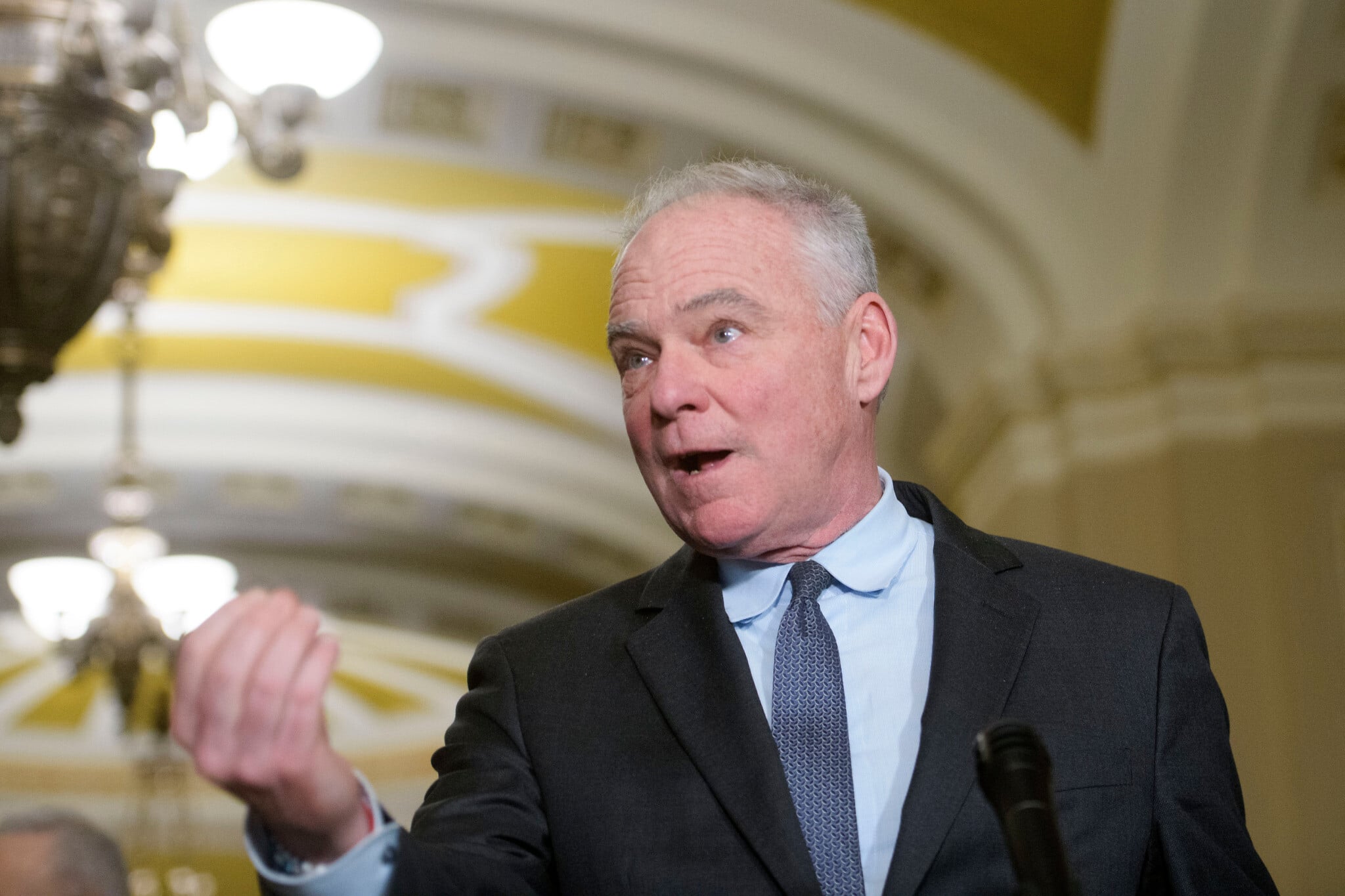 Sen. Tim Kaine speaks during the
Senate Democrat policy luncheon news conference at the Capitol, Tuesday,
Feb. 10, 2026, in Washington. (AP Photo/Rod Lamkey, Jr.)
Sen. Tim Kaine speaks during the
Senate Democrat policy luncheon news conference at the Capitol, Tuesday,
Feb. 10, 2026, in Washington. (AP Photo/Rod Lamkey, Jr.)
“If some of my colleagues support war, then they should have the guts to vote for the war, and to be held accountable by their constituents, rather than hiding under their desks,” Kaine said in a statement.
An aide to Kaine said there was no timetable yet as to when the Senate might take up the resolution.
In the House of Representatives, Republican Thomas Massie of Kentucky and Democrat Ro Khanna of California said they planned to force a vote on a similar resolution next week.
“Trump officials say there’s a 90% chance of strikes on Iran. He can’t without Congress,” Khanna said in a post on X.
The New York Times reported that hundreds of US troops had been evacuated from Al Udeid base in Qatar, citing unnamed Pentagon officials.
Troops have also been evacuated from bases in Bahrain that house the Navy’s 5th Fleet, The Times said, adding that there were no longer any American troops at bases in Iraq, Syria, Kuwait, Saudi Arabia, Jordan and the United Arab Emirates.
Shortly after the story was published, however, Fox News said it was false, citing an unnamed, well-placed US official. News Nation also said CENTCOM flatly denied the report.
The move would be seen as a precautionary step ahead of a potential US strike on Iran, as Tehran is likely to retaliate to such an attack by targeting US personnel in the region.
The endgame
Araghchi gave no specific timing as to when Iranians would get their counterproposal to the US, but said he believed a diplomatic deal was within reach and could be achieved “in a very short period of time.”
“What we are now talking about is how to make sure that Iran’s nuclear program, including enrichment, is peaceful and would remain peaceful forever,” he said.
He added that technical and political “confidence-building measures” would be enacted to ensure the program would remain peaceful in exchange for action on sanctions, but he gave no further details.
“The president has been clear that Iran cannot have nuclear weapons or the capacity to build them, and that they cannot enrich uranium,” the White House said when asked about Araghchi’s comments.
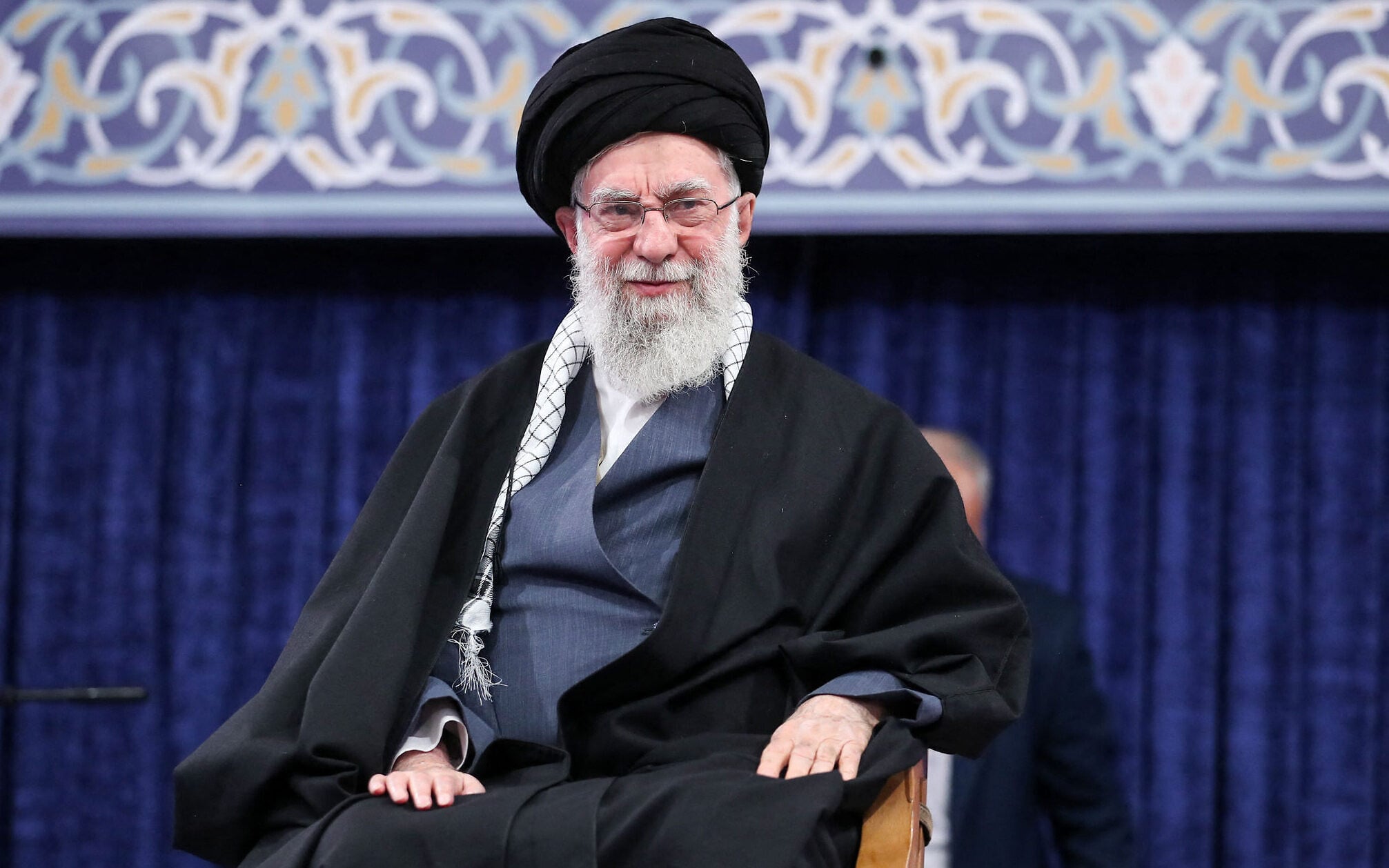 This handout picture provided by
the office of Iran’s Supreme Leader Ayatollah Ali Khamenei shows him
during an address in Tehran on February 17, 2026. (Handout / KHAMENEI.IR
/ AFP)
This handout picture provided by
the office of Iran’s Supreme Leader Ayatollah Ali Khamenei shows him
during an address in Tehran on February 17, 2026. (Handout / KHAMENEI.IR
/ AFP)
European and regional officials believe the scale of the US deployment to the region would enable Washington to launch strikes on Iran while simultaneously defending its military bases, allies and Israel.
The core US demand remains unchanged: no uranium enrichment on Iranian soil. Iran, for its part, says it must keep its nuclear capability and refuses to discuss its ballistic missiles. It denies planning to build a nuclear weapons arsenal.
If talks fail, defense analyst David Des Roches said, US activity in the Gulf already signals how any strike would begin: blind Iran’s air defence and then hit the Revolutionary Guards Navy, the force behind years of tanker attacks and threats to close the Strait of Hormuz, the route for a fifth of global oil.
But some Arab and European officials say they are unsure what Trump’s endgame is, and European governments want the US to spell out what strikes would be meant to achieve — to degrade Iran’s nuclear and missile capabilities, deter escalation, or pursue something more ambitious such as “regime change.”
Some regional and European officials question whether military action can alter the trajectory of Iran’s ruling establishment, led by Khamenei and protected by the powerful Islamic Revolutionary Guards Corps.
Some say that, with no obvious alternative political force in Iran and the leadership’s resilience largely intact, it is perilous to assume strikes could trigger regime change.
Military action may be easier to start than to control, and much harder to translate into a strategic outcome, they say.