Millions of Iranians perform Eid prayers despite US-Israeli war
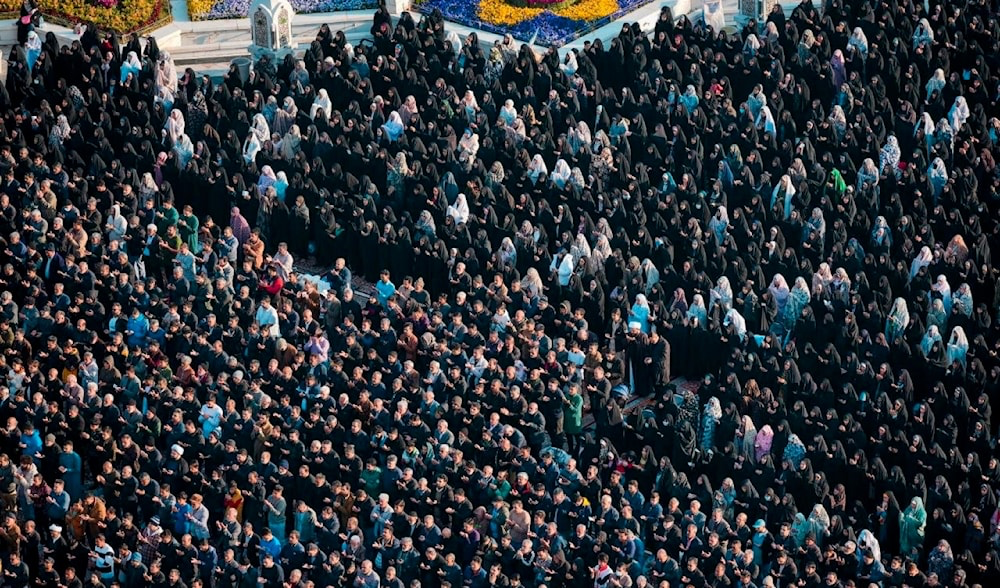
Millions of Iranians across the country attended Eid al-Fitr prayers on Saturday, marking the first time the celebrations took place without the presence of the late Leader, Martyr Sayyed Ali Khamenei, who had led the prayers for decades.
According to Mehr News Agency, the main prayer was held at 8:00 AM at the Imam Khomeini Mosalla in the capital, with simultaneous prayers taking place in cities and towns nationwide.
Mosques and prayer grounds opened their doors to worshipers starting 6:30 AM, with authorities implementing arrangements to manage the flow of attendees. At the Imam Khomeini Mosalla in Tehran, Sheikh Ali Akbari, head of Iran’s Friday Prayer Imams’ Policy Council, led the prayer.
Despite the ongoing US-Israeli war on Iran, outdoor squares surrounding the prayer sites were filled with worshipers.
Al Mayadeen’s correspondent in Tehran noted that the Iranian turnout, in the absence of their leader and amid wartime conditions, underscores the population’s determination that Iran's adversaries would not achieve their objectives.
Meanwhile, the capital also witnessed the funeral of Martyr Ali Mohammad Naeini, spokesperson for the Islamic Revolution Guard Corps (IRGC), with attendees performing the Eid prayer followed by the funeral prayer at the Mosalla.
Following the Eid prayers, large-scale demonstrations took place across Iran, expressing support for the government and denouncing the ongoing US-Israeli aggression.
The voice of the IRGC martyred
The Islamic Revolution Guard Corps (IRGC) mourned on Friday Brigadier General Ali Mohammad Naeini, the IRGC’s Public Relations deputy and spokesperson, martyred in a US-Israeli attack in the early hours of the last day of Ramadan.
The IRGC sent condolences to Iran’s Leader, Naeini’s family, fellow officers, media personnel, and the people of Kashan, describing his martyrdom as a “proud martyrdom in the fields of culture and media.”
The statement noted Naeini’s contributions to preserving the Islamic Revolution throughout his 40 years of service, particularly during the eight-year Iran-Iraq war, where he played a key role in documenting and narrating the conflict. In recent years, he served as the IRGC’s spokesperson, notably during Operations True Promise 1 through 4.
The IRGC emphasized Naeini’s transformative ideas and strategies in “soft warfare”, calling them guiding principles for personnel engaged in cognitive operations against adversaries.
The statement praised his bravery and dedication, pledging to continue the path of steadfastness and hope exemplified by him and his martyred brother, while reaffirming the IRGC’s commitment to maintaining its spiritual and soft-power influence and ensuring the corps’ voice remains strong among believers.