War-Weary Trump Balks Again, as Advisors Fear Conflict is "Consuming His Presidency"
Reports continue to circulate that Trump is flabbergasted and losing patience behind the scenes, as the Iran war drags on and slowly exhausts the US military’s clay colossus:
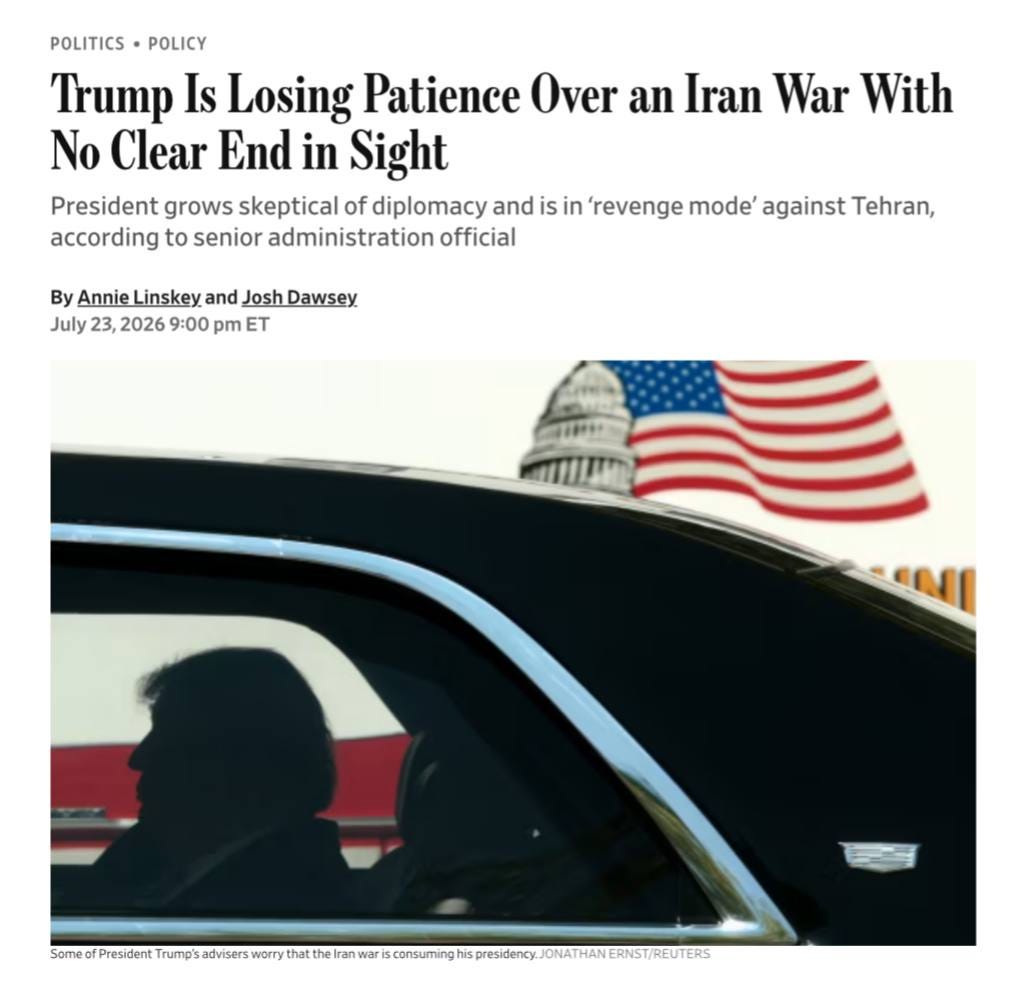
Trump’s advisors reportedly now fear that this war is “consuming his presidency”:
As the war in Iran enters its fifth month, Trump is increasingly frustrated that a conflict he once thought would be over in a matter of weeks has dragged on with no end in sight, administration officials and others close to the president said.
Some of Trump’s advisers now worry that the war—which has resulted in higher prices, falling approval ratings and the deaths of more than a dozen U.S. servicemembers—is consuming his presidency and damaging Republicans’ already dim prospects in the coming midterm elections.
The truth is, by consuming his presidency, the war is precisely doing its job. Part of the major reason behind the war was to divert from the Epstein scandal which itself threatened to consume Trump’s presidency. As such, by laying a blanket over the fire, the war was able to snuff it out, yet now itself threatens to suffocate the remainder of Trump’s career and political legacy.
The article notes that even Trump’s top aides are now in fear for their life due to CIA intelligence that Iran is eyeing them for liquidation:
The war has taken a personal toll on the president and some of his senior advisers. Some top aides have been advised by intelligence agencies that the Iranians are seeking to kill them and have been told to stop taking car services, according to people familiar with the matter.
The most eye-opening part of the article reveals Trump’s frustrations at not being able to deal with Iran’s leadership because he believes everytime the US has made headway in negotiations, Iran resorts to striking:
As the war lingers, Trump has grown less confident that the U.S. and Iran can find a diplomatic solution to the conflict. He has complained to advisers that it is difficult to know who speaks for top leadership, and every time the U.S. thinks it has made progress at the negotiating table, Iran continues its attacks, according to people familiar with the matter.
This, more than anything else, testifies to the deeply-ingrained nature of the imperial hubris that has taken over the heart and soul of American foreign policy. The arrant exceptionalism has grown so all-pervasive, that Trump simply operates from the base denominator that agreements made by the US need only be honored by the opposing side. The US itself is exempt, held to no standard because it’s assumed as a given that as global hegemon, the US’s side of the parley is allowed to be ‘fluid’.
It is perhaps another aspect of the all-pervasive privilège exorbitant.

Everyone knows it is in fact the US that broke and dishonored all agreements, or simply ignored contingencies such as the Israel-Lebanon inclusion, amongst other things.
Yesterday turned out to be the first day that the US had failed to attack Iran, amidst concerns that the US is simply running out of stocks and is unable to maintain the high-intensity pace of daily strikes.

This has been corroborated by CBS, which quoted anonymous defense officials as admitting the US simply can’t sustain this rate of expenditures:
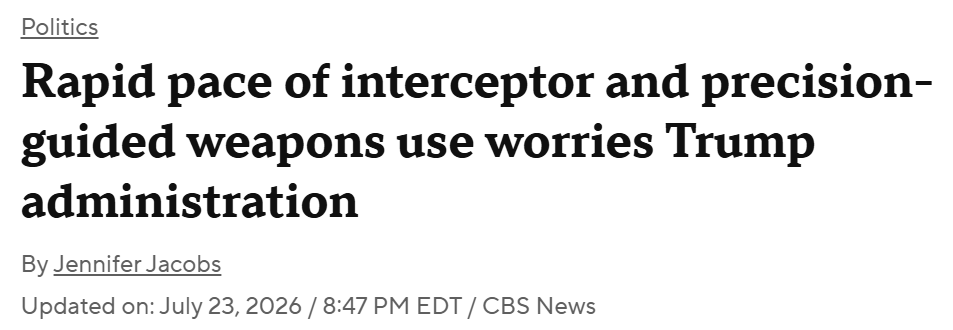
The U.S. officials, who spoke to CBS News on condition of anonymity given the sensitivity of the topic, said the U.S. cannot sustain the rate at which it expended precision munitions early in the campaign against Iran.
Remember when jeers rang out about Iran’s “diminishing” rate of ballistic missile launches, while Hegseth and co. bragged that the US was still sending up hundreds of sorties per day in the opening days of the war? It seems the clay colossus has now gotten its feet truly mired, because the gasbag of the US military “juggernaut” has deflated to a pitiful whimper.
The Telegraph went even further:

Read the jaw-dropping rumors below:
But rumours are spreading across the administration that the Pentagon is concealing a shortage of interceptor missiles, which are needed to resume the war. There are also suggestions that the White House does not want to know about the scale of the shortfall.
Sharing “bad news, or realistic news, doesn’t seem to end well for anybody”, an insider told The Telegraph. Another said a “culture of silence” was causing problems for Pete Hegseth, the US defence secretary.
As the CBS piece noted, the US has been forced to increasingly use JDAM glide-bombs with much more limited ranges because it has expended most of its advanced JASSM and Tomahawk cruise missiles:
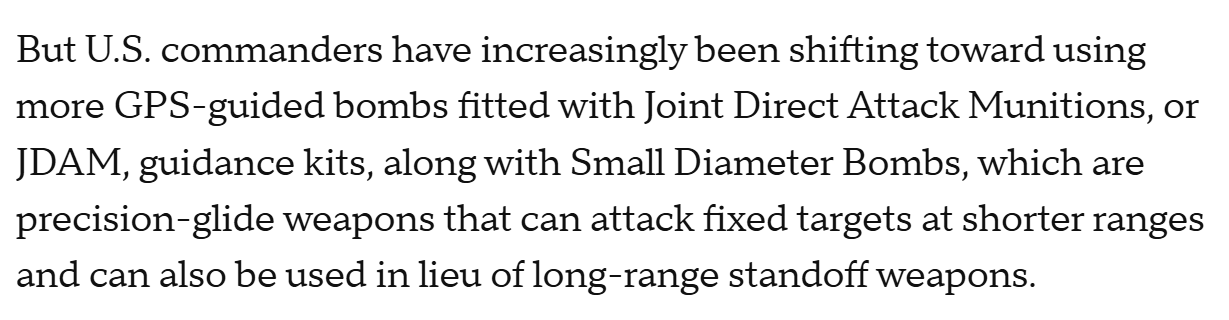
This puts JDAM carriers at growing risk because they have to get close to their targets, not to mention launch the munitions from an extremely high altitude to ensure the gliding distance can be reached, which puts them in further danger of being seen by long range Iranian radars and shot down.
The compounding effect here is that Iran is then able to shift its most important assets deeper into the country where US precision long-range weaponry can no longer consistently reach. The concluding effect is that the US is slowly sinking into an entirely untenable quandary wherein its own best assets are exposed for Iran to hit, while Iran’s are safe from US strikes.
Case in point:
One of the strikes announced overnight by CENTCOM, during the 12th consecutive night of operations against Iran, targeted a speedboat on the island of Qeshm, Iran GEO: 26°41'07.00"N 55°55'23.14"E @GeoConfirmed@FaytuksNetwork Geolocated by @LayBay_ish
6:41 AM · Jul 23, 2026 · 57.5K Views
9 Replies · 12 Reposts · 104 Likes
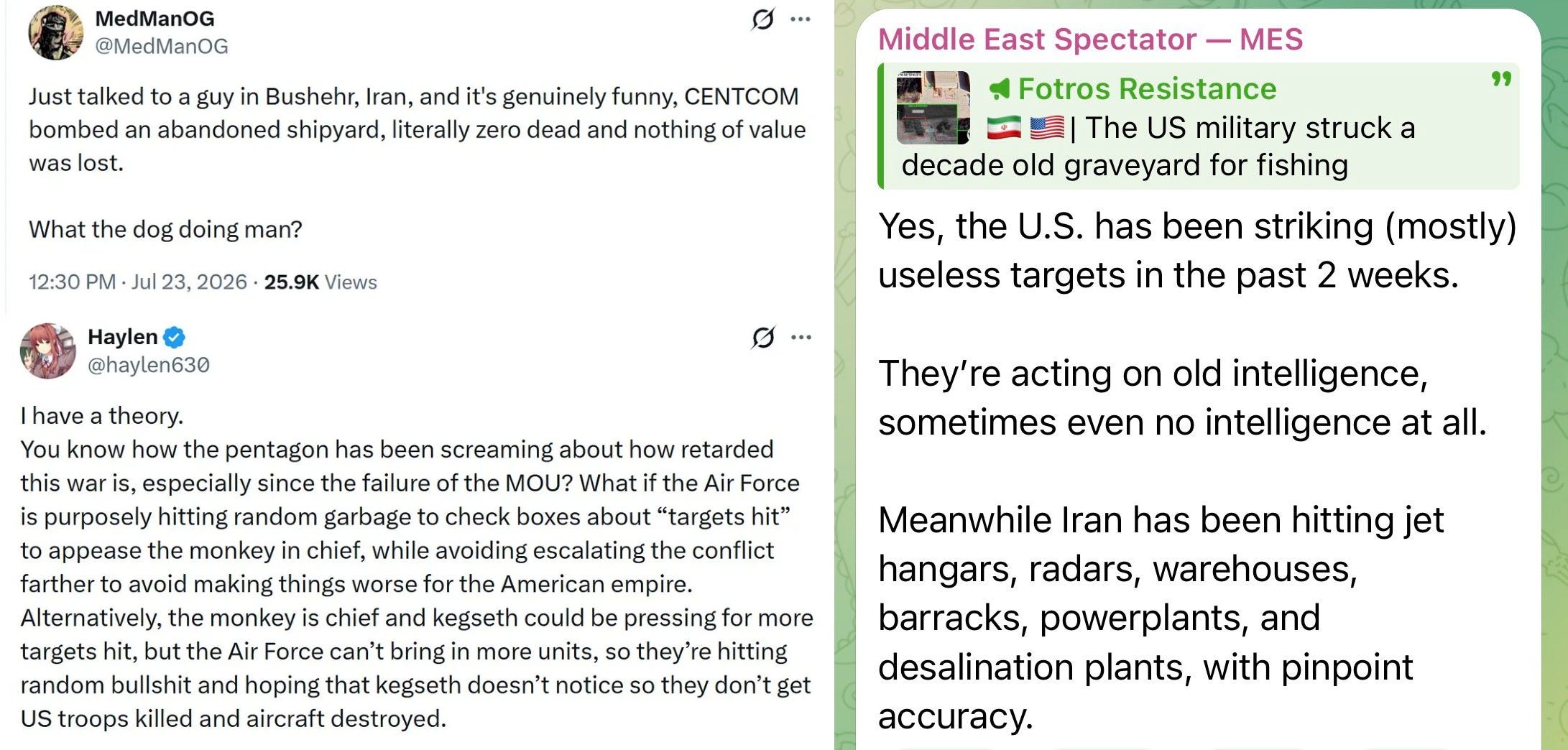
It is now becoming increasingly evident that the US is hitting empty targets in order to give the appearance of strength and initiative, when in reality Iran’s military apparatus is hardly even being attrited anymore:
Iran on the other hand continues to completely wipe away the US’s most critical assets in the region, with more major long-range radars and bases having been hit in the past week:
Imagine a radar station with a FPS-117 long-range radar, right next to Iran's borders, remaining intact after ~ 4 months... just to be destroyed now... Iran's targeting behavior remains... mystic...
5:18 AM · Jul 22, 2026 · 128K Views
59 Replies · 298 Reposts · 2.66K Likes
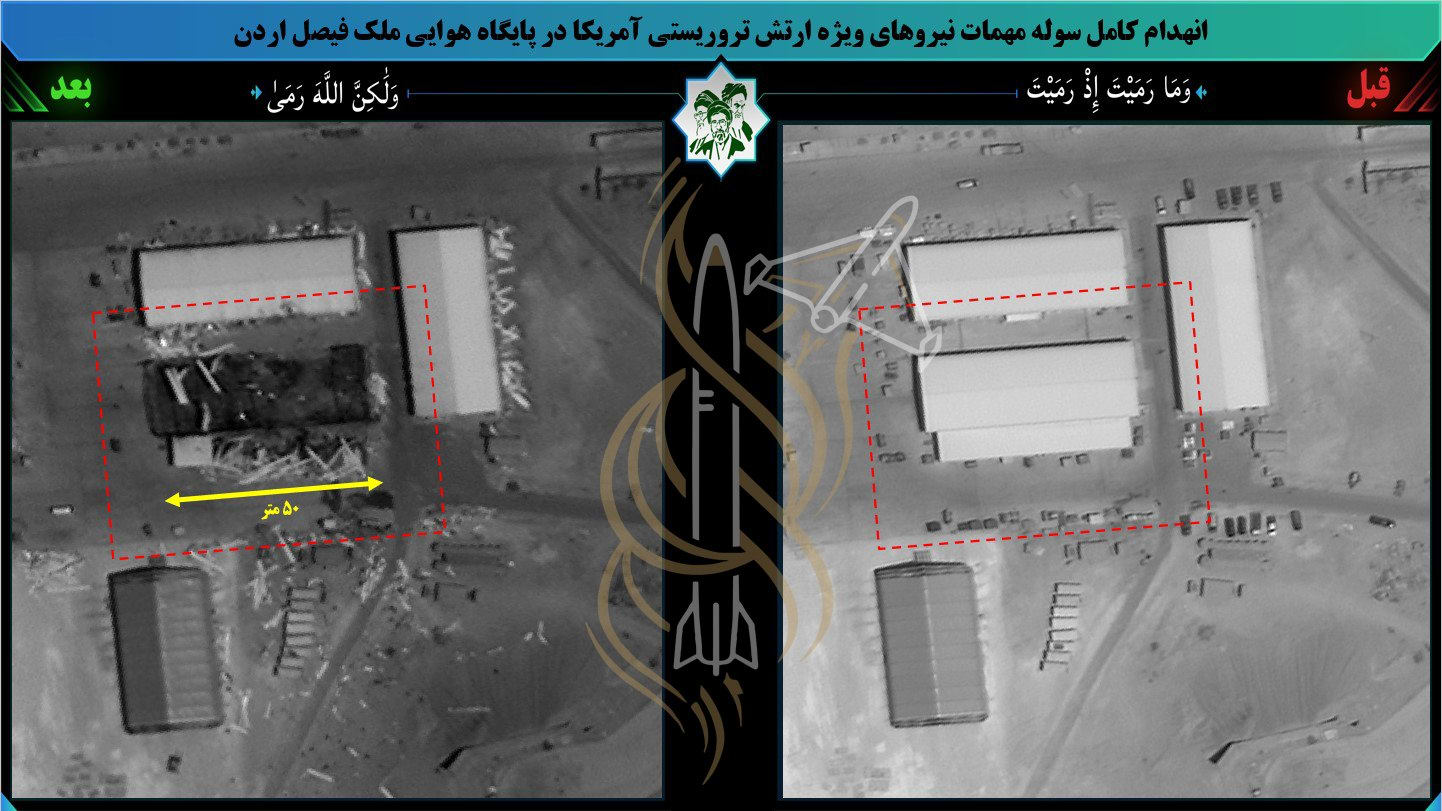
Satellite images show the complete destruction by Iranian missiles of a hangar containing ammunition for special operations units of the U.S. Army at King Faisal Air Base in Jordan.
Meanwhile, Iran’s ability to rebuild from its own putative losses continues to shock the Western establishment:
From the above:
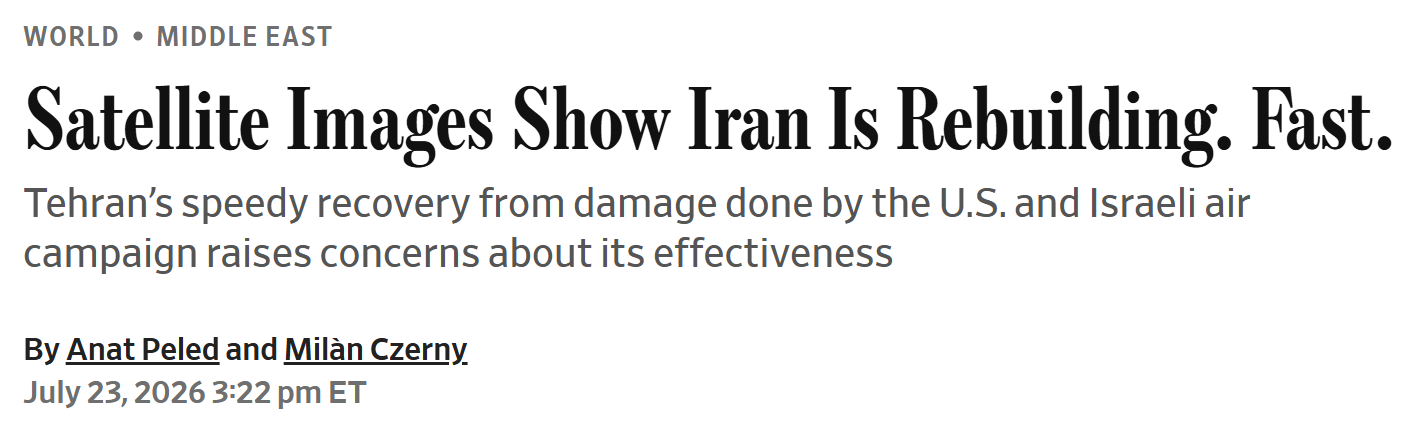
Iran has quickly rebuilt infrastructure damaged during the U.S. and Israeli bombing campaign over recent months, from missile bases nestled deep inside mountains to bridges, ports and production facilities, according to Israeli and Western officials and a review of satellite imagery.
The faster-than-expected progress worries some Israeli officials. It helps explain Iran’s continued resilience despite an air campaign that involved more than 20,000 strikes at the height of the war and that continues along Iran’s coast in an effort to break Tehran’s grip on the Strait of Hormuz.
As a slight aside, note once more the infamous MSM “discovery lag”: virtually everything us independent analysts have reported for months invariably ends up being “breaking news” when the effort to upkeep the propaganda info-structure begins to outweigh its usefulness.
From virtually day one of this war, we’ve reported here that:
The US was not hitting any military targets of note, as Iran had dispersed everything in preparation for the war.
Iran was rebuilding all the civilian infrastructure the US was hitting with incredible speed.
US precision munition stocks would not be able to last until some hoped-for “victory” could materialize.
Now, months later, all of the above are begrudgingly admitted to as some kind of breaking bombshell.
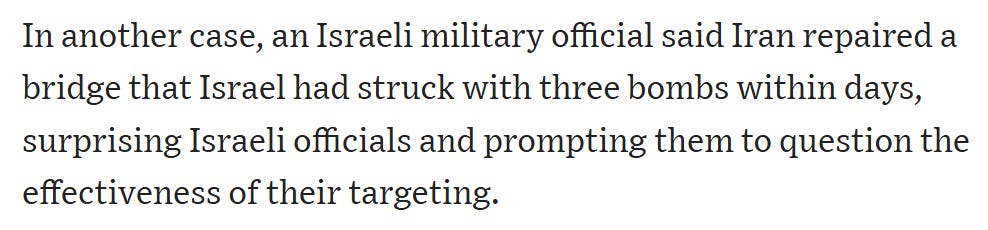
“They refilled their stockpiles,” he said. “They have very impressive industrialization and reconstruction capabilities.”
No, really? It’s a country of 90 million, for heaven’s sake—with, at least according to one source, the fourth highest IQ of any nation on earth.
Outlets continue reporting US’s ongoing failure to stop Iran from controlling Hormuz:
HFI Research@HFI_Research
Insanity. FT: Staying close to the Omani coast, the vessels — Kavomaleas and Acheloos — attempted the crossing on Sunday night, the only two ships to do so, according to people with knowledge of the situation. Despite reinforced US air support and days of heavy attacks on
1:07 AM · Jul 23, 2026 · 72K Views
4 Replies · 140 Reposts · 680 Likes
FT describes how two ships attempted to sneak through Omani waters, presumably under the “brilliant” guidance of US officials. But even under cover of the formidable US aerial assets screening and defending them, the ships were lit up like a Yalda Night tree by Iranian missiles:
Staying close to the Omani coast, the vessels — Kavomaleas and Acheloos — attempted the crossing on Sunday night, the only two ships to do so, according to people with knowledge of the situation.
Despite reinforced US air support and days of heavy attacks on military targets along the coast, both were hit and damaged by Iranian missiles.
“Hitting the Dynacom vessels was a game-changer, and even the vessel owners who are prepared to take risks will need more than headlines about peace to come back in,” said Amrita Sen, founder of consultancy Energy Aspects.
All the while, the US economy bleeds out:
Charlie Bilello@charliebilello
The US Strategic Petroleum Reserve is now at its lowest level since March 1983. Over the past 5 years we've seen a drawdown of 310 million barrels, a 50% decline.
12:59 PM · Jul 25, 2026 · 14.5K Views
9 Replies · 13 Reposts · 66 Likes
Granted, 311 million barrels is still a lot—but it amounts to only about 15 days or so of usage for the country.
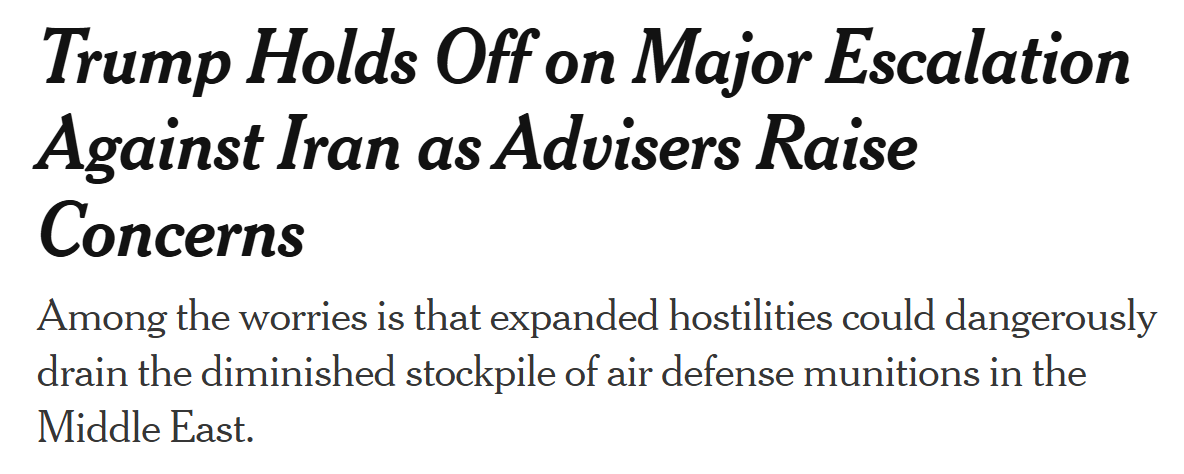
Now NYT reports that Trump has, for now, decided against launching a “much larger” operation against Iran.
The stated reason is an obvious one:
Among the worries is that expanded hostilities could dangerously drain the diminished stockpile of air defense munitions in the Middle East.
Humorously enough, in the above piece officials are quoted as opining that Trump’s bombing of Iran is actually helping fortify Iran’s so-called “regime”:
The official said the strikes have the opposite effect of what is intended, keeping Iran cohesive and allowing Iranian leaders to focus attention on an external threat.
With the Yemenis now edging to enter the war as well, US air defense missile stocks could plunge to catastrophic levels given that US would have to supply everyone in the region to both ward off Ansar Allah as well as Iranian attacks.
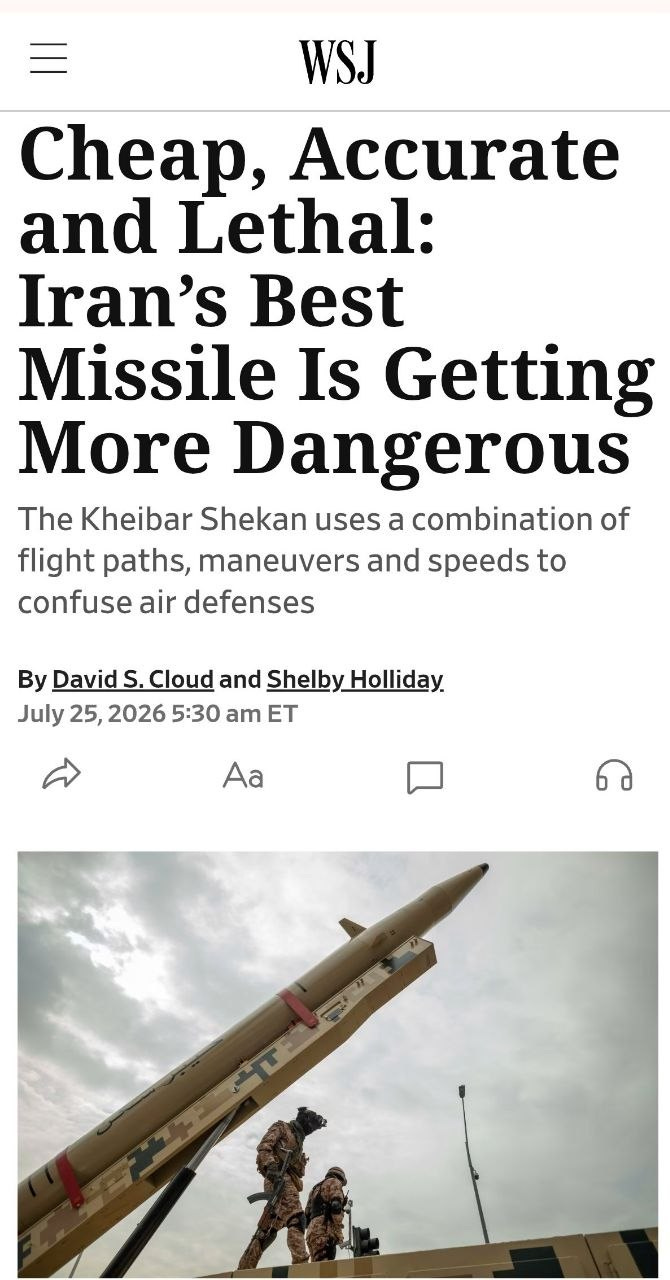
As an addendum to the last paid piece which covered the West’s astonishment at the evolution of Iran’s firepower, we have WSJ covering one of Iran’s most successful missiles, the Kheibar Shekan:
They explain how Iran’s evolving tactics have kept the US on the backfoot and unable to deal with the onslaught:
The Kheibar Shekan missile is the workhorse of Tehran’s arsenal—a cheap, mobile, accurate weapon with a range of at least 900 miles. And recently, Iran has been using it in complex attacks, proving itself to be an adaptable adversary for the U.S.
Since the fighting picked back up this month, Iran has been firing the Kheibar Shekan at American bases, U.S. officials said. It is using a combination of different flight paths, maneuvers and speeds to try to confuse U.S. defenses, they say.
Just like the Emad missile we covered in the paid piece, they write that the Kheibar can also be equipped with a MaRV that has its own propulsion, and thus can retain targeting ability and guidance through the final terminal arc:
In some variants of the missile, the nose section, which carries the explosive warhead and detaches during the final phase of flight, is equipped with a small engine that makes it capable of adjusting its direction as it nears its target at 6,000 miles an hour, according to analysts and officials.
They also indirectly confirm one of the ‘leaks’ from the paid piece. Recall this one, said to have been written by a US soldier with insider info at one of the US bases:

Now take in this corroborating bit from the WSJ piece:
Ballistic missiles travel into the upper atmosphere or space before plunging back down toward a target, but not all are capable of maneuvering. Military analysts who have studied the Kheibar Shekan said it can vary its trajectorymore than some other ballistic missiles in an attempt to make it harder to detect and destroy.
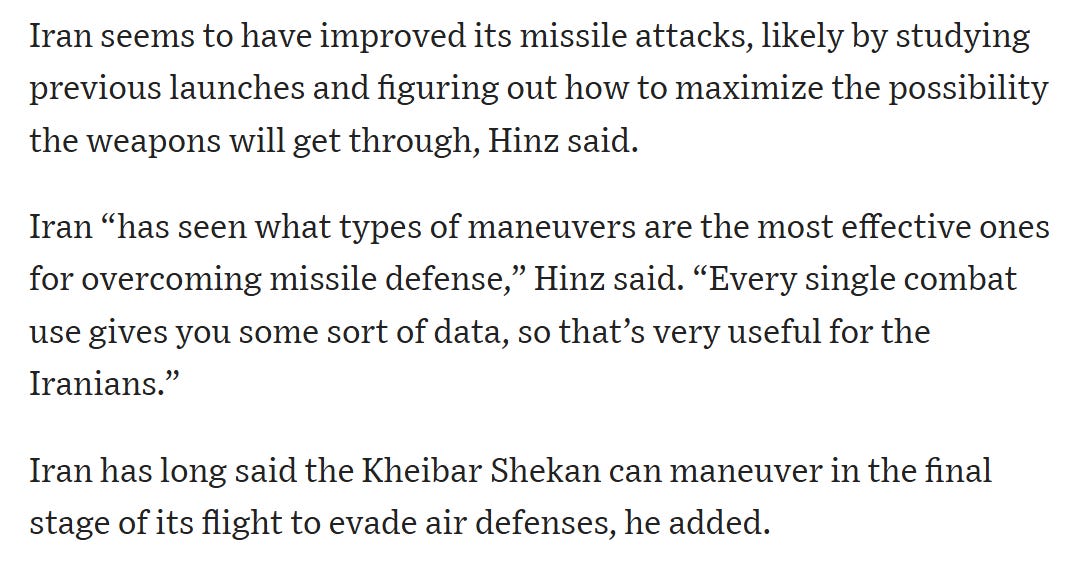
Judging by the above, seems like those Iranians are smarter than the US gave them credit for.
Not long after our paid piece, another bit of corroborating info was also published by Western outlets with new information indicating that Iran has been accurately striking secretive CIA facilities with such effective precision that experts had no choice but to conclude Russia was supplying the targeting:

One internal memo from a Western intelligence agency, described by an official in the region with access to the document, concluded Russia has likely played a role in targeting regional CIA facilities. The official discussed the memo on condition that its precise authorship not be disclosed.
The attack on the CIA station in Riyadh in particular allegedly used Russian-“enhanced” variants of the Shahed drone, the accuracy of which left officials scrambling for answers:
One of the aircraft blew a hole through a vulnerable part of the embassy's exterior and the second flew through the opening and detonated, they said.
One of the enhancements was the supply of Russian Kometa-M CRPA satellite navigation antenna-modules which we’ve covered here many times:
The two Western officials in the region said Russia has helped Iran improve its Shahed drones’ ability to reach targets, and said analysts suspected that Iran used these versions in its strike in Riyadh.
Russia, said a separate source, has helped Tehran improve the accuracy of its Shahed-136s by supplying a satellite navigation system — the Kometa-M — that experts say is far more accurate and harder to jam than the one produced by Iran.
Well, if it’s the latest Kometa-M designs, the reason it’s far more accurate and harder to jam is because it jam-packs up to 16 or more such modules onto a single board, whereas earlier designs had as few as 2-4.
They state many of the CIA stations hit were “closely guarded secrets”, presumably implying that only Russia could have disclosed their coordinates:
CIA facilities overseas include the agency’s main offices in individual countries that traditionally are housed in embassies and are called stations. Additionally, the CIA maintains offices, safe houses, logistics hubs and sites involved in surveillance or other operations.
The locations of those sites are closely guarded secrets.
The sources declined to disclose the exact number or locations of CIA facilities hit by Iranian drones. One source put the number at “more than one and fewer than a dozen.” A second source said several facilities were hit.
Or maybe the West has again underestimated Iran’s indigenous intelligence capabilities.
After all, according to Trump’s latest bafflegab the “defeated” nation has been reduced to a dysfunctional satrapy ruled by a “gay dictator”:
One supposes, from this point, finishing them off should be easy then.