Who is the Houthi family leading the armed rebels in Yemen?
The Houthis have gone on the offensive again. So who is Abdul-Malik al-Houthi, the quiet man waging family war, and can the movement survive?
Sunday October 11 2026
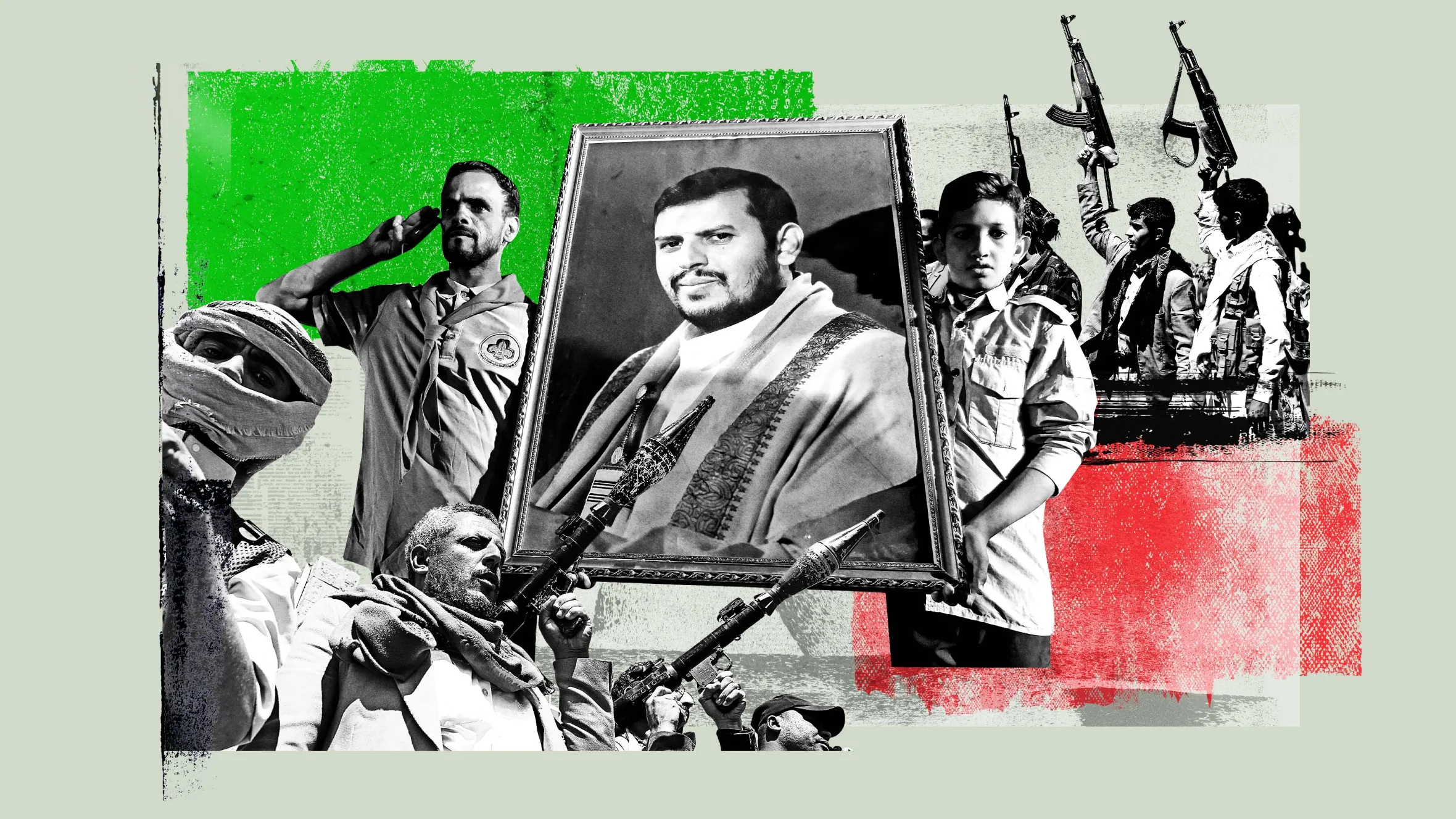
The man who had spent much of his adult life facing off against the Yemeni army looked as though he had just come from the barber. His hair was freshly trimmed, his traditional Yemeni clothes neat. In 2011, there was little to suggest that Abdul-Malik al-Houthi, the head of the Houthis who was then in his early thirties, commanded a rebellion that had survived six wars against the government.
“When I met Abdul Malik, he didn’t look like the head of a militia,” recalled Jamal Benomar, who had been the United Nations secretary-general’s special adviser on Yemen. “He looked more like a student in a traditional Islamic school. Even when I criticised him and his movement, he never interrupted me.”
Benomar had travelled to Saada, the Houthis’ stronghold in Yemen’s northern mountains, where villages of mud brick and stone built into the terraced hillsides bore the scars of years of bombardment. The young commander received him in a house bare of luxuries and scrupulously clean, listening patiently as the UN envoy challenged him over his movement’s conduct.
Far to the south, protesters were filling the capital, Sanaa’s, Change Square, demanding the fall of the president, Ali Abdullah Saleh, after 33 years in power. The Houthis had taken the provincial capital that March and the softly spoken man across from Benomar was already the movement’s most powerful figure.
Fifteen years on, the group he leads is firing missiles at Saudi airports and oil refineries, rattling oil prices and threatening one of the busiest shipping lanes on earth. A Houthi attack on the international aiport in the capital Riyadh on Saturday killed at least 12 people and injured more than 300, according to authorities in the country.
In September a lightning offensive swept down Yemen’s western coast and within days government forces had abandoned Mocha and the hills above the Bab el-Mandeb, the strait at the southern mouth of the Red Sea. Holding that coastline had been the proudest achievement of the Houthis’ enemies for almost a decade. Losing it in a week brought an Iranian ally to the edge of a second vital chokepoint after the Strait of Hormuz. Saudi-backed forces have since launched a counteroffensive and the uneasy calm that had held since a 2022 truce has collapsed.
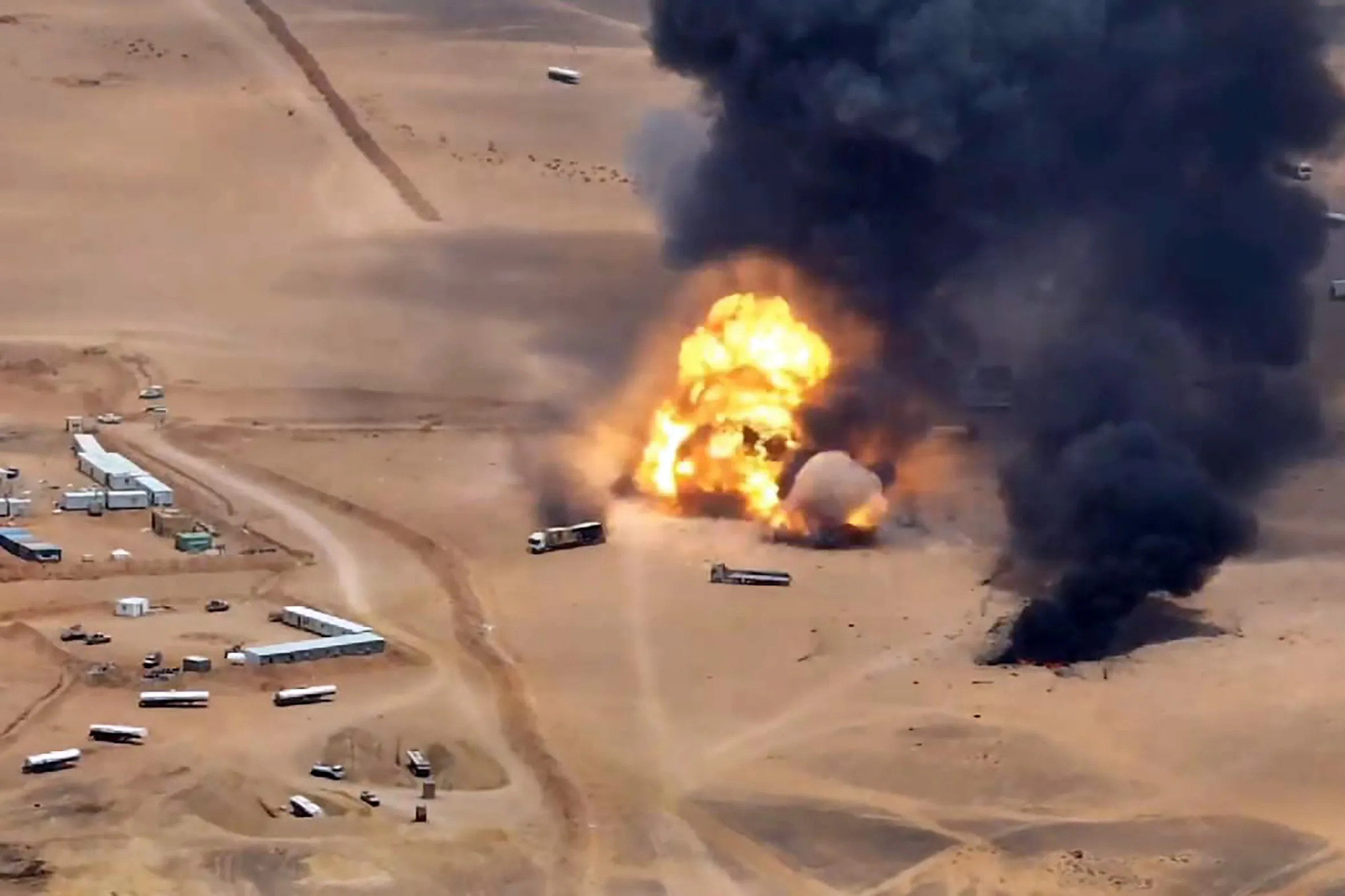 A strike on trucks said to be carrying military equipment from Saudi Arabia in the Yemeni province of Hadhramaut last monthHouthi Group press Service/UPI/Shutterstock
The Houthis, formally Ansar Allah, grew out of a religious revival among the Zaydis, a branch of Shia Islam rooted in Yemen’s northern highlands. In 2014 they seized Sanaa and within months had forced out the internationally recognised government, dragging what was already the Arab world’s poorest country into civil war and humanitarian catastrophe. Human rights groups have documented them jailing critics and recruiting child soldiers. The United States designates them a terrorist organisation. They belong to Iran’s “axis of resistance”, the network of armed allies, including Hezbollah and Hamas, that Tehran supplies with weapons, training and know-how. While Hamas and Hezbollah were battered in the wars that came after October 7, 2023, the Houthis have expanded their influence.
“They went from a bunch of young guys, many of them practically kids, carrying Kalashnikovs and walking around in sandals, to people using technology to make missiles that can reach Saudi Arabia and even Israel,” Benomar said. Yet he resists calling them proxies, rather seeing a Yemeni movement whose interests are “currently clearly aligned with Iran”. Fatima Abo Alasrar, an independent Yemen analyst and founder of The Ideology Machine, sees the latest escalation as “an Iranian decision to disrupt Bab el-Mandeb, just like they disrupted Hormuz”.
Their enemies still call them by their family name and it fits. A father laid down the faith, one son built the movement and another inherited it and today brothers, cousins, an uncle and sons-in-law fill its senior posts. “The movement was the project of the Houthi family from day one,” Maysaa Shuja al-Deen, a senior researcher at the Sanaa Centre for Strategic Studies, said. Farea al-Muslimi, a research fellow at Chatham House, put it more bluntly: “Right now the Houthi family is the most powerful family in Yemen, not just in northern Yemen.”
The father and founder
Badreddin al-Houthi was a Zaydi scholar who claimed descent from the Prophet Muhammad and, according to Shuja al-Deen, admired Iran’s 1979 revolution. By taking four wives and fathering more than a dozen sons, he formed deep political alliances and bound his family into the most powerful tribes of Saada. His eldest son, Hussein, a preacher and former member of parliament, emerged as the leading figure in the Zaydi revival, steering its youth study circles towards confrontation with the state. Government forces killed him in 2004, in the first of the Saada wars and his portrait is still carried through the streets at Houthi parades.
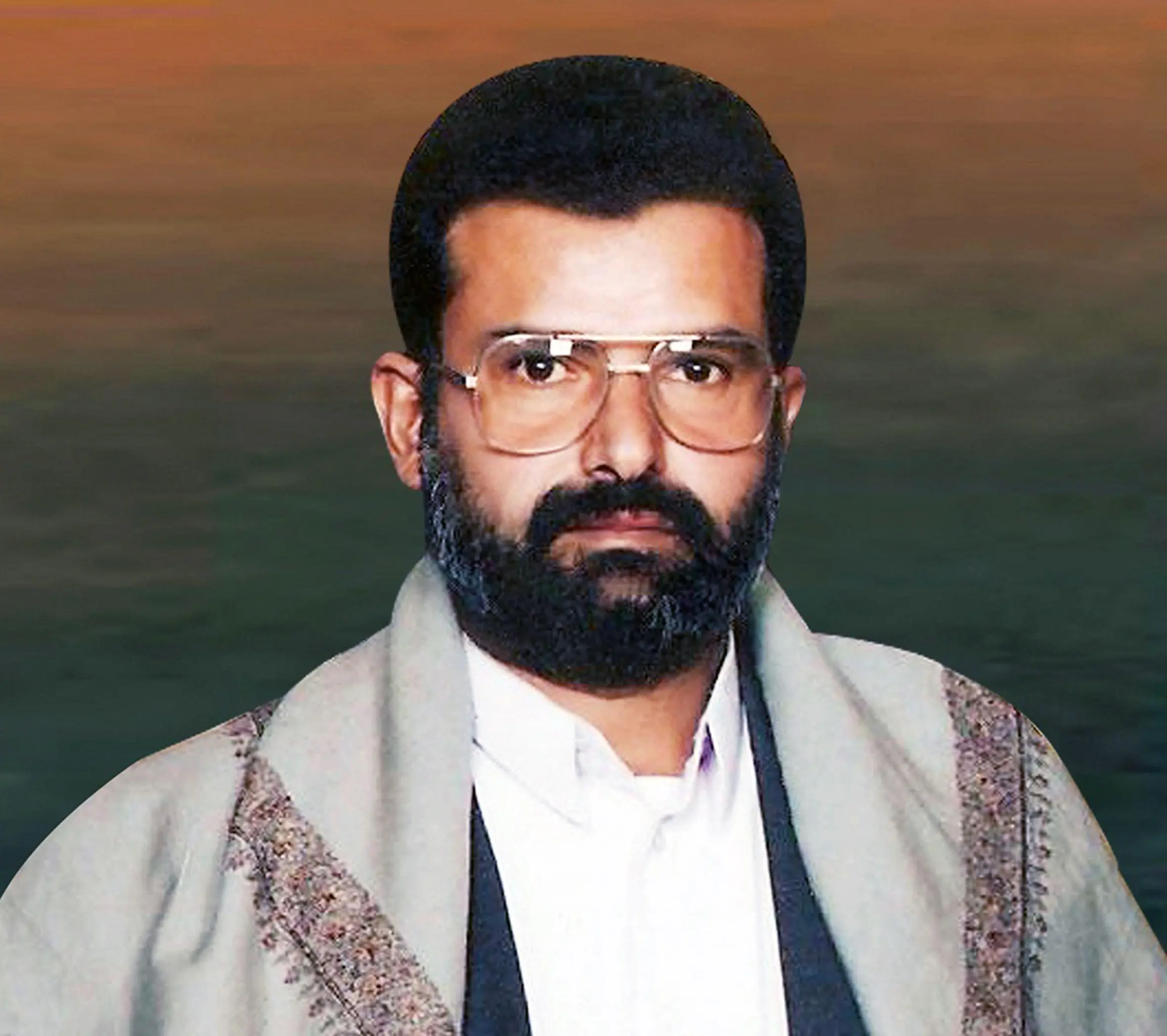 Hussein Badreddin al-HouthiPictures From History/CPA Media Pte/Alamy
The leader
After Hussein’s death, Badreddin al-Houthi backed another of his young sons, Abdul-Malik, Hussein’s younger half-brother, to lead the movement. Abdul-Malik was a young fighter with no political record, chosen over the men who had fought beside Hussein. Shuja al-Deen suggests it may have mattered that his mother, Badreddin’s youngest wife, nursed her husband in his final years.
Benomar remembers warning Abdul-Malik that marching on Sanaa would lead to hundreds of deaths, saying: “I remember his smile. Every time I repeated that warning, he would smile and tell me, ‘No, I can assure you there is going to be no bloodbath in Sanaa.’ ”
But it was not bloodless and at least 274 people were killed in Sanaa during the fighting of September 2014, according to the Yemeni health ministry. Benomar brokered the power-sharing deal between the government and the Houthis, signed on the day the capital fell.
Abdul-Malik, 47, rarely appears in public, speaking to his followers instead through long televised addresses from undisclosed locations. “He’s not charismatic. He doesn’t charm you,” Shuja al-Deen said. Abo Alasrar said that the movement had to “construct the charismatic leader out of nothing”.
What Yemenis under his rule really think is hard to know, with public criticism forbidden. Yet his appeal has travelled into parts of Yemen that oppose the Houthis and across the region from Morocco to Lebanon, where many see him as a strong, independent champion of the Palestinians rather than a man propped up by Iran. “I have friends and people that I know who absolutely like him,” Abo Alasrar said.
Many report him ruling the movement with an iron fist stronger than that of the Iranian supreme leader. Abdul-Malik has control of “everything you can think of”, Muslimi said, including theology, state structure and the military. To Shuja al-Deen his rule is simply “a one-man show”.
The brothers, the cousin and the uncle
Abdul-Malik’s younger brother Abdul-Khaliq is the soldier of the family. The UN security council sanctioned him in 2014, accusing him of leading fighters dressed in Yemeni army uniforms in an attack on Damaj, in Saada province, the previous year, and he has since commanded the movement’s reserve force and Central Military Region.
Yahia, an older half-brother and former MP, served as education minister until 2024 and is better known for provocative statements that embarrassed Abdul-Malik. Their cousin Mohammed Ali is the movement’s familiar face, forever on television and out in the streets, while their uncle Abdul-Karim has run the interior ministry and the machinery through which the Houthis control the north.
The inner circle
The family sits at the top of an informal hierarchy, according to Shuja al-Deen’s research, followed by veterans of the Saada wars and other families claiming descent from the Prophet. April Longley Alley, a former UN adviser on Yemen now at the Washington Institute, puts it simply: “The family is critically important, but they’re not the only ones that are important.”
War and peace newsletter
Tom Newton-Dunn’s concise guide to global conflict – with reasons for optimism.
Muslimi counts five constituencies inside the movement and says Abdul-Malik keeps control by rotating which group he relies on, so none becomes powerful enough to challenge him and the costs fall on them, not himself. He said: “It’s like Russian roulette with five different bullets, every time he chooses one — except not to his head, to others’ heads.”
Marriage has helped bind the inner circle together, linking the Houthi family to powerful tribal and religious networks. Yusuf al-Madani, appointed military chief of staff last year after his predecessor died in an Israeli airstrike, is married to one of Hussein’s daughters. But how these relationships work behind closed doors is much harder to establish.
The next generation
The question of succession leads back to the founder’s other son, Ali Hussein, who is also Abdul-Malik’s nephew, and runs the Police Intelligence Service. Last November he appeared on television to announce the discovery of a spy cell, leading Yemeni analysts to question whether he was positioning himself as a successor.
Abo Alasrar points to his bloodline and his growing role mediating with tribes. She said: “I think he’s probably being groomed to replace Abdul-Malik. He’s probably the only other person who can step into that role.” Shuja al-Deen sees no clear succession plan, only a family looking after its own. Others whisper about Abdul-Malik’s son, Jibril, whom she puts in his late twenties. If the leadership passes to him, she says, “this means that it is hereditary”.
Future ambitions
The Houthis’ ambitions now stretch far beyond northern Yemen. During the relative calm since 2022, the group has expanded its arsenal, combining Iranian weapons and technical expertise with the local assembly and manufacture of missiles and drones. Although the Houthis can produce some simpler weapons themselves, their most sophisticated systems still depend heavily on Tehran. These cheaper, more adaptable weapons have given them an advantage over government forces, whose rival factions remain divided by competing loyalties and years of mistrust. Their lightning advance down the Red Sea coast in September exploited those weaknesses, catching their enemies off guard. The Houthis are now striking Saudi infrastructure and threatening international shipping, using military pressure to extract political concessions and establish themselves as a regional power. Their recent offensive exposed how their military organisation and preparation had outpaced a weakened government camp.
Israel killed the Houthi prime minister and chief of staff last year and Abdul-Malik has seen Hassan Nasrallah of Hezbollah and Iran’s supreme leader Ali Khamenei also be killed. Alley believes that, after seeing that, the movement has prepared for the same fate. Muslimi doubts it: “I don’t think the Houthis have actually come to the conclusion that he might die.” For now, the movement still orbits the soft-spoken man who once sat in a bare, clean room in Saada and smiled at a warning. Shuja al-Deen said Abdul-Malik was “like a star and everyone is around this one star”.