One of the more memorable Hollywood villains is Stephen, the slave butler in Tarantino’s Django Unchained.
The character was played by Samuel Jackson. He is the black head slave to Calvin Candie, the white plantation owner played by Leonardo DiCaprio.
Stephen hates other black people, especially free ones like Django, played by Jamie Fox. The hatred is not mere jealousy but a visceral contempt for blacks.
Stephen sits at the top of the house slave hierarchy with a degree of comfort, status, and authority that field slaves don’t have.
He has completely internalized the white racist worldview of his owners and has turned into a reverse “Uncle Tom”.
Rather than identifying with fellow black slaves, Stephen wants to immediately “put Django in his place”. His goal is to prove to other slaves that Django’s freedom and defiance are not things they could ever aspire to.
Even when Django kills him in the end, Stephen remains a loyal servant to his masters.
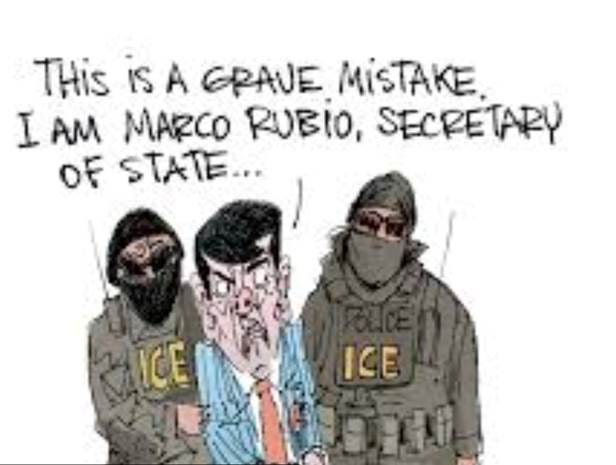
Stephen reminds me of the two foreign ministers of the West today – Marco Rubio of the US and Kaja Kallas of the EU.
Marco Rubio – high priest of “Western heritage” and colonialism
Last week on Oct 7, Rubio made a foreign policy address in Athens, Greece with a backdrop of the Acropolis.
In his speech, Rubio argued that Western power has been hollowed out by self-doubt, open borders, industrial outsourcing, and military decay.
Rubio urged Europe to “awaken from its long slumber” and called for unapologetic pursuit of national power, citing historical empire-builders in the West.
Rubio explicitly attacked the “abstractions of international law” instituted by the United Nations after World War II.
He argued that universal laws treating all nations and humans as equal served only to “hamstring” the West.
Little surprise that the US just sanctioned the International Criminal Court (ICC) for indicting Yidsraeli genocider Notayahoo.
Rubio called for a might-makes-right international order, suggesting that a natural hierarchy exists where strong, ambitious civilizations have a sovereign right to subjugate others.
Rubio outlined a vision for an alliance with Europe to revive the collective West’s dominance over the rest of the world.
Rubio’s Athens speech shares heavy thematic overlap with the address he made in February 2026 at the Munich Security Conference.
Both speeches railed against “the decline of the West” from mass immigration and “lost will to dominate”.
Rubio lauded Western achievements, crediting “missionaries, pilgrims, soldiers, and explorers” with advancing the globe by crossing oceans and settling continents.
Meanwhile, he left out centuries of Western colonial exploitation, slavery, violent conquest of indigenous populations.
Rubio framed colonialism not as an extractive or genocidal process, but as an era of romantic achievement.
He explicitly praised the historic era of global colonization. He lamented that the West had entered a “terminal decline” since 1945 due to anti-colonial uprisings.
Rubio was the latest Trump acolyte to travel to Europe to explain Europe’s history to the Europeans.
While such rhetoric is hardly surprising for an American Secretary of State, the raw crudeness is new.
What’s more interesting is for a person of Hispanic descent like Marco Rubio himself to champion the traditional “Western” pro-colonial narrative.
After all, Latin American history is deeply defined by the devastating impacts of European colonialism.
Even today, Hispanics and Latinos are called “spics” derogatively by the very white people whom Rubio celebrates.
Rubio, just like Stephen in Django Unchained, has completely embraced the logic of the oppressors that historically marginalized and subjugated Cuba where his own Hispanic family came from.
Rubio’s perverted psyche is mirrored on the other side of the Atlantic by his fellow EU foreign minister, Kaja Kallas.
Kaja Kallas – waving the banner of “European values”
Kallas, an Estonian, has made her name as a profoundly ignorant ideologue whose virtue signaling of European exceptionalism is only matched by her historical blindness.
She said openly it is “news” to her that Russia and China were among the victors of WW2.
It must also be “news” to Kallas that Hungary, Romania, and Bulgaria fought for the Nazis and so did large contingents of the Baltics.
Or maybe it’s “news” to her that Hitler lost the war. That could explain the “confusion”.
Regardless, equipped with fearless ignorance and flaming self-righteousness, Kallas has taken up the mantle of the vanguard of European civilization. Like so many in Eastern Europe.
Kallas presents the West as inherently benevolent and “rules-based”, glossing over how they regularly bypass these “rules” when it suits them such as in the former Yugoslavia.
She brands the West as the sole custodian of global morality, law, and human liberty.
Kallas brittles with the same doctrinal rigidity as her predecessor Jospeh Borrell who lovingly described the West as the “garden” and dismissed the rest as the “jungle”.
Kallas and Rubio represent the two sides of the same coin of “Western supremacy”.
One comes with the argument “might makes right” and the other with “moral exceptionalism”.
Ultimately, both positions demand a global hierarchy with the West at the top.
Just like Rubio, Kallas’ representation of European heritage invites a study of the underlying psychology.
Kallas comes from Estonia, an Eastern European nation traditionally viewed as “inferior” by Western Europe.
Historically, the core states of Europe routinely treated Eastern Europe as buffer zones, geopolitical bargaining chips, and culturally backward peripheries.
Apart from rabid Russophobia, there seems little common ground between Estonia or Poland with France or Britain.
Prominent European thinkers such as Voltaire, Rousseau, Immanuel Kant viewed Eastern Europeans as backward, submissive, weak, and semi-barbaric serfs.
Even today, Western European establishment has treated newer EU member states from the East as “second-class citizens,” lecturing them on rule of law and viewing them primarily as sources of cheap labor.
Outside of Europe, few associate Eastern Europe with what defines as “European” – the Renaissance, the Enlightenment, and Industrial Revolution.
In realms from philosophy, literature, art, architecture, food to consumer goods to historical political and military figures, what people consider “European” comes from Western Europe.
And Russia has given the world Fyodor Dostoevsky, Leo Tolstoy, Tchaikovsky, Pushkin, ballet and caviar.
On the other hand, who can name what Romania, Czech, Lithuania, Bulgaria, Poland or Albania have produced?
The one saving grace for Eastern Europe is that it was not the perpetrator of colonialism. However, Eastern Europe seems bent on reminding the world that it is now a member of the victimizer’s club.
Eastern European nations regularly align their votes with Yidrael and the US at the United Nations against Palestine and Cuba.
Perversely, the people loudest in claiming European values today are not even considered “European” by traditional core states in Europe.
By doing so, Eastern European countries identify not as independent nations with unique culture and history, but as appendage to the West.
Eastern Europeans like Kaja Kallas have taken upon themselves to out-West the West in moralizing to the rest of the world.
In sociology, the term “nesting Orientalism” describes how Eastern European nations seek to elevate their own status by claiming, “We are fully Western, but the people just to the east or south of us are the true barbarians”.
Black skin, White masks
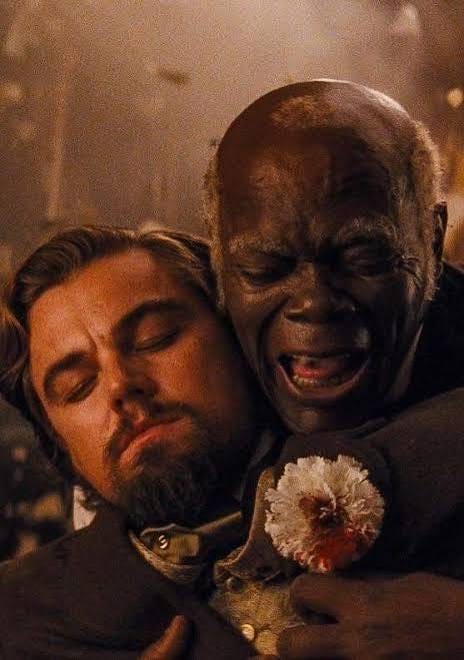
Rubio and Kallas, like Stephen in Django Unchained, demonstrate a psychological dynamic where a marginalized individual or group adopts the prejudices of their oppressors to gain status.
They internalize oppression in what famed Caribbean psychiatrist and revolutionary, Frantz Fanon, described as “black skin, white masks.”
Fanon was one of the most important theorists of anti-colonialism, racism, and the psychological impacts of decolonization.
In his 1952 book “Black Skin, White Masks”, Fanon argues that colonialism forces Black people to internalize feelings of inadequacy and adopt the language and culture of the white colonizer (”white masks”) to be accepted, leading to a fractured sense of identity.
When a dominant system labels certain groups as inherently inferior or “underclass,” individuals or subgroups within those marginalized communities often face a choice.
Either resist the system from the outside or attempt to prove they belong inside it by out-performing the biases of the ruling elite – sometimes by acting even more ruthlessly toward their own peers.
This way, they attempt to secure their own safety, privileges, or high-status within the existing power structure.
This is exactly the archetype portrayed by Stephen in Django Unchained.
Stephen identifies completely with the white slaveholder’s power because his own survival and relative privilege depend entirely on maintaining that specific hierarchy.
This is also exactly what Rubio and Kallas represent in today’s global politics.
Rather than facing reality, they are saying, “We are not like those other outsiders; we are civilized and part of your tradition. We share your values, enemies, and prejudices.”
Sadly for them, history has shown no matter how fiercely an individual or a buffer-state defends the ruling elite’s narrative, the core elite typically continues to view them as useful instruments rather than true equals.
If the political landscape shifts or their utility runs out, they are often relegated right back to the “underclass” status by the very system they fought to protect.
Stephen may be the head slave in the Candyland plantation, but he is a slave, nevertheless. Calvin remains the lord and master.
In this end, Rubio’s championing of colonialism and Kallas’ condescending moral lecture of Western values are little more than overcompensating attempts by junior vassals to sit at the “master’s table”.