The End of Paris
Yesterday
Athens
430 BC. Athens commands a maritime empire stretching across the Aegean’s islands and eastern shores.
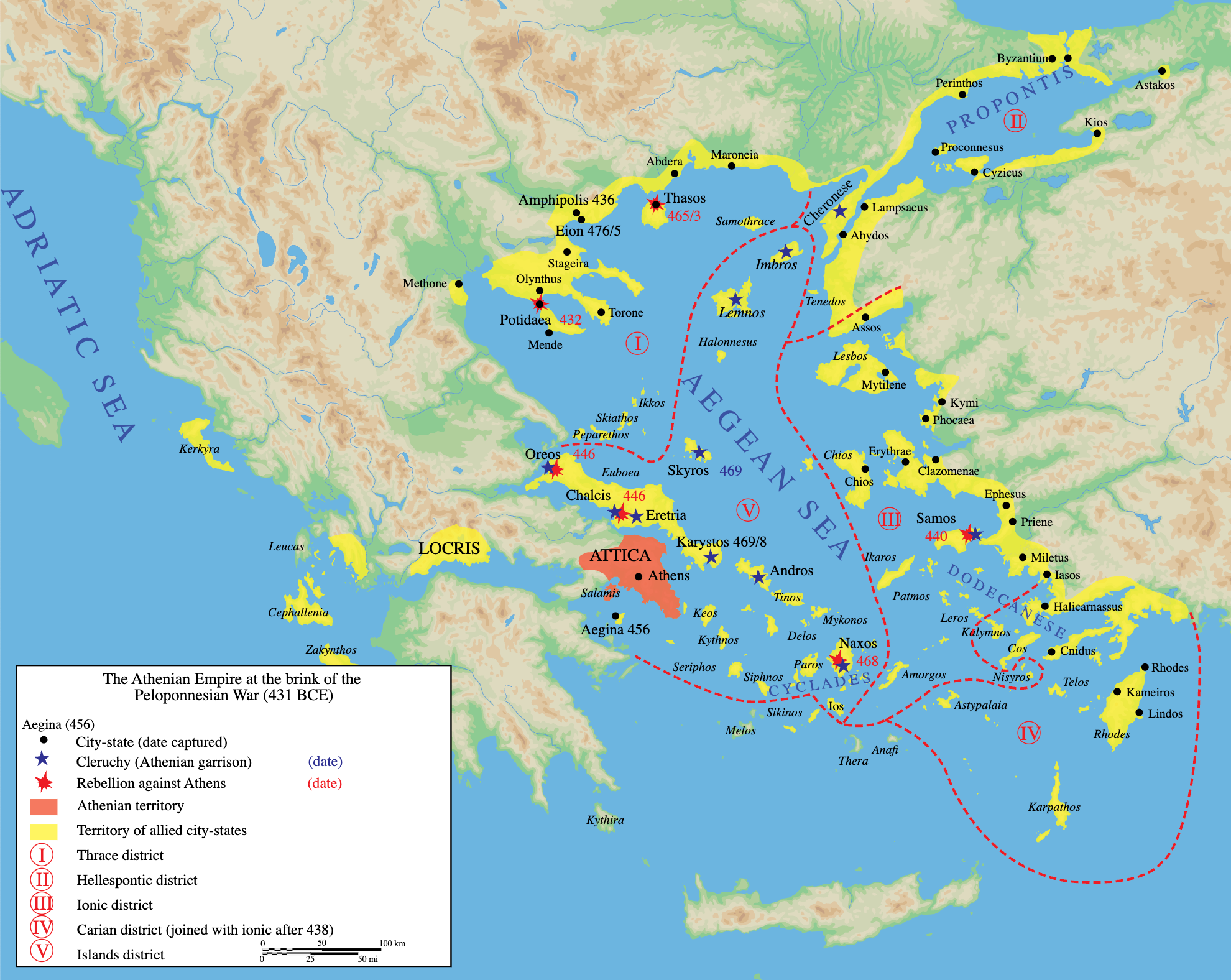
Tributes flowed into a city building the marble Parthenon. It invented rhetoric, debate, and democracy. Socrates questioned Athenians in its streets, his mentee Plato founded its Academy, and his mentee Aristotle trained a pupil who would become Alexander the Great. Their arguments about truth, ethics, and politics have echoed through intellectual life for more than two millennia.
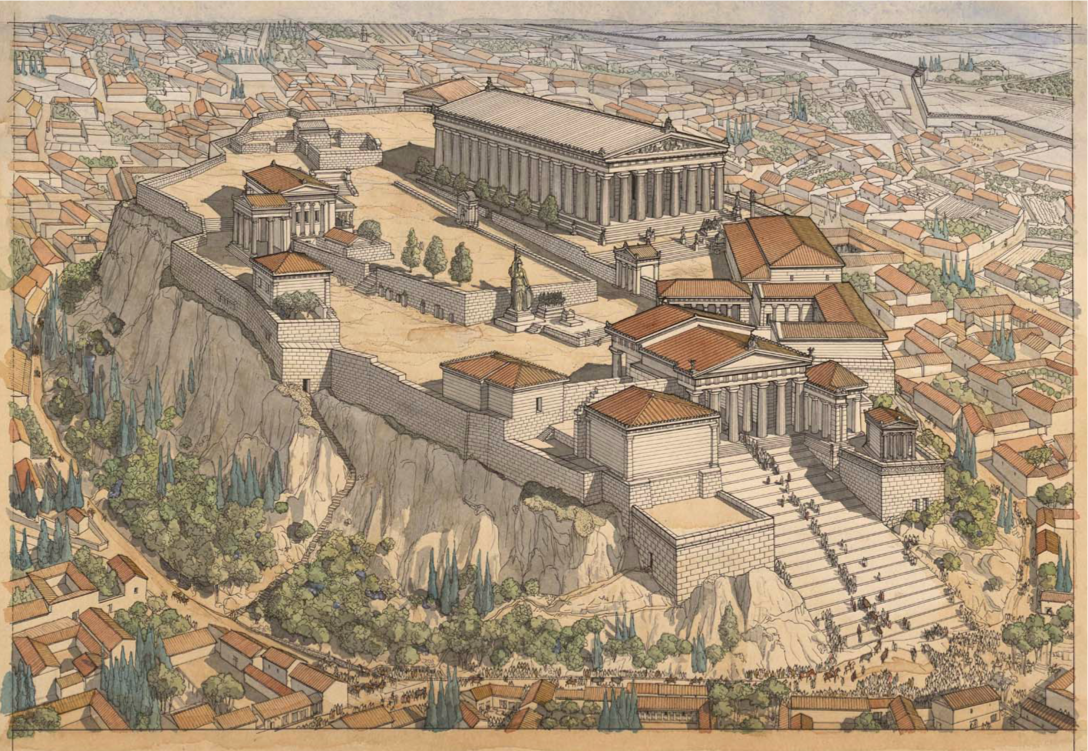
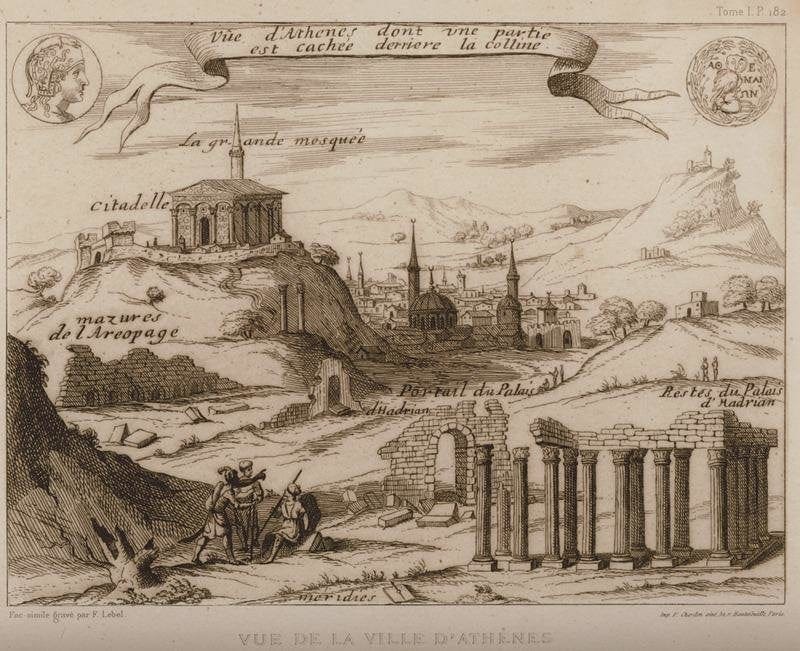
800 AD. The Agora is abandoned. The few people remaining live around the Acropolis, surrounded by the remnants of its ancient greatness.
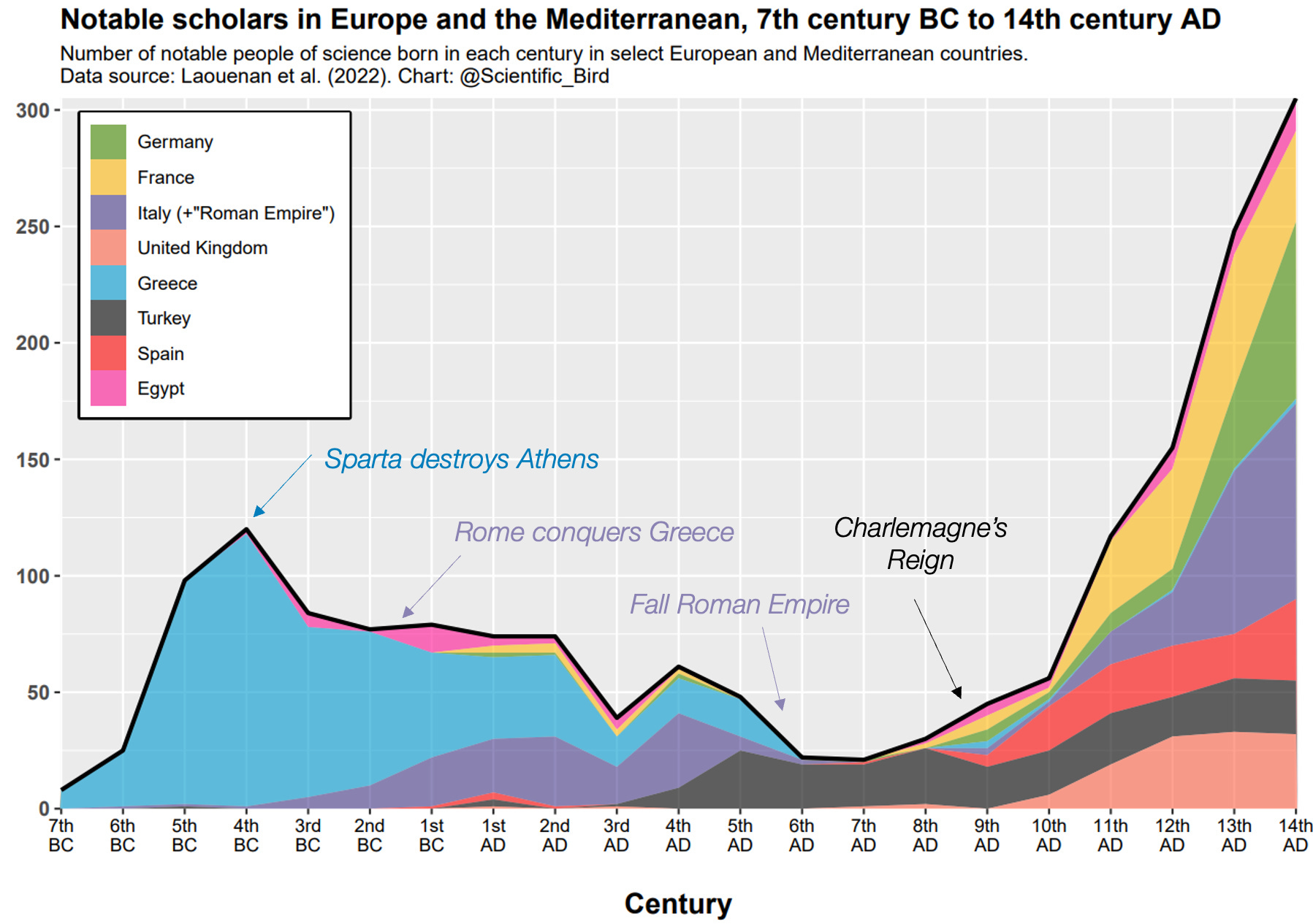
Why? Its leaders had turned allies into tributary subjects. While already fighting Sparta, it opened a disastrous second front in Sicily. The defeat encouraged subject cities to rebel, and Persian financing enabled Sparta to build the fleet that destroyed Athens’s remaining navy and blockaded it into surrender in 404 BC.
It never recovered.
Rome, “Eternal City”
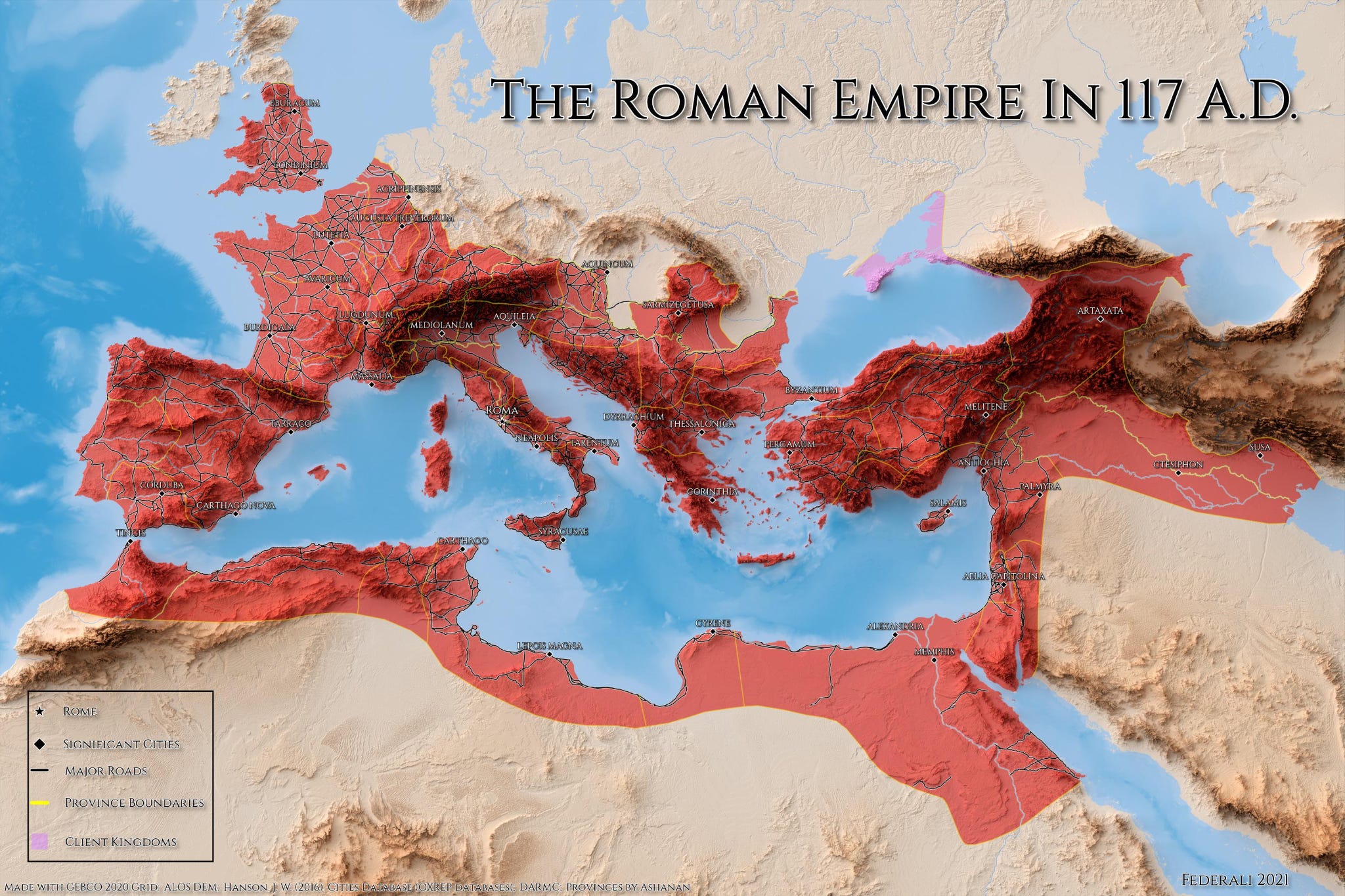
117 AD. Rome governs an empire stretching from Britain to Egypt and from Spain to Mesopotamia.
The city hosts one million people. Aqueducts supply its fountains and baths, fleets bring food from distant provinces, the Colosseum stages spectacles beneath the palaces of the emperors. An entire Mediterranean economy sustains this single enormous capital.
1200 AD. The memory of Rome’s might has faded. The only thing that remains of the powerful city is the specter of the monuments that haunt its citizens: An advanced civilization lived here, and it was better than us in every way, but it decayed and we’ve lost all its knowledge. We live in dark ages.
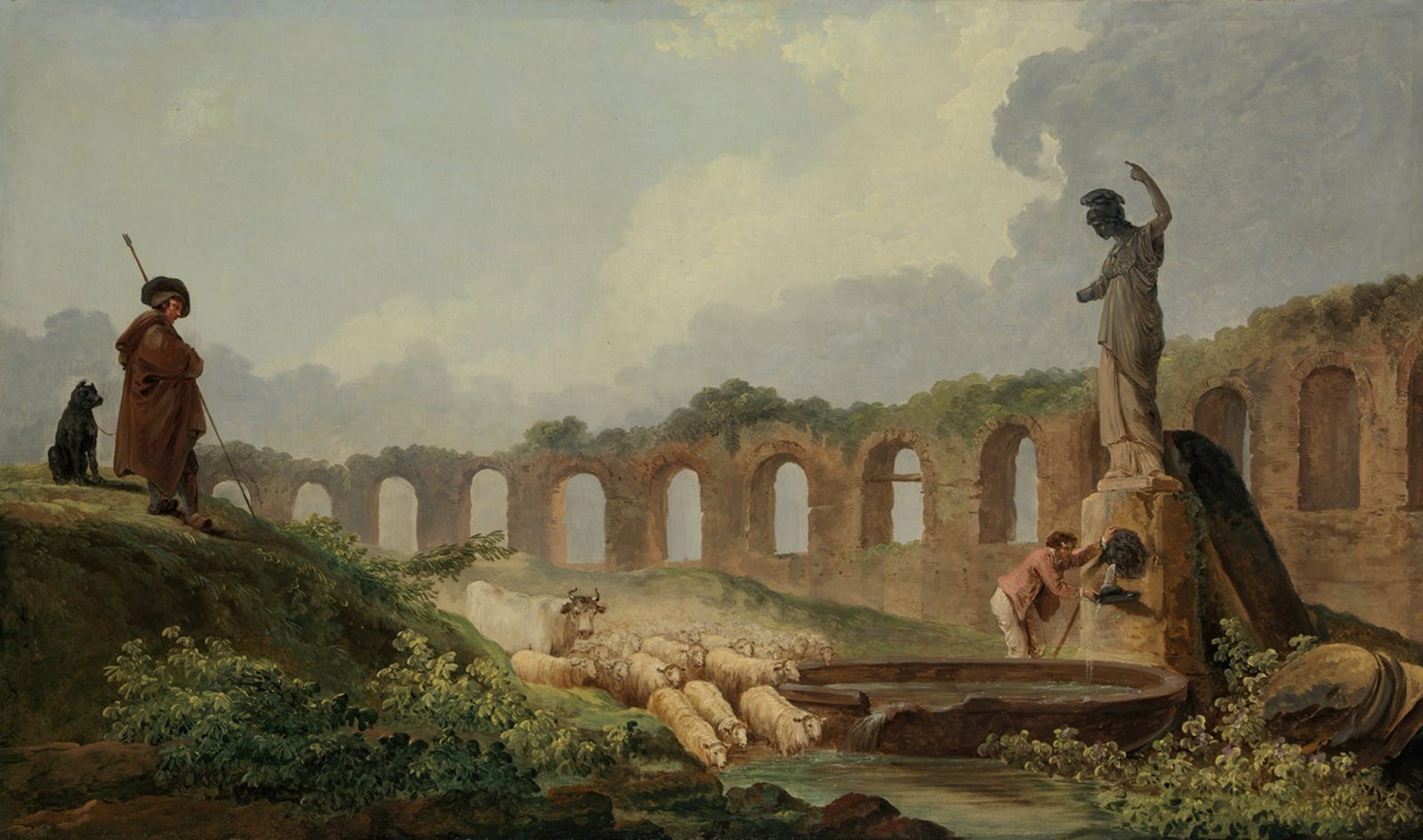
Rome’s population has crashed, from millions to tens of thousands.The Forum has become the Campo Vaccino, the “cow field”: Cattle graze and are traded where Rome once conducted its public affairs.
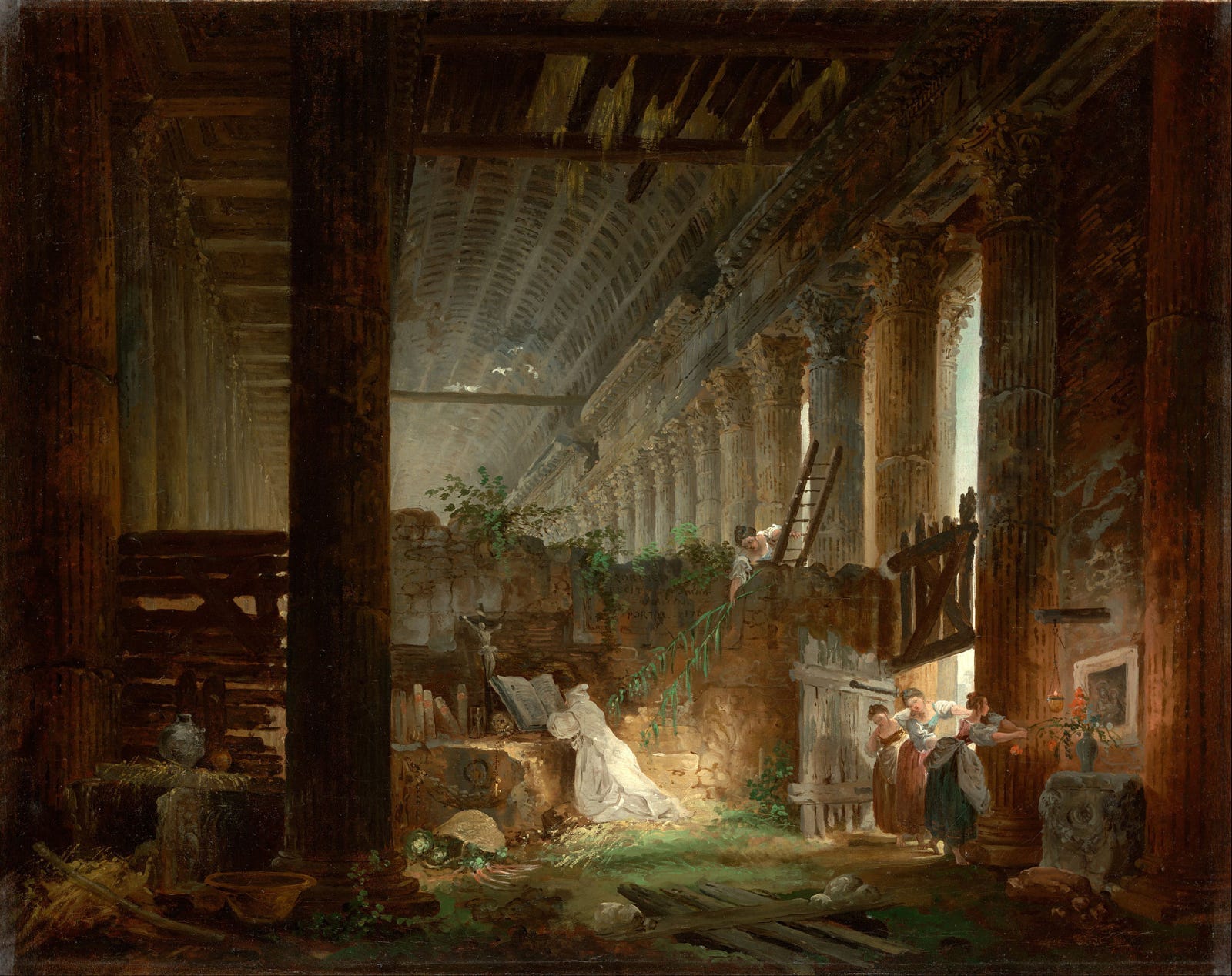
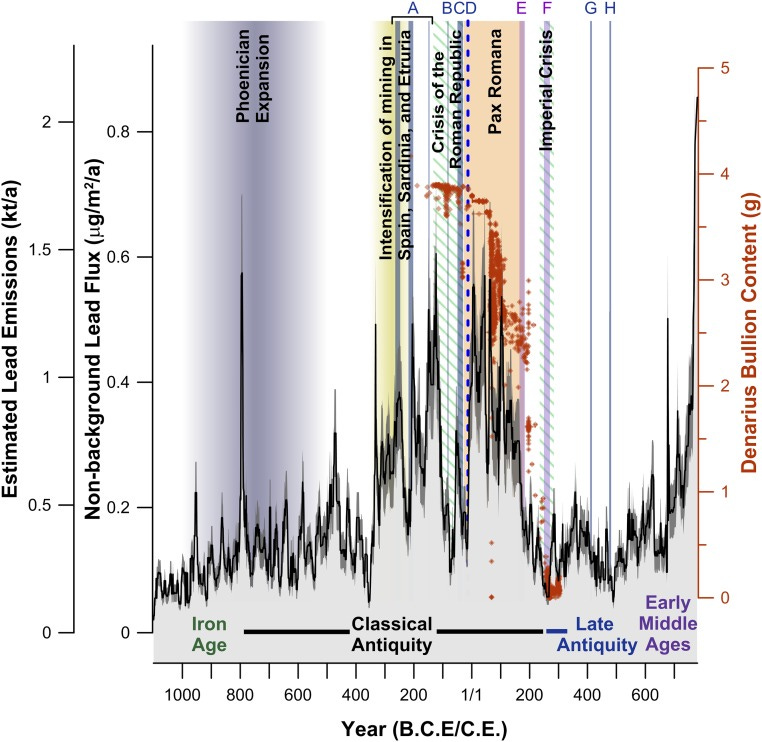
Why? Oceans of ink have been used describing the fall of Rome, but a big factor is that the social structure that allowed its growth stopped working as its citizens became comfy. People started fighting for what was there rather than trying to build new things, the infighting prevented improvement while Rome’s neighbors were catching up with it. Civil strife became war, invasions, pests, displacement, food shortages, and the entire system broke down. It took over 1,000 years for Europe to go back to a comparable state.
Angkor
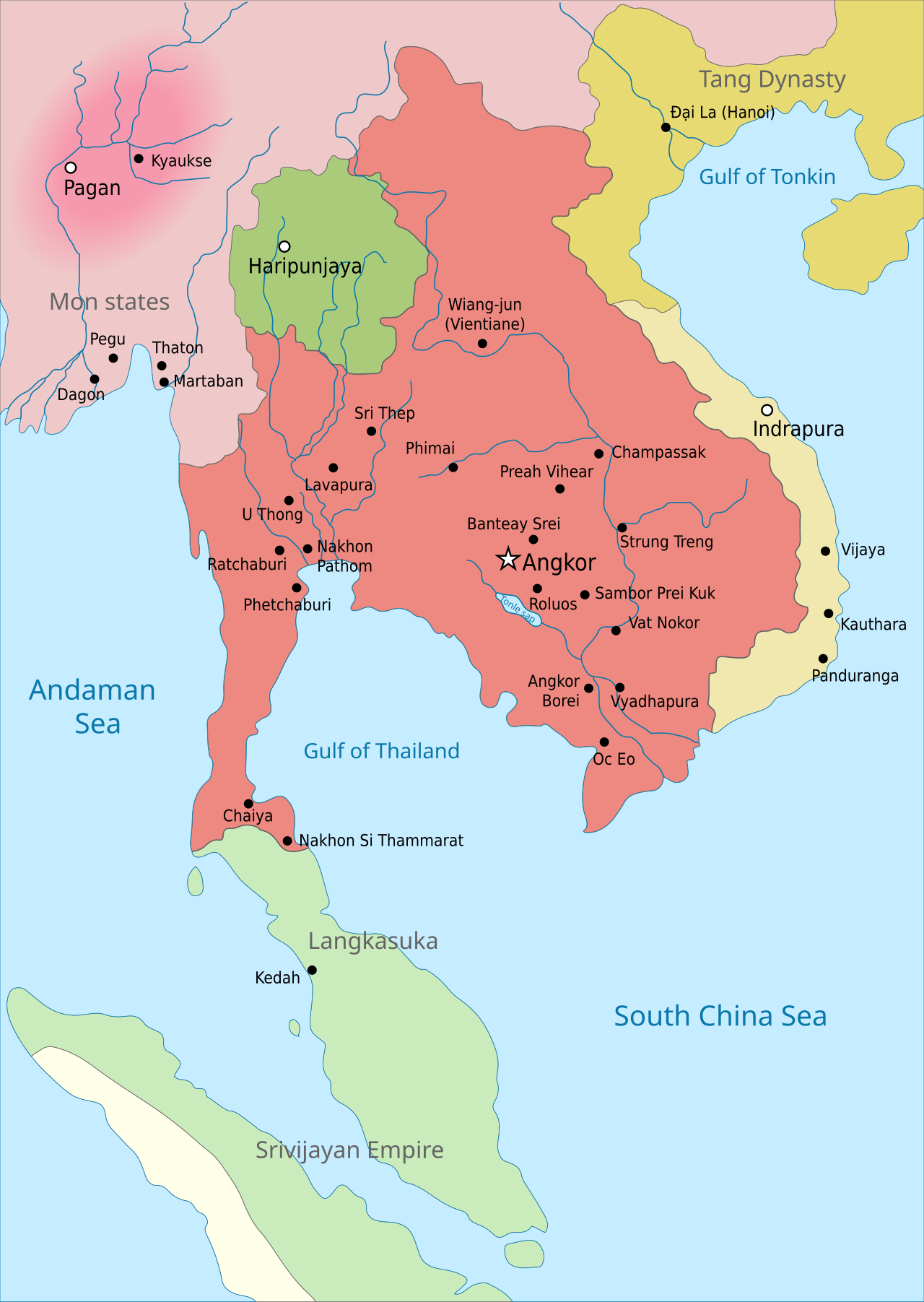
1300 AD. Angkor is the heart of the Khmer Empire. Its greater metropolitan region hosts an estimated 700,000–900,000 people.
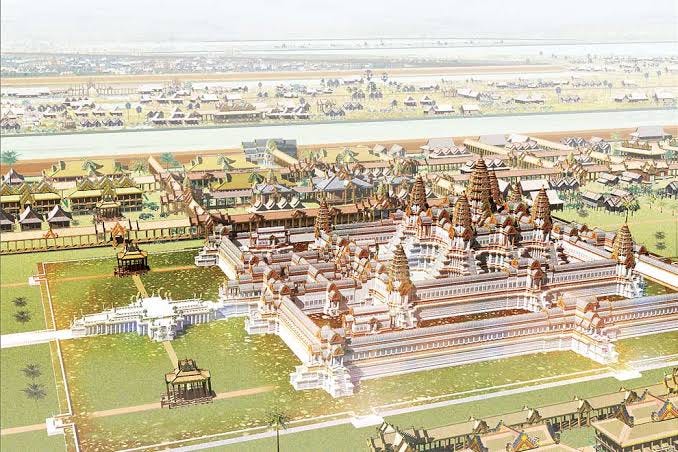
Angkor Wat’s towers rise above a sprawling landscape of temples, homes, and rice fields. Huge reservoirs store monsoon water. Canals carry it across the landscape. An entire engineered ecosystem sustains one of the largest settlements of the preindustrial world.
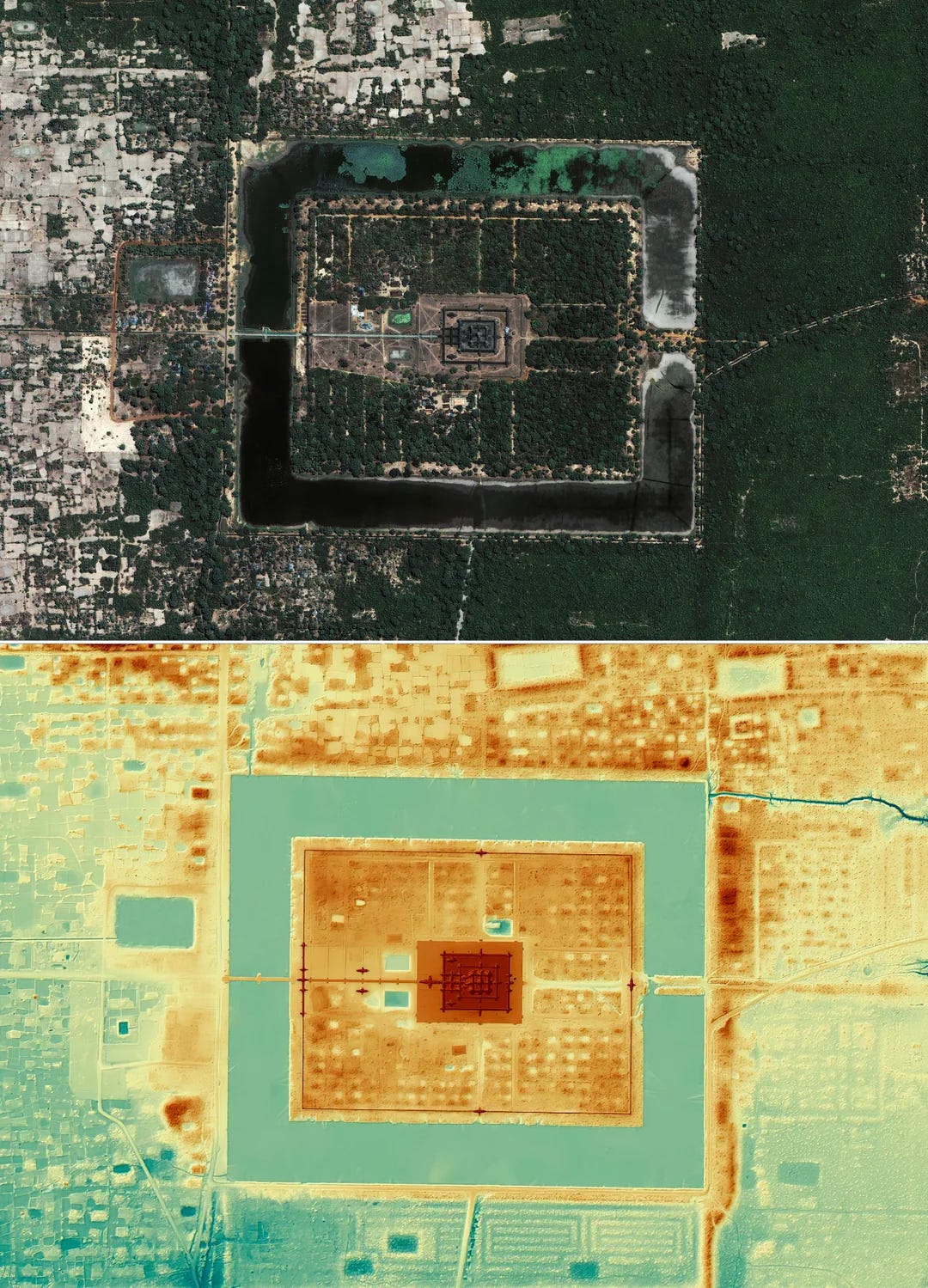
1500 AD. Much of the metropolis has ceased to function. Its administrative core has emptied. Its damaged water network can no longer sustain the city’s life.

People still worship at Angkor Wat, but elsewhere, settlements disperse and monumental complexes fall out of use. The city’s wooden buildings disappear, leaving stone temples as the most visible remnants of its greatness. Little by little, the jungle consumes civilization.
Why? Prolonged droughts alternated with destructive floods. But that had happened before. Crucially, this time elites began leaving, and that probably caused the final breakdown. Why did they leave? We don’t know. Maybe to go to the Mekong Delta and its maritime commerce opportunities. But a city without its elites loses its wealth generation and management ability. When a rival from Thailand arrived, the Khmer were not in a position to fight anymore, and Angkor collapsed for good.
Antwerp
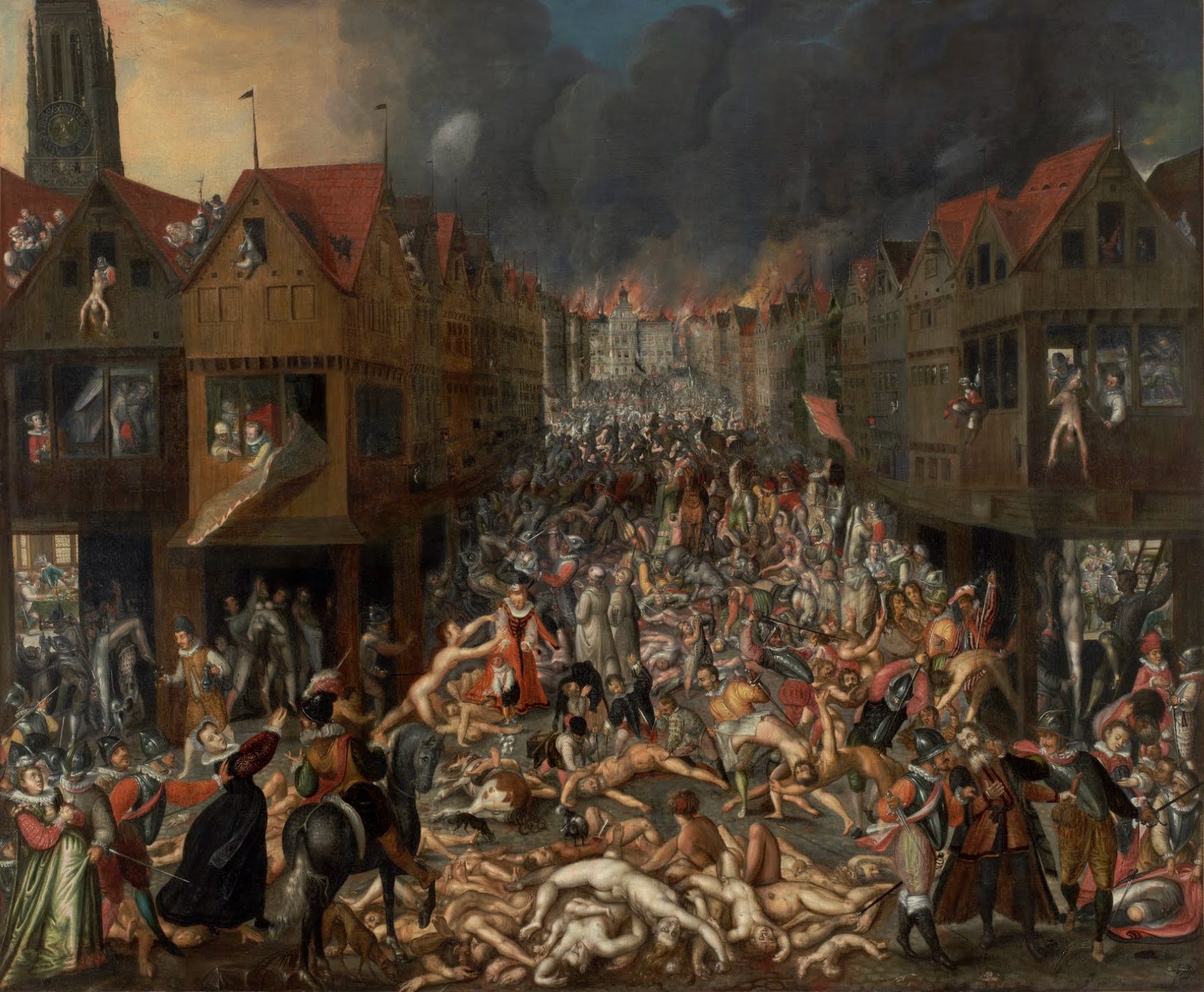
1568 AD. Antwerp hosts approximately 100,000 people, more than twice its population seventy years earlier. It’s one of the richest cities in Europe, and one of the main ports in the world.
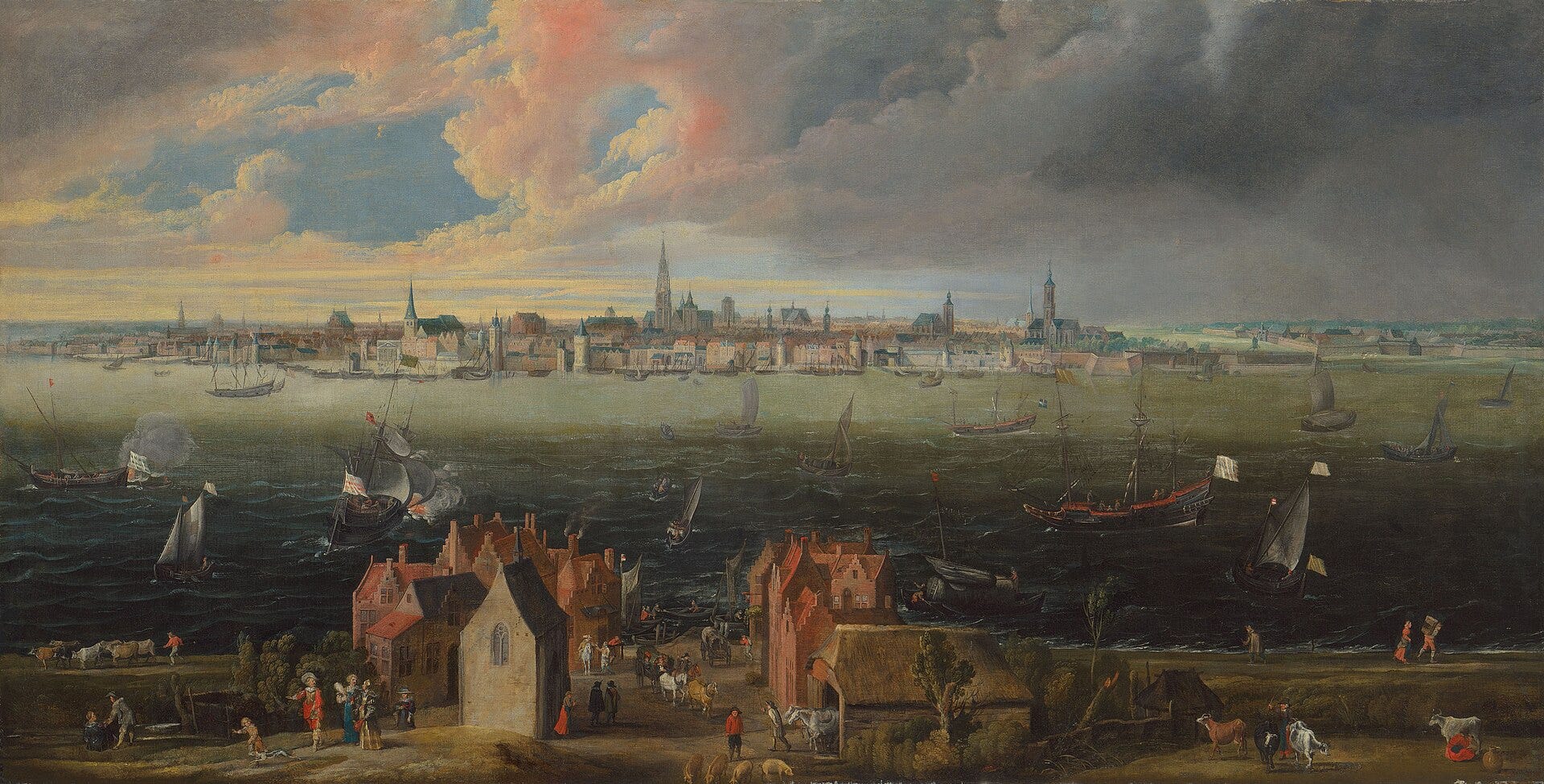
Ships crowd its waterfront. Merchants connect English cloth, international finance, and goods arriving through European trading networks. New houses spread through the growing city. Commercial wealth supports painters and a flourishing market for luxury goods.
Between 1568 and 1591, the city’s population halves. By 1700, deserted quays, rusty cranes, deteriorating warehouses, neglected houses. Weeds grow through the streets. Its buildings remain, but much of the commerce that gave them purpose has gone.
Why? A Protestant revolution produces a clash against the Habsburgs, the Spanish kings retake the city, but all the Protestants must leave. Many go to Amsterdam, a massive loss of human capital. On top of that, Amsterdam, now more powerful, blockades Antwerp’s Scheldt River—and thus its port opening into the sea—for centuries. No more commerce, no more money, no more people.
Detroit
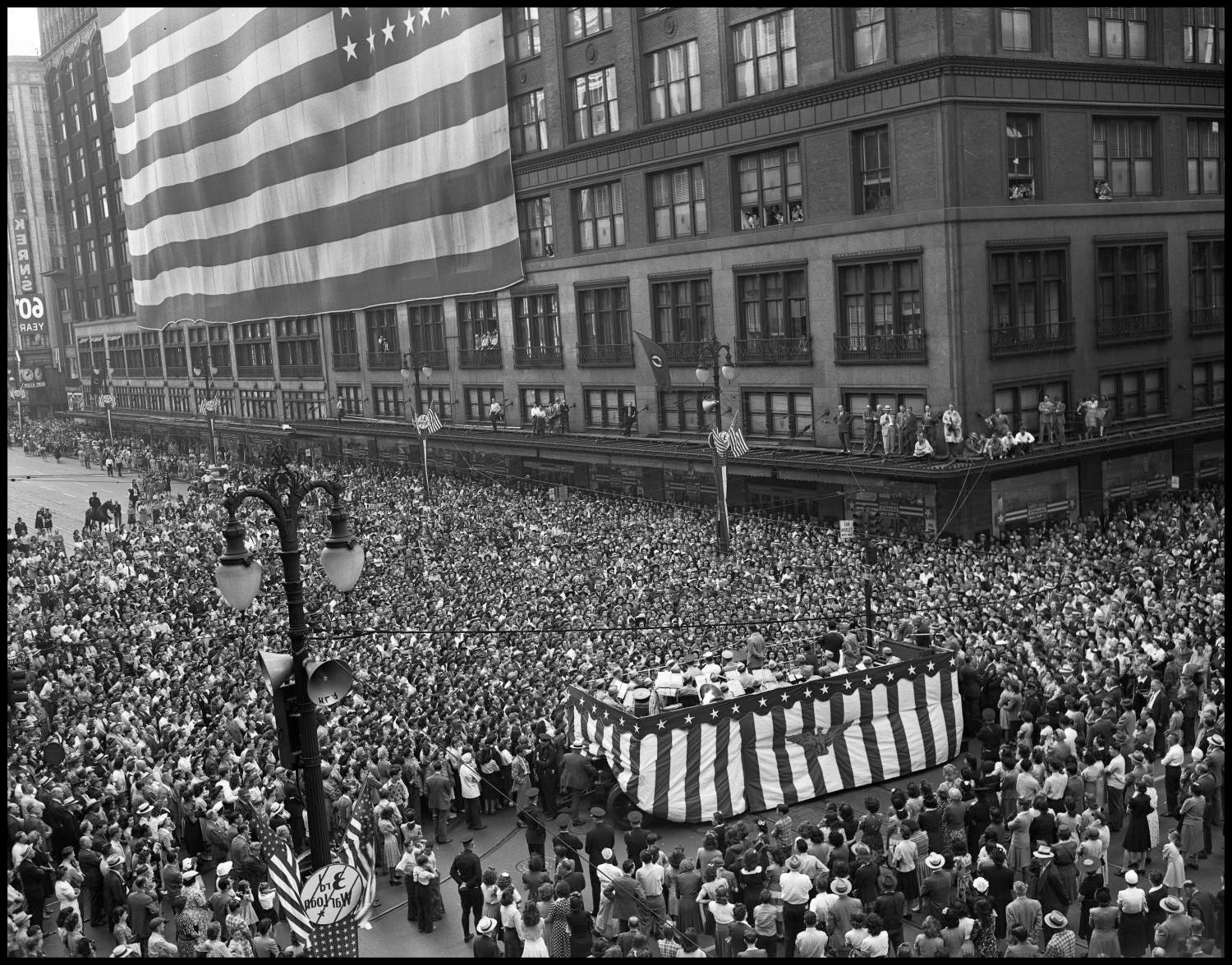
1950. Over 3,000 manufacturing plants require over 300,000 people, and they have attracted nearly 2M people to the capital of America’s automobile industry, making it the 5th most populated city in the US, and the richest per capita.
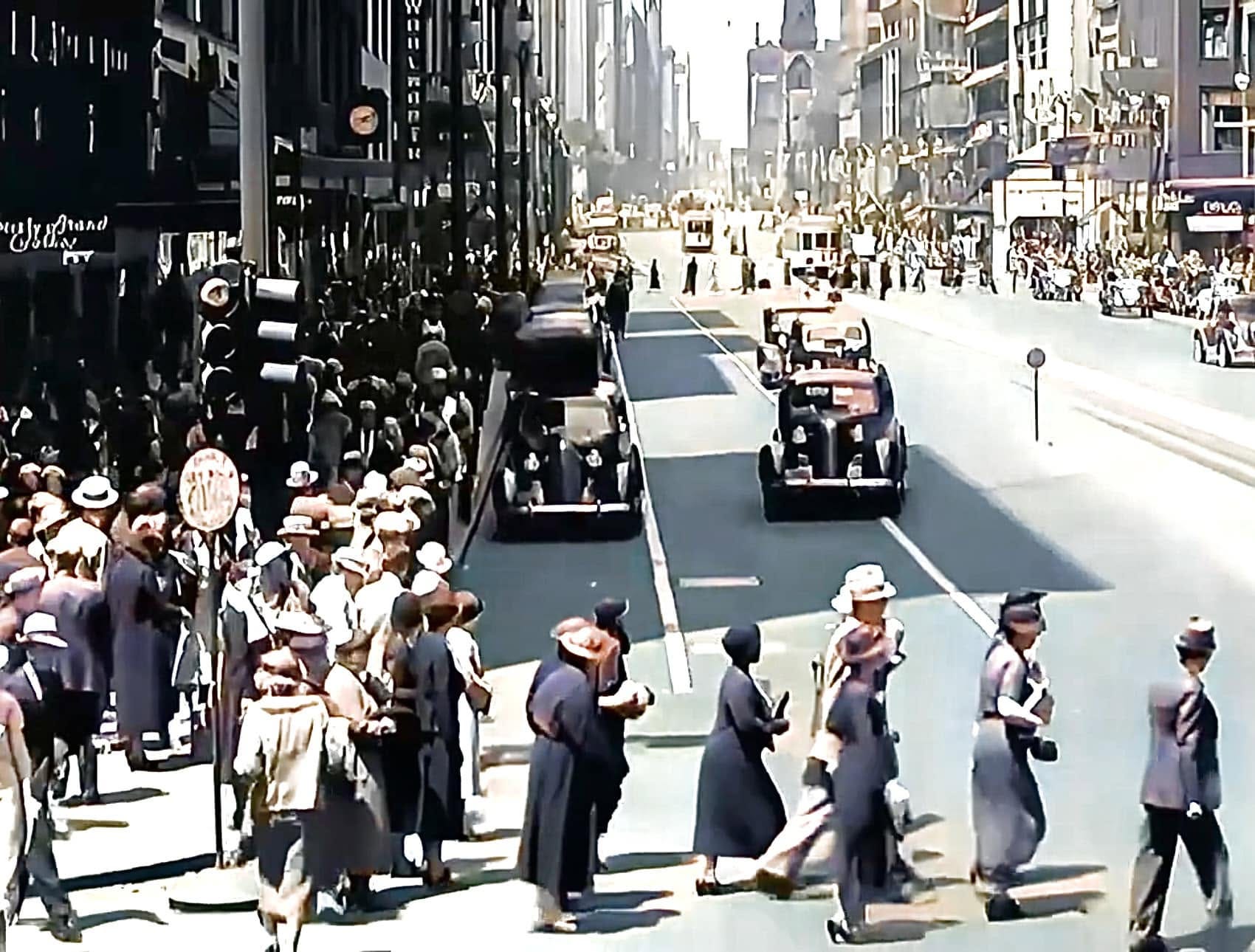
Assembly lines, rail terminals, and crowded neighborhoods churn out cars, converting industrial capacity into prosperity.
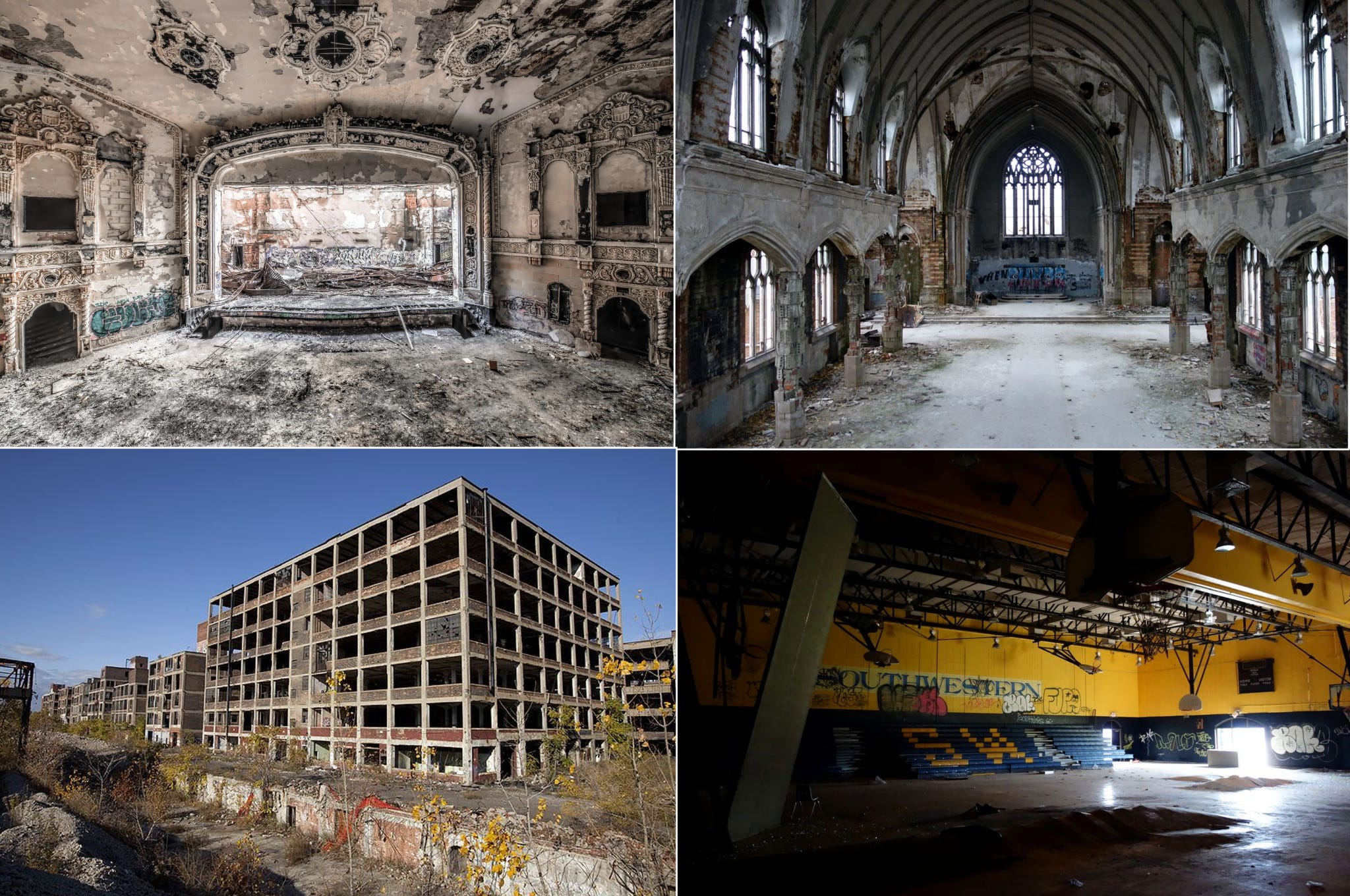
2013. Detroit enters bankruptcy. The latest census counts just 714,000 residents, 61% fewer than in 1950. Michigan Central Station stands largely vacant. Abandoned buildings occupy neighborhoods built for a much larger population. The city must maintain extensive streets and infrastructure with a fraction of its former tax base.
Why? Factories moved out because of labor unions. The constant strikes, conflict, and demand for higher wages reduced investment. Factories moved south, where unions were weaker and wages cheaper. This accounts for half of the decline of the American Rust Belt in general.
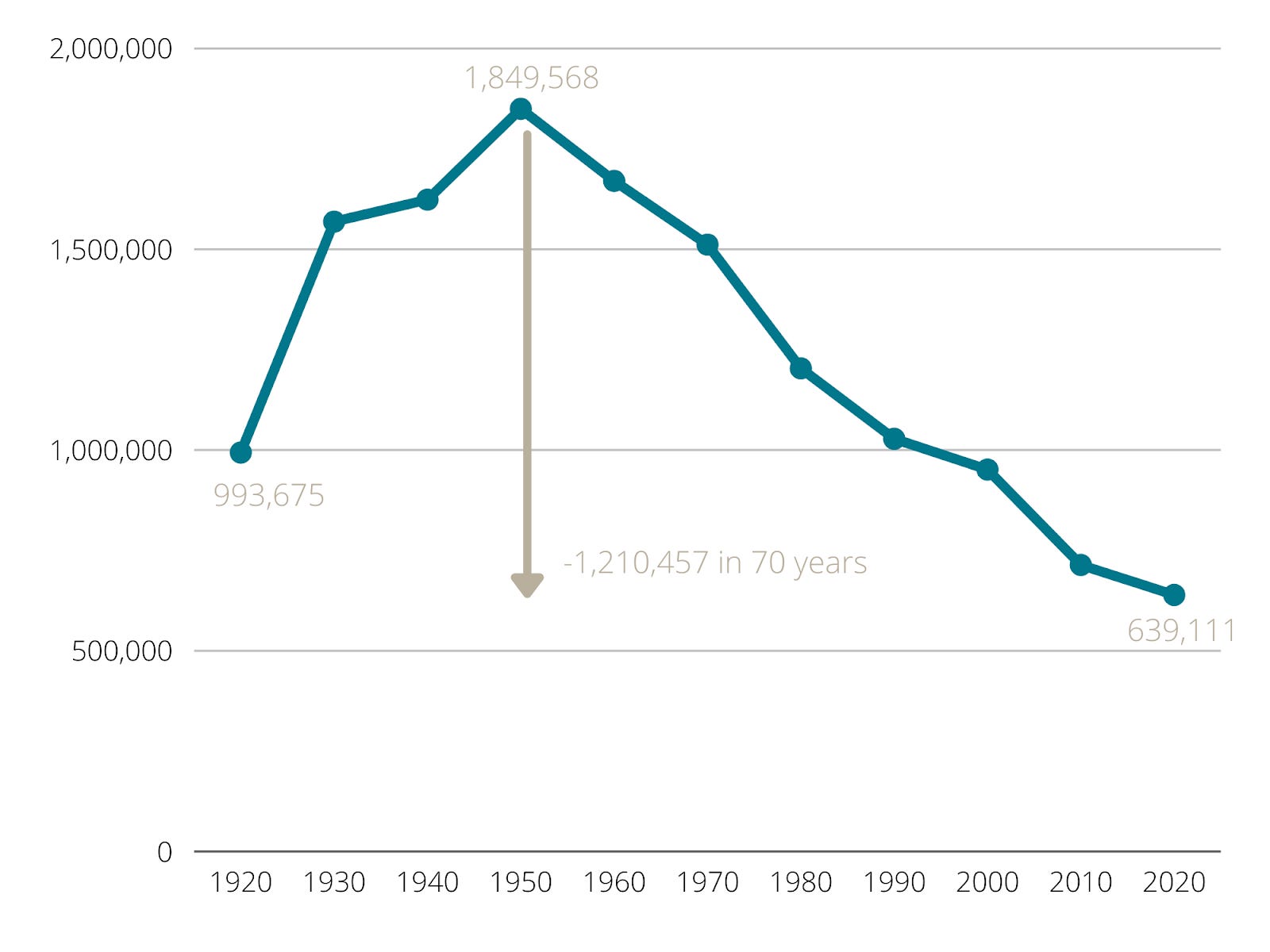
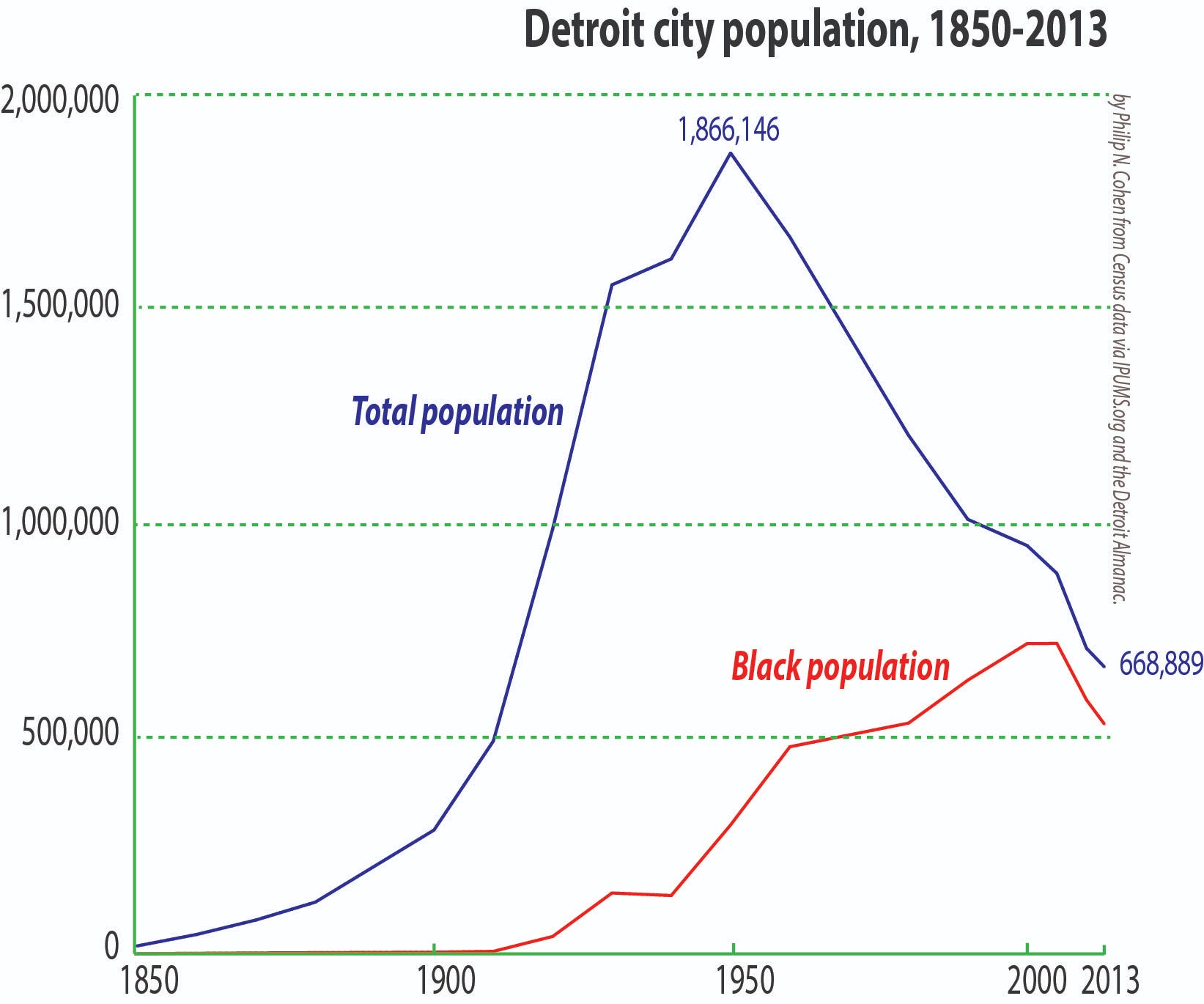
The decline hides a radical change in ethnic mix, where Whites immediately started leaving in the 1950s—many to the suburbs—while the Black population continued growing until very recently.
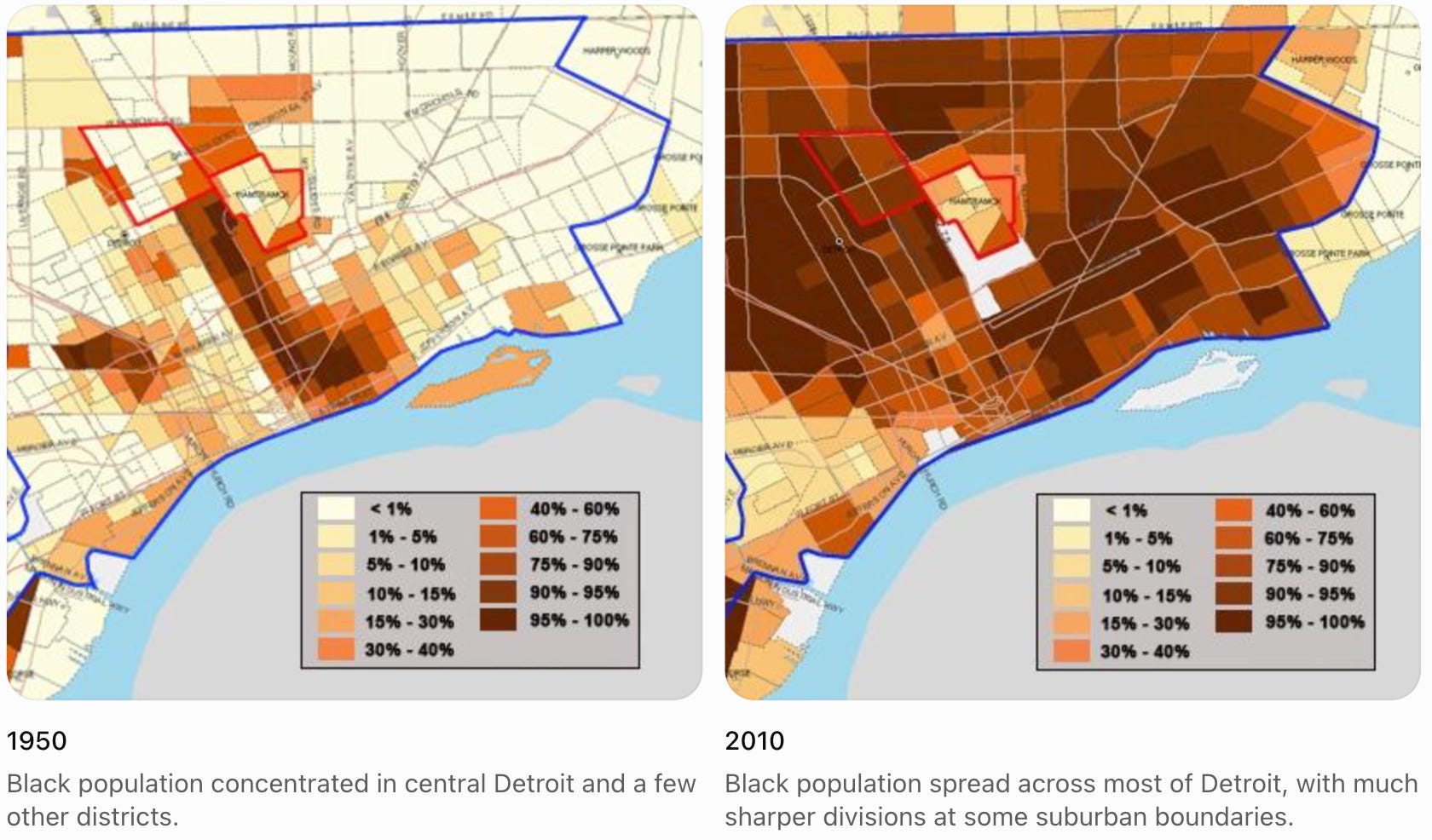
Resulting in one of the starkest segregation maps I’ve ever seen.

Here’s the evolution:
Beirut
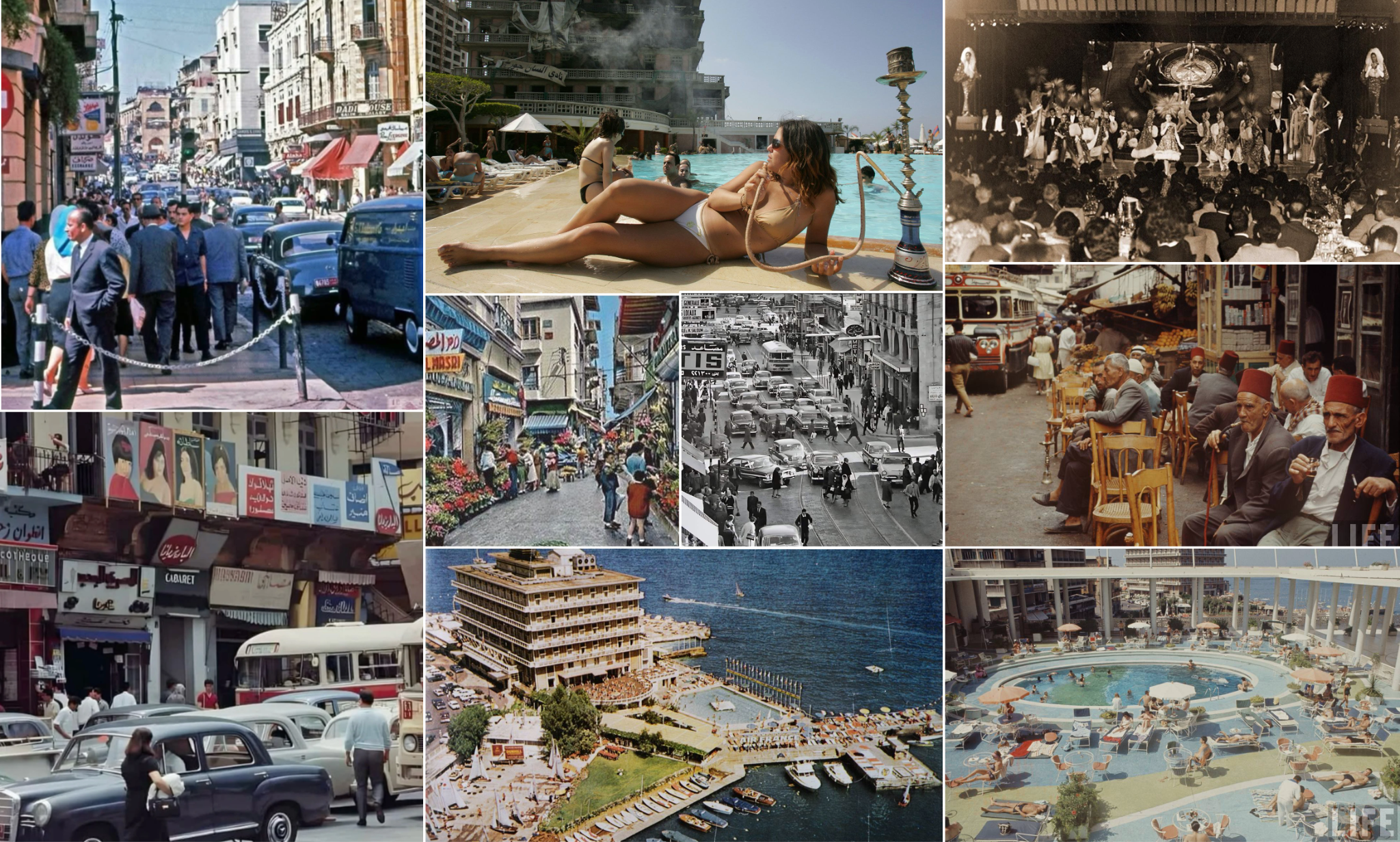
1969. Beirut is the financial and commercial gateway to the Middle East. Banks serve regional wealth. Ships carry goods through its port. Downtown streets bustle with shops, cinemas, and hotels. Visitors arrive in a cosmopolitan capital whose cultural and economic influence extends far beyond Lebanon.
1990. Downtown lies devastated after fifteen years of civil war. Vegetation spreads along parts of the Green Line dividing the city.
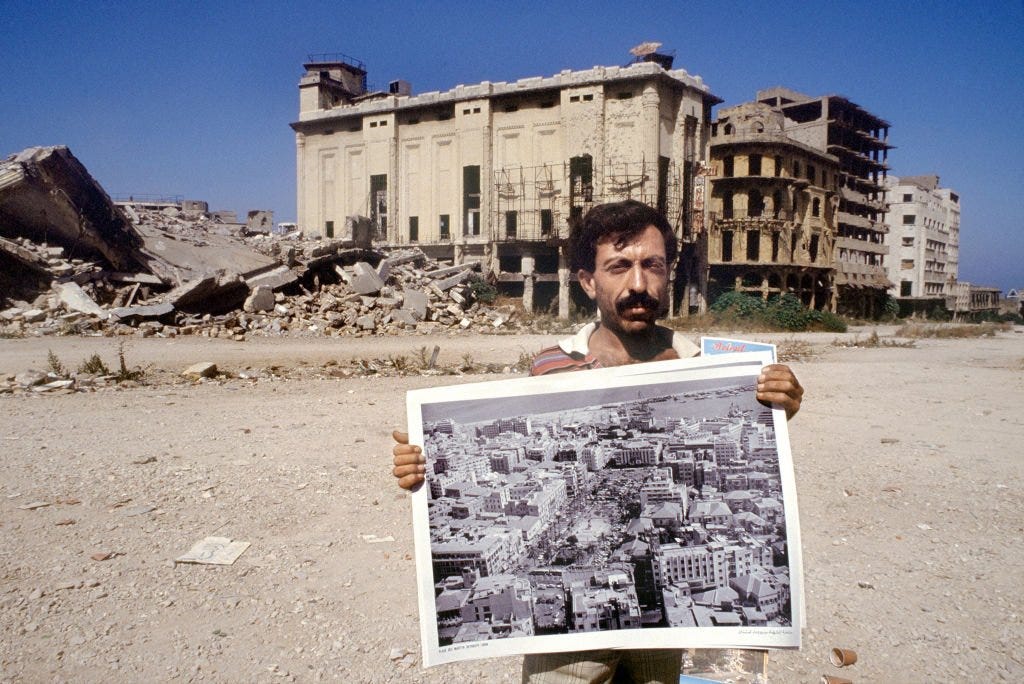
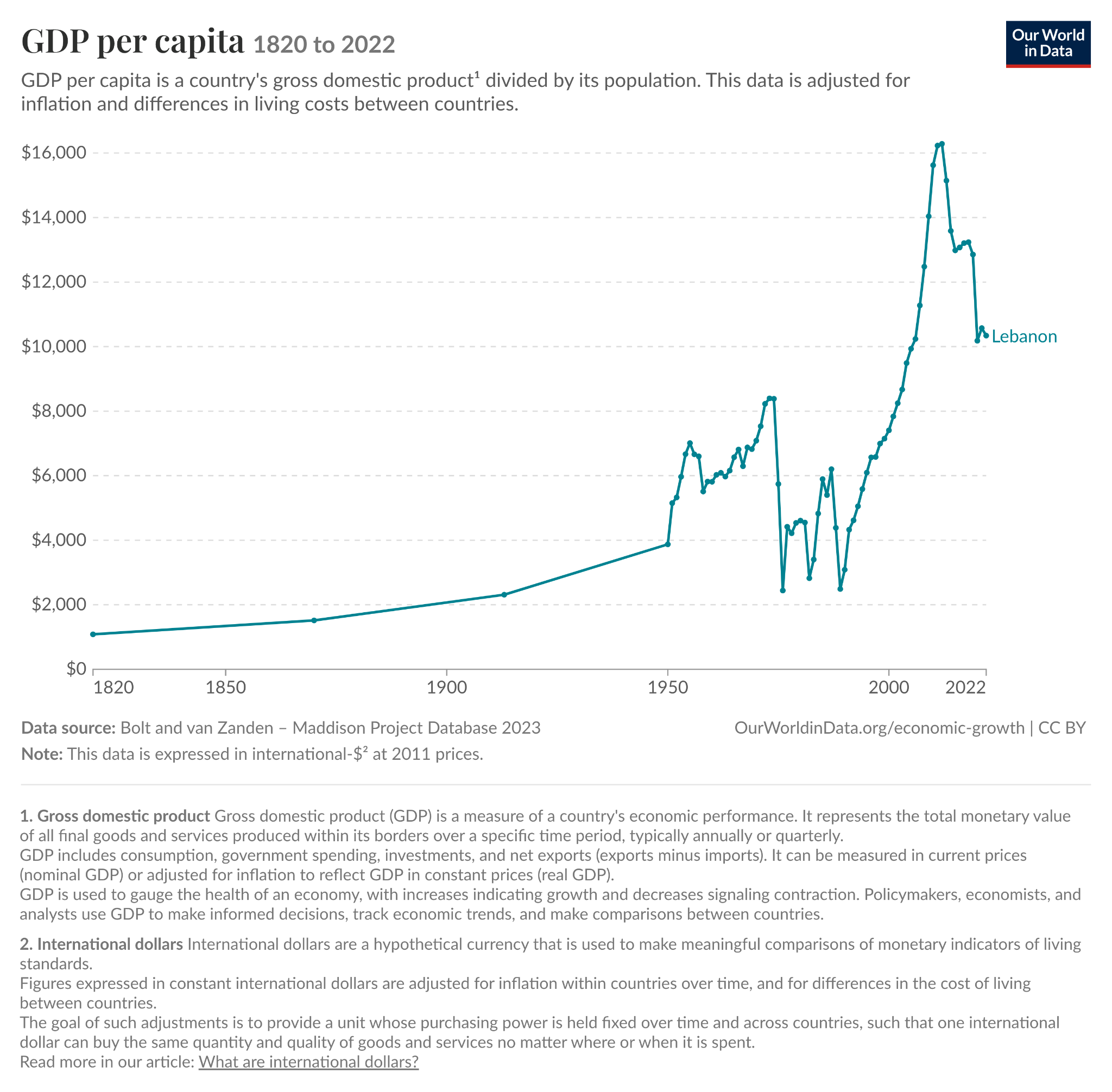
As street vendors sell posters of these same streets in the late 1960s, around him stand the ruins of their former prosperity. Across Lebanon, GDP is approximately 1/3 of its 1984 level.
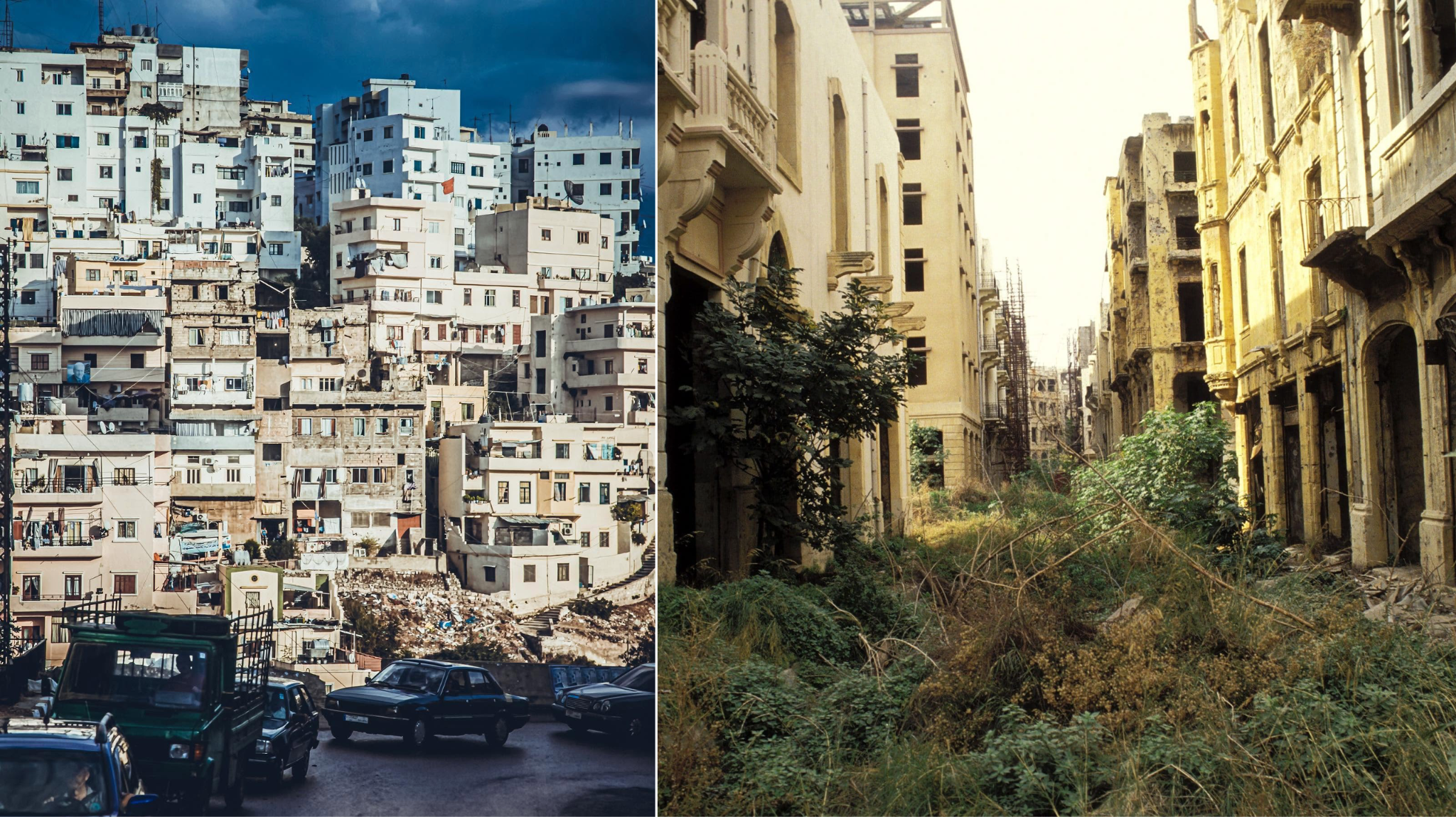
Why? Lebanon already had a delicate ethnic balance between Christian Maronites, Sunni Muslims, and Shia Muslims, plus hundreds of thousands of Palestinians in refugee camps after the 1948 war in Israel. In the 1970s, Palestinian militias that tried to bring down the government in Jordan were expelled from that country. They went to Palestine, where they joined forces with local Palestinians and Muslim Sunnies, along with Socialists and Communists, in a Left-Islamic alliance to bring the Christian power down. This led to civil war, fought for 15 years between 1975 and 1990. The country was destroyed, started rebuilding, but was again affected by regional sectarian violence when civil war exploded in neighboring Syria.
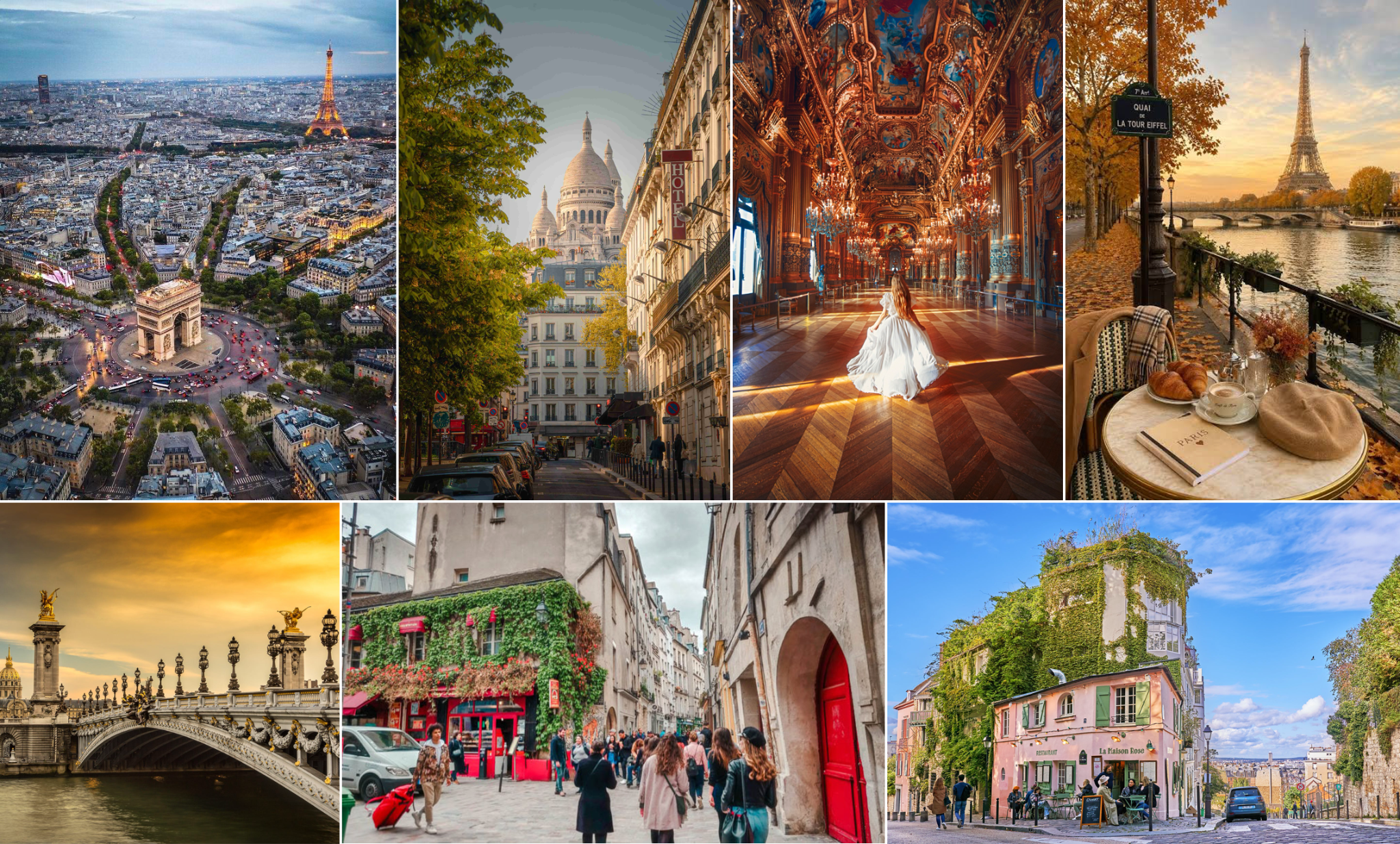
Today, Paris
The capital of what 300 years ago was the world’s most powerful country is today the most beautiful city on Earth.
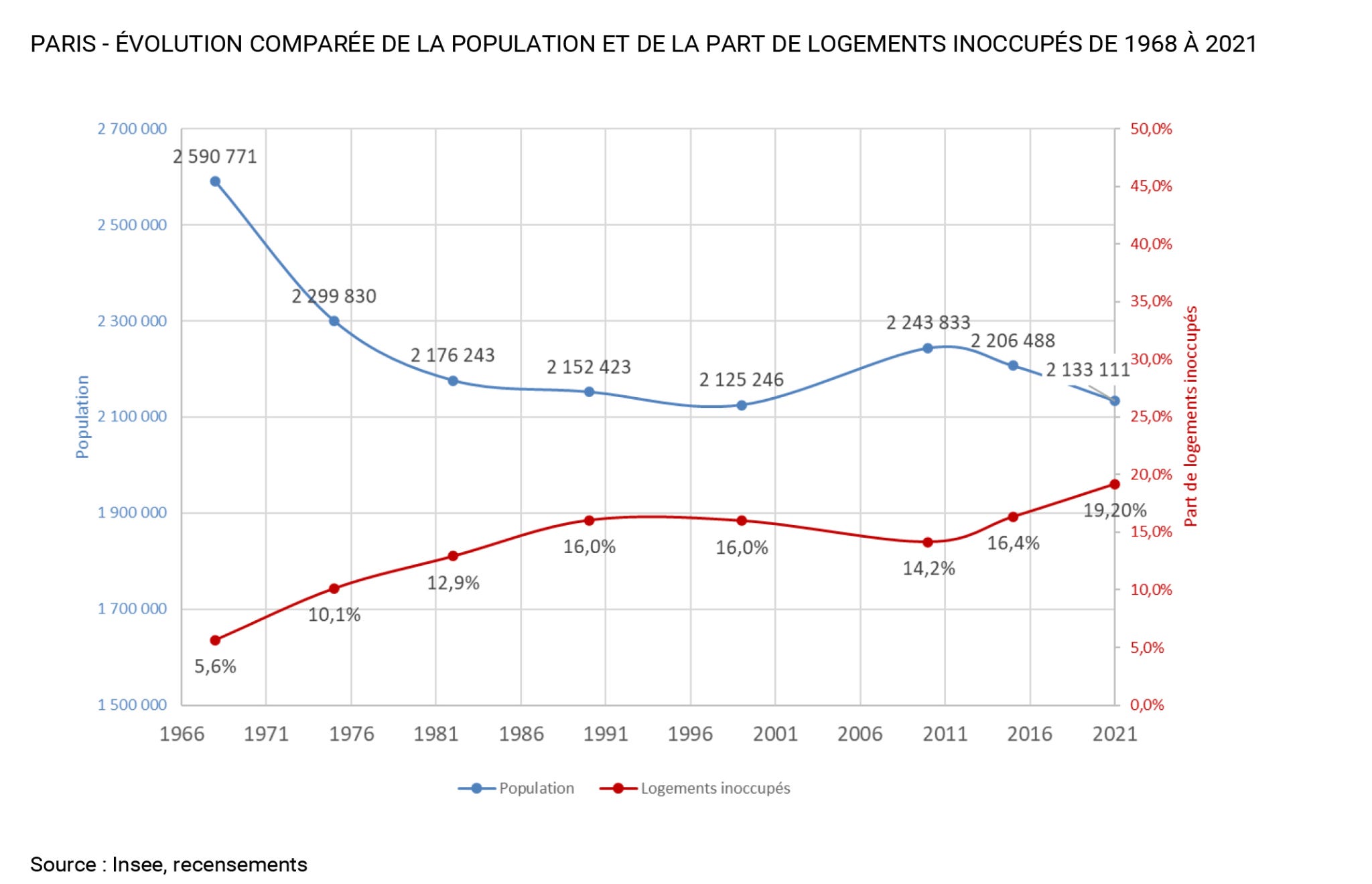
And yet the city has lost a fifth of its population in the last few decades, while vacancies increase.
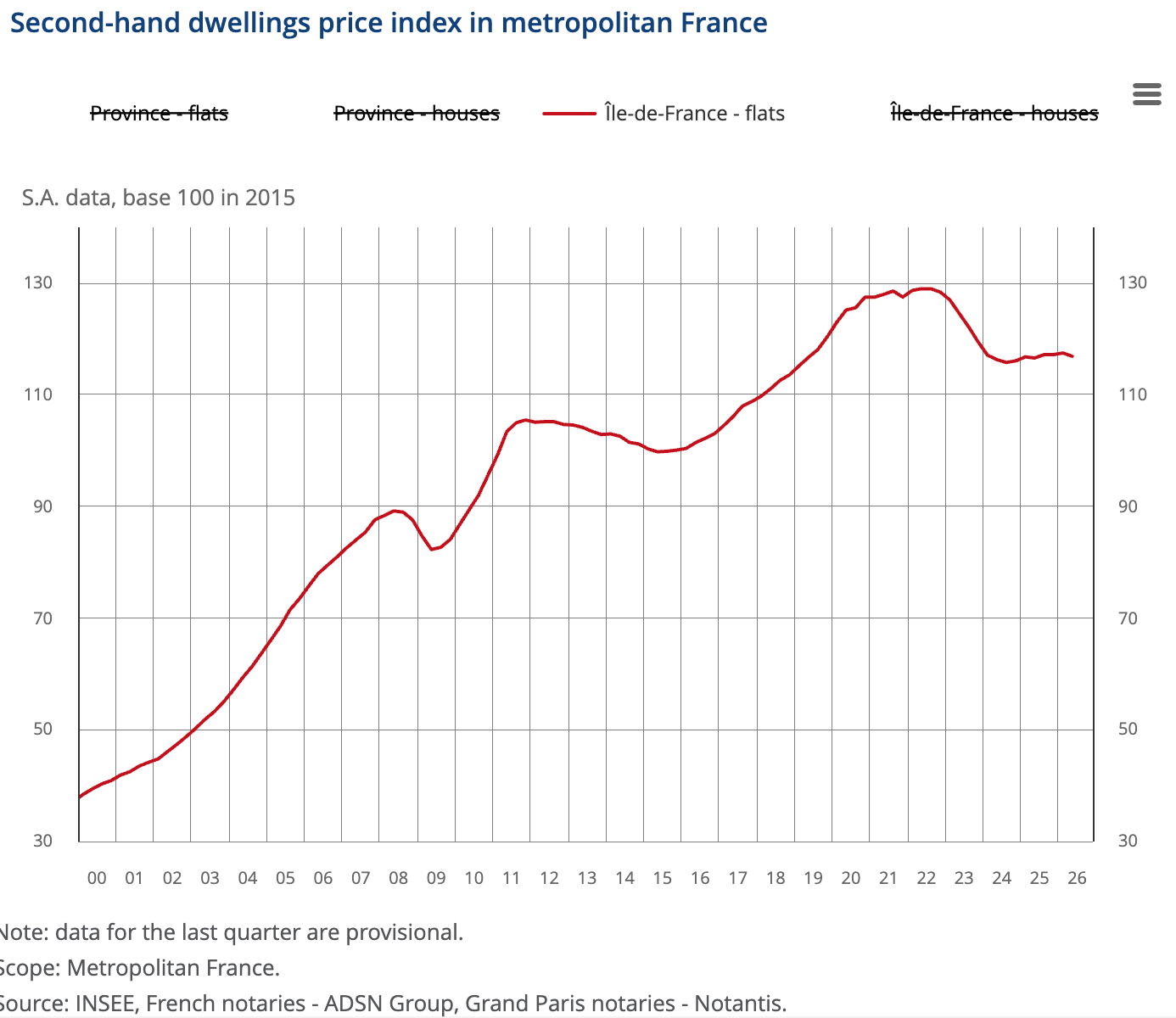
Housing prices have been going down over the last 4 years.
And as we’ve seen in the previous articles in the series, France is completely incapable of steering the ship back on course. Now that more than half of its GDP is spent by the state, people depend more on its money than on working for themselves, and they will continue voting for those who promise to keep milking the cow until it runs dry. At this point, the only three things that can save France are AI (but we saw that’s more likely to make the problem worse), somebody changing people’s minds pretty radically, or a massive crisis that has the same effect.
I just hope the crisis doesn’t turn the City of Light into the City of Darkness.