(Dobbs) The Heartbeat Was Healthy
Most voters didn’t care about Ohio Republican incumbent Jon Husted’s ass that Trump so openly admired.
This is not only about what just happened last night. It’s about what might happen next because of it.
A CNN headline Sunday said, “Democratic leaders enter the midterms ‘confident and paranoid.’” Both were true. That’s why for most of us, judging from the election results, the main takeaway from yesterday is so sweet: the Democrats are in, Donald Trump’s Republicans are out. Big-time.
Another takeaway, notwithstanding races that aren’t yet decided, is that by and large the polls were right. And so were the pundits, even if in the final analysis, they were going with their gut. Sometimes their gut is shaped by the polls.
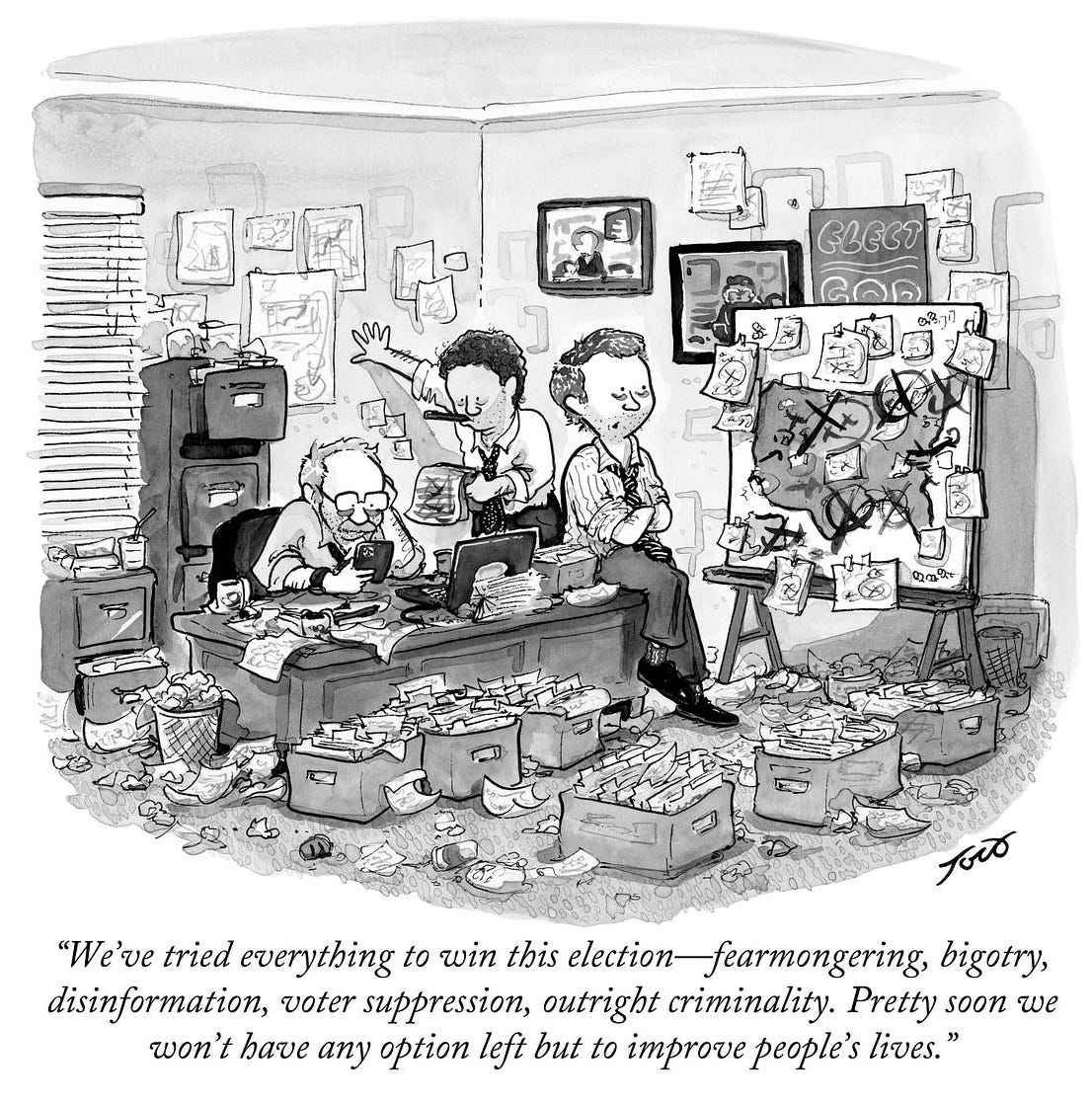
But despite all the wrenches thrown into the election— the money, the lawsuits, the scare tactics, the bribes—their gut this time was right. That’s what’s behind this cartoon by The New Yorker’s Tom Toro, thanks to The Borowitz Report.
And despite the deep red dye coloring so many states where by traditional measures the Democrats should have lost, from Ohio to Kansas to Texas to South Carolina, the wave turned blue. That’s no small thing, because there is nothing traditional when Donald Trump gets involved.
In the final couple of months, Trump started telling his rallies, “Pretend I’m on the ballot.” Evidently people did, but not the way his ego thought they would. There are small exceptions, but it was a Democratic sweep. Of the electorate and, come January, of Congress.
Trump and his movement paid the price for his unpopular positions, from spending time and money on vanity projects to promoting energy-eating data centers to showing no compassion for law-abiding undocumented immigrants to failing to ameliorate the cost-of-living to ending his war with Iran.
And corruption. Suddenly in the polls it was a major issue in many voters’ minds. They finally started paying attention to how Donald Trump and his family and his cronies are profiting from their untouchable perches in the power structure of America.
And finally, the decisive factor for some: him. The president became more and more unhinged, even more and more profane, and for those who were paying attention, much more seemingly unfit to occupy the Oval.
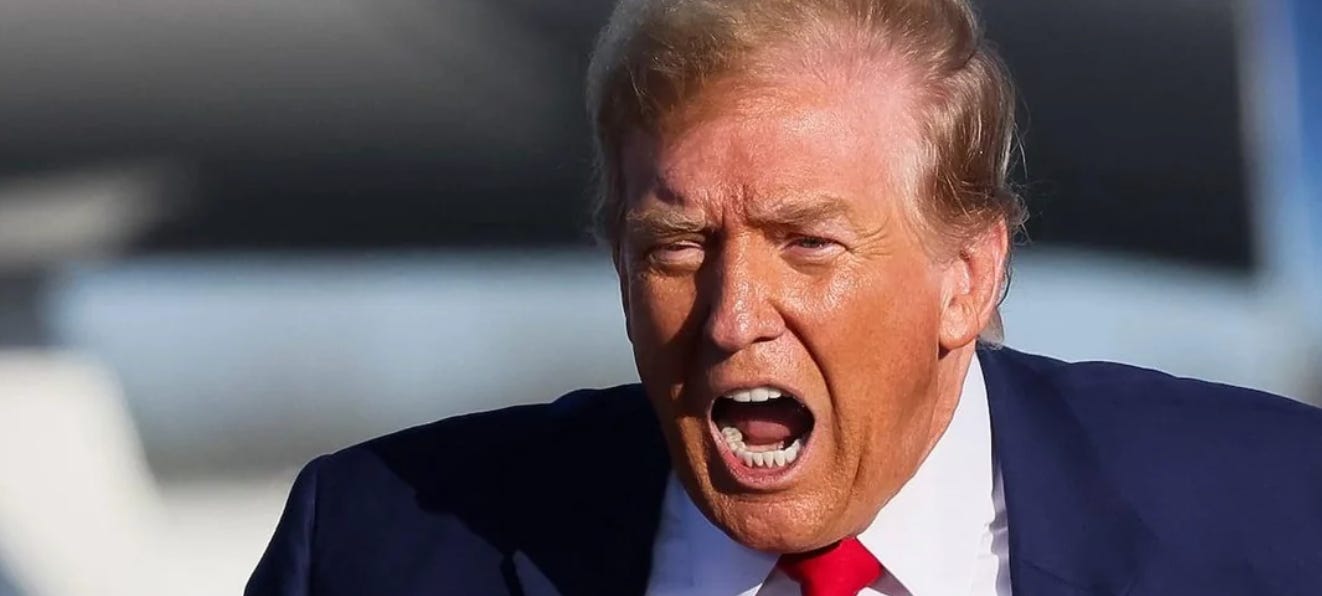
Most voters didn’t care about Michigan Democrat Abdul El-Sayed’s religion or Maine Republican senator Susan Collins’s seniority, and they didn’t care about Ohio Republican incumbent Jon Husted’s ass that Trump admired so much. El-Sayed won. The other two lost.
And Texas, a blue state? James Talarico beat the honor-challenged Ken Paxton for the Senate and for good measure, Greg Abbott took a drubbing and lost the statehouse, turning it over to a Latina woman, Gina Hinojosa, who was outspent by Abbott ten to one. Texas has never had a Latino in the governor’s office. And hasn’t had a woman there for 30 years. Who’d have thunk it?!
Four positive upshots from last night beyond the political shifts themselves. First, off-cycle gerrymandering, which began in Republican-led Texas, didn’t work. Second, Trump’s endorsement has lost its magic. Exhibit A: the two Senate candidates he virtually hand-picked to run and made personal visits to boost, Darline Graham in South Carolina and Paxton in Texas, lost. Third, the Republican financial advantage— hundreds of millions from Elon Musk which went down the drain, hundreds of millions more from Donald Trump’s PACs— did not carry the day. Kind of like the two low-payroll teams that just played the World Series, leaving the rich teams to watch it on TV, it’s heartening to see that money doesn’t always win out.
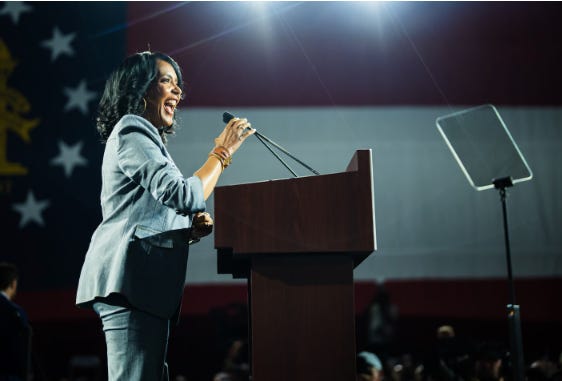
And fourth, racial history was made. The new governor of Georgia is Atlanta’s former mayor, Democrat Keisha Lance Bottoms, which makes her not only the first black governor of that deep southern state but the first black woman to govern any state in the union.
Republican congressman Byron Daniels becomes the first black man to win as governor in another state with a southern streak, Florida. When he decided to run, people said it probably wasn’t possible. Democrat David Crowley becomes the first black governor in Wisconsin. Even in Mississippi, which hasn’t had a black governor since Reconstruction, Democrat Scott Colom fought incumbent Cindy Hyde-Smith to a razor-thin draw. Let me say it again: in Mississippi.
And at the top of the mountain, Hakeem Jeffries now is the presumptive Speaker of the United States House of Representatives. Nancy Pelosi broke the gender barrier when she became speaker, now he will break the racial barrier as the first black speaker.
Before moving to the future, a handful of interesting shifts. Ken Paxton is the first Republican in Texas to lose a senate race in almost 40 years. Roger Marshall is the first in Kansas to lose since 1932. That’s a real blue wave.
What can Congress do now under Democratic leadership? It can make Trump’s life miserable.
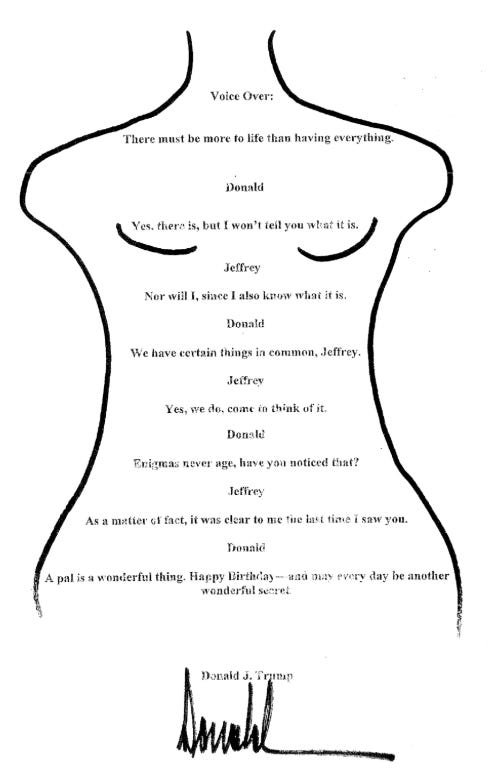
For one thing, it can put the brakes on the president’s agenda. It can overturn some of his executive orders and even withhold funding for some of those vanity projects in Washington that seem to consume him. And it can block his appointments to every high-level job requiring confirmation, up to and including seats on the Supreme Court. And it can investigate investigate investigate. The corruption, and with so many Americans hungering to reopen them, the Epstein files. Whether spoken or unspoken, the question millions want answered is, what did Donald Trump know and when did he know it?
What it can’t do is enact major legislation if Trump doesn’t like it. He has said more than once and said again Monday, if his party loses the majority, “I guess I’ll become Mr. Veto.” Nate Silver, one of the country’s leading election statisticians, wrote a week ago on Substack, “If Trump has a bad night, as polls show, then he’s a super-lame duck.“ But he’ll still have one tool in his pocket: a requirement of ⅔ of both houses to override a presidential veto.
And finally, impeachment.
The headline of a column over the weekend by John M. Crisp of the Tribune News Service read, “A third impeachment? What if there’s no choice?” Crisp wrote, “An ugly third impeachment in the House and trial in the Senate might do more harm than good. In fact, America needs the spectacle and drama of another impeachment like it needs another forever war. But here’s the problem: The Constitution provides not only the possibility of impeachment, it seems to impose an obligation, as well: It doesn’t say that a president ‘may be removed,’ it says that a president ‘shall be removed from Office on Impeachment for, and Conviction of, Treason, Bribery, and other high Crimes and Misdemeanors.’”
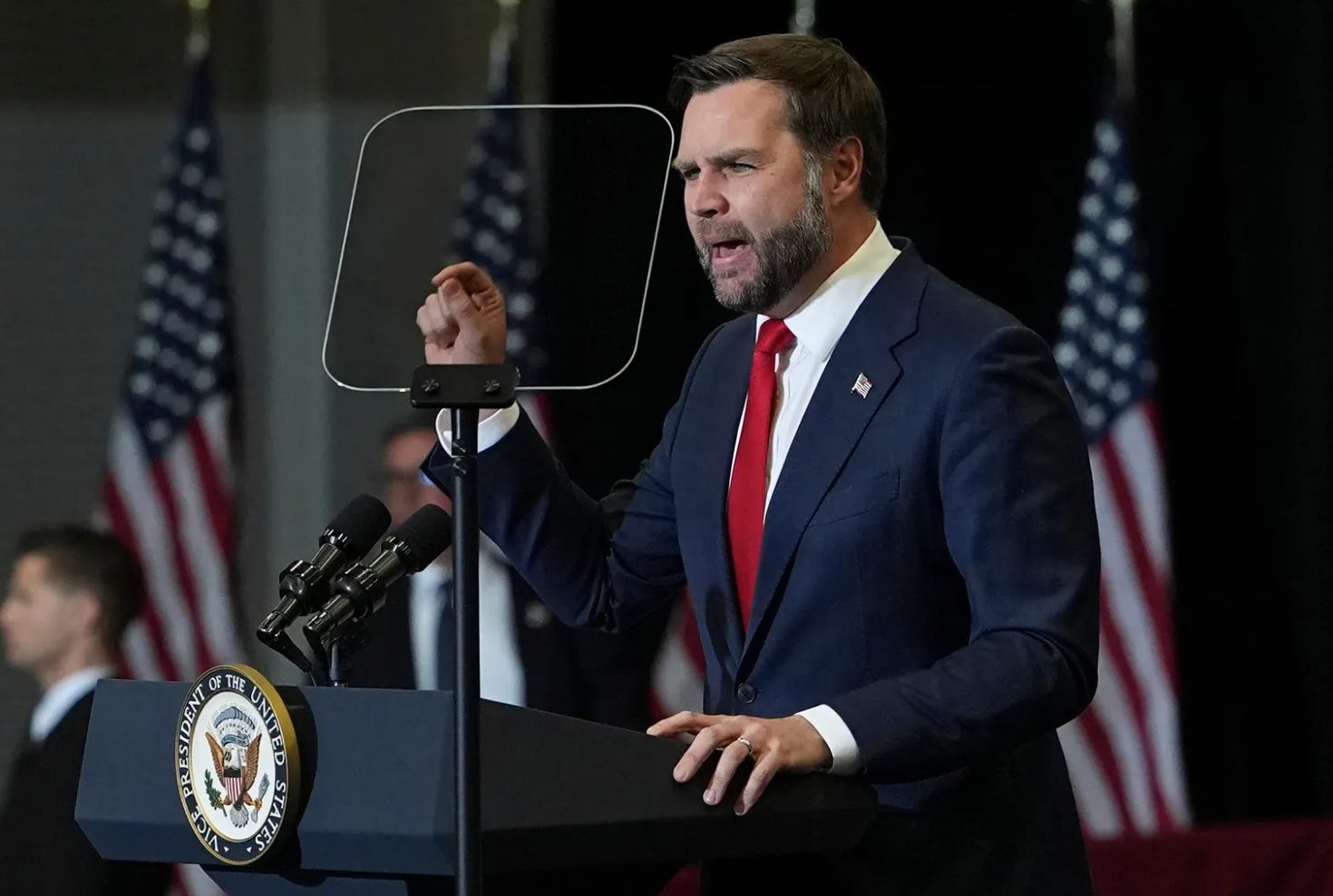
If the new Democratic majority in the House chooses to go ahead with it, it’s almost a no-brainer. But convicting him in the Senate is a different story. That would take a “yes” vote by 67 out of the hundred senators. Even with a best-case scenario for Democrats, the math probably doesn’t support enough Republican senators crossing over to convict Trump. Given his waning influence, it’s not an impossible hill to climb, but it leads to the question, would they want to boot him out if it means the new president is JD Vance, which would make him the titular leader of the Republican Party and give him a large leg up on the nomination in 2028? Since Vance is just Trump with a smaller belly, they might not.
There are several things we can’t possibly predict.
One is, will Trump fight to invalidate yesterday’s outcomes? He did tell The New York Times last night that he accepts the results of the election, but the man is erratic and a promise from Donald Trump is never cast in stone. And even though federal courts have stopped many of his election-altering schemes— the Supreme Court turned him down just the day before the election on his bid to stall the ballots of 20,000 Californians— he won’t go quietly into the night. The man doesn’t have the moral strength to uplift Americans’ faith in the integrity of elections. When they don’t go his way, he has always chosen to tear it down.
And, will all the Republicans who lost concede that they lost? Reuters surveyed Senate candidates three weeks ago and reported that every Democrat said he or she would accept the results, unconditionally. Only four Republicans— in Alaska, Iowa, Maine, and New Hampshire— said they would. Mississippi’s Cindy Hyde-Smith is one who didn’t. Roger Marshall of Kansas is another.
Another question is, what are the implications of these elections for both parties on the 2028 presidential race? It might be shaped by just how big a repudiation of the Republican Party yesterday’s outcome actually was.
And, will the election of candidates who aligned with the Democratic Socialists of America mean a rift within the Democratic Party itself, and dilute the power it’s on the verge of having?
Finally, will this actually humble Donald J. Trump? Not if his online post last night, once the writing was on the wall, is any indicator: “I wasn’t on the Ballot,” he said, “and if I was, we would have won IN A LANDSLIDE!” Excuse me, but isn’t this the guy who told people to “pretend I’m on the ballot?” The man hasn’t changed and never will.
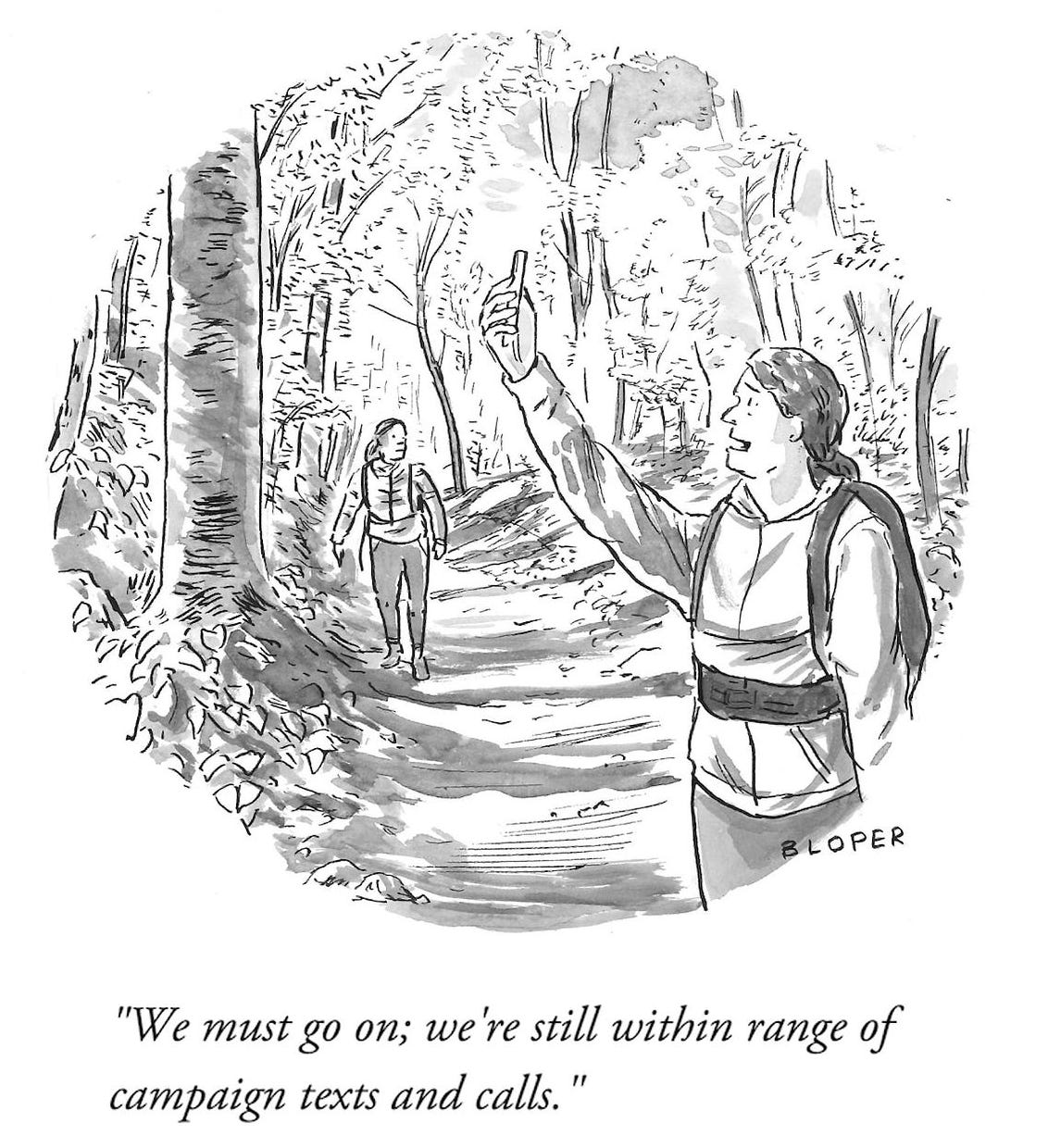
One thing we can predict is that even with this election finally behind us, the irritating texts and emails and social media appeals for money will barely stop before they start flooding our phones and computers again. Different candidates, different causes, same annoyances. This cartoon by The New Yorker’s Brendan Loper, also thanks to The Borowitz Report, tells the story.
These midterm elections were a contest between the momentum of movements that wanted to punish Donald Trump and his enablers, and the avalanche of money that wanted to keep them in power.
Dan Rather wrote Monday to his readers on Substack to encourage them to vote: “Your vote is the red, beating heart of democracy.”
The heartbeat was healthy.
Over more than five decades Greg Dobbs has been a correspondent for two television networks including ABC News, a political columnist for The Denver Post and syndicated columnist for Scripps newspapers, a moderator on Rocky Mountain PBS, and author of two books, including one about the life of a foreign correspondent called “Life in the Wrong Lane.” He also co-authored a book about the seminal year for baby boomers, called “1969: Are You Still Listening?” He has covered presidencies, politics, and the U.S. space program at home, and wars, natural disasters, and other crises around the globe, from Afghanistan to South Africa, from Iran to Egypt, from the Soviet Union to Saudi Arabia, from Nicaragua to Namibia, from Vietnam to Venezuela, from Libya to Liberia, from Panama to Poland. Dobbs has won three Emmys, the Distinguished Service Award from the Society of Professional Journalists, and as a 40-year resident of Colorado, a place in the Denver Press Club Hall of Fame. He also has been a consultant for the Counterterrorism Education Learning Lab.
You can learn more at GregDobbs.net