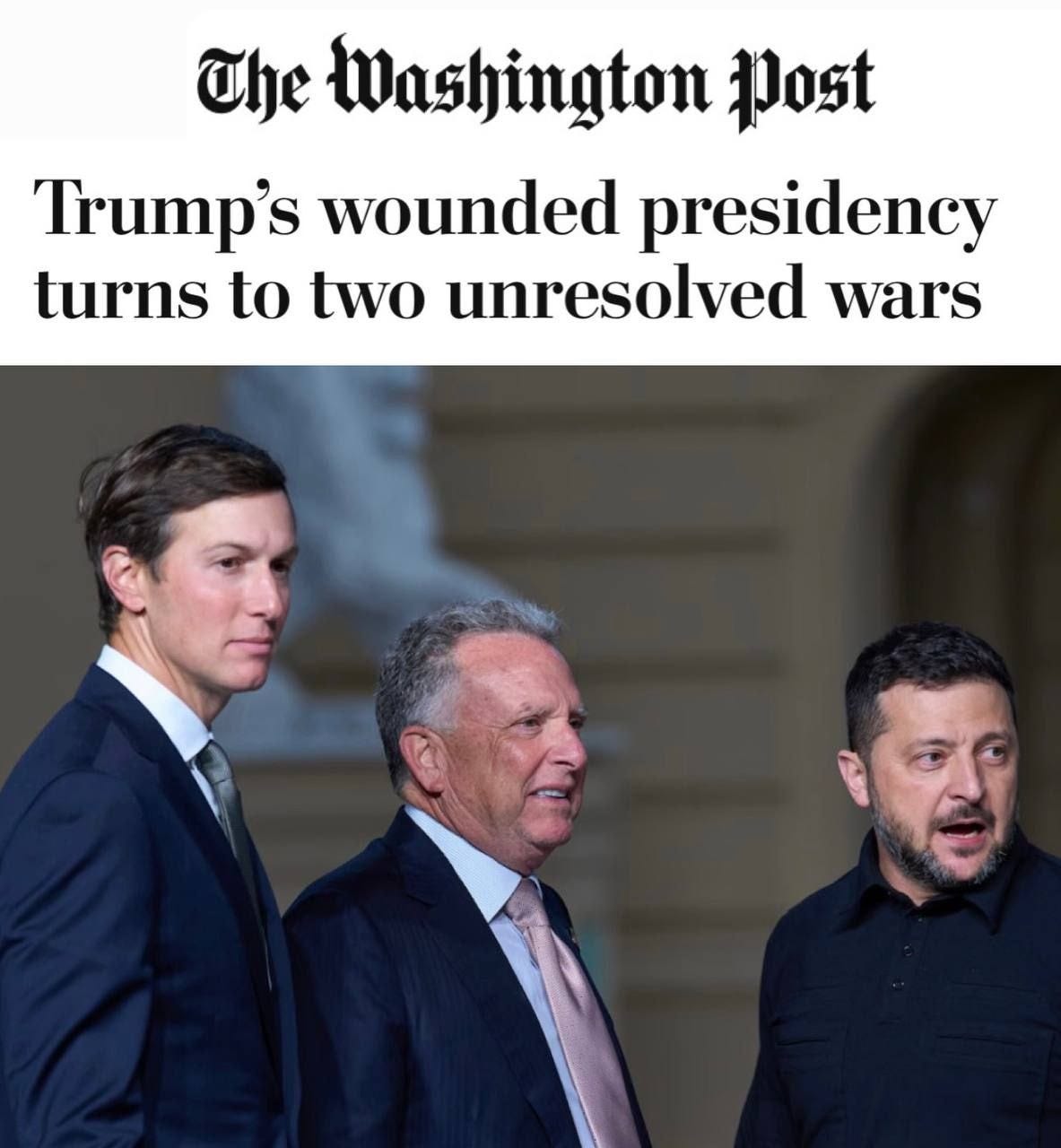
Delegations from Russia, Ukraine, and the US met in Adu Dhabi for a new trilateral negotiations attempt billed as bringing the war one step closer to its end. The meeting was notably attended by higher ranking representatives than usual, such as Kyrylo Budanov on the Ukrainian side and Putin aide Medinsky for the Russians, while being hosted by Jared Kushner and Steve Witkoff.
The results of the meeting showed the Russian and Ukrainian positions as divided as usual, in fact more so. The Russian side has continued to demand total capitulation of the Donbass territories, while Ukraine is now adamant that no territory can be ceded. In a “twist” tactic, the US attempted to propose a redrawing of Donbass boundaries so that Russia could announce “victory” without having to capture the remaining physical territory. This was apparently rejected by both sides, and the deadlock remained.
There is no possibility of a territorial exchange between Russia and Ukraine, stated Vladimir Medinsky, head of the Russian negotiating group in Abu Dhabi, in an interview with the "Vesti" news agency.
According to him, the main goal of the negotiations is to create a new security system in Europe, which will become the new "Yalta" and "Potsdam."
Medinsky also stated that Russia will be satisfied with the results of the negotiations when peace is achieved on its terms.
Leaving little to interpretation, Medinsky went on to succinctly clarify that Russia intends to return “every inch” of land that it feels belongs to it:
One of the sly new tricks the US-Ukrainian side is attempting to impose on Russia is a kind of escalatory armistice regime that is meant to gradually “warm” Russia to a progressively expanding set of ceasefires. The purpose here is clearly to set new precedents with each small ceasefire, while slowly goading Russia into what the US hopes will eventually become a permanent armistice across the entire front—a kind of boiling frog strategy toward sneakily ending the conflict:
According to unconfirmed information—specifically, snippets and leaks emerging from Abu Dhabi—the Ukrainian side has proposed a "freeze" along the entire Kherson/Dnieper sector of the line of contact. As a starting point, they are using their recent incursion into Russian-held territory near the settlement of Oleshky in the Kherson region as a basis for this proposal.
They are also suggesting the declaration of an extended "Christmas truce."
Included in this same package is the now-"traditional" proposal for a maritime and energy-related ceasefire.
Perhaps this is the very reason why Witkoff and Kushner are departing for Moscow in a few hours—to persuade the Russians to embrace "humanitarianism." Will there be anyone in the Kremlin foolish enough to grant Ukraine a winter respite?
First, it started with Melania Trump’s recent ceasefire in Oleshky, in the Kherson region. Now they hope to expand that toward more frequent holiday-based ceasefires, wider ceasefires along the entire Dnieper front, Black Sea corridor ceasefires, then eventually a winter-long ceasefire across the entire frontline. The purpose is to eventually coax Russia, in very gradual fashion, into halting all operations.
Lavrov commented on the talks, very keenly understanding that the West wants to “rush” Russia into halting military action before reaching any true agreements:
His point: Russia seeks an agreement on a wide-scale and new pan-European security architecture first, then a ceasefire after that. Brussels, on the other hand, demands an immediate ceasefire and only then will allow discussion of security agreements.
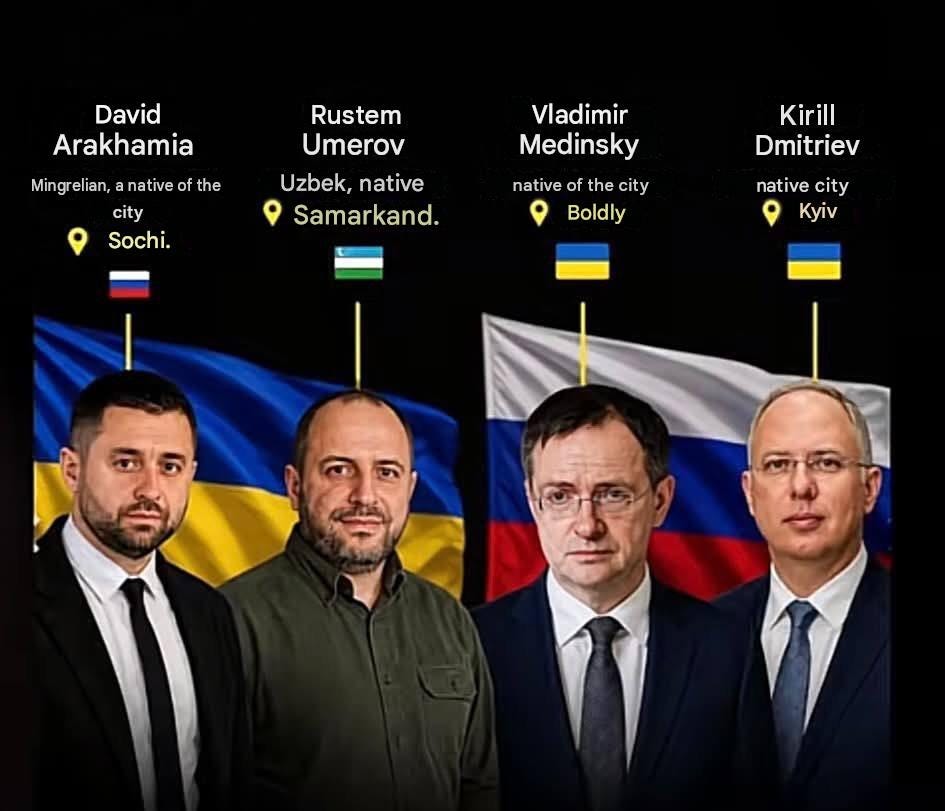
One of the fascinating quirks of the negotiations that continues to demonstrate the conflict’s internecine nature: One of Ukraine’s main negotiators was born in Sochi, Russia; while both of Russia’s main negotiators were born in Ukraine—Medinsky in the city of Smila near the Dnieper river, and Dmitriev in Kiev:
Then there’s the recent revelation that top Ukrainian presidential advisor Mykhailo Podolyak’s brother Vladimir Podolyak was killed on the frontline while fighting for Russia:
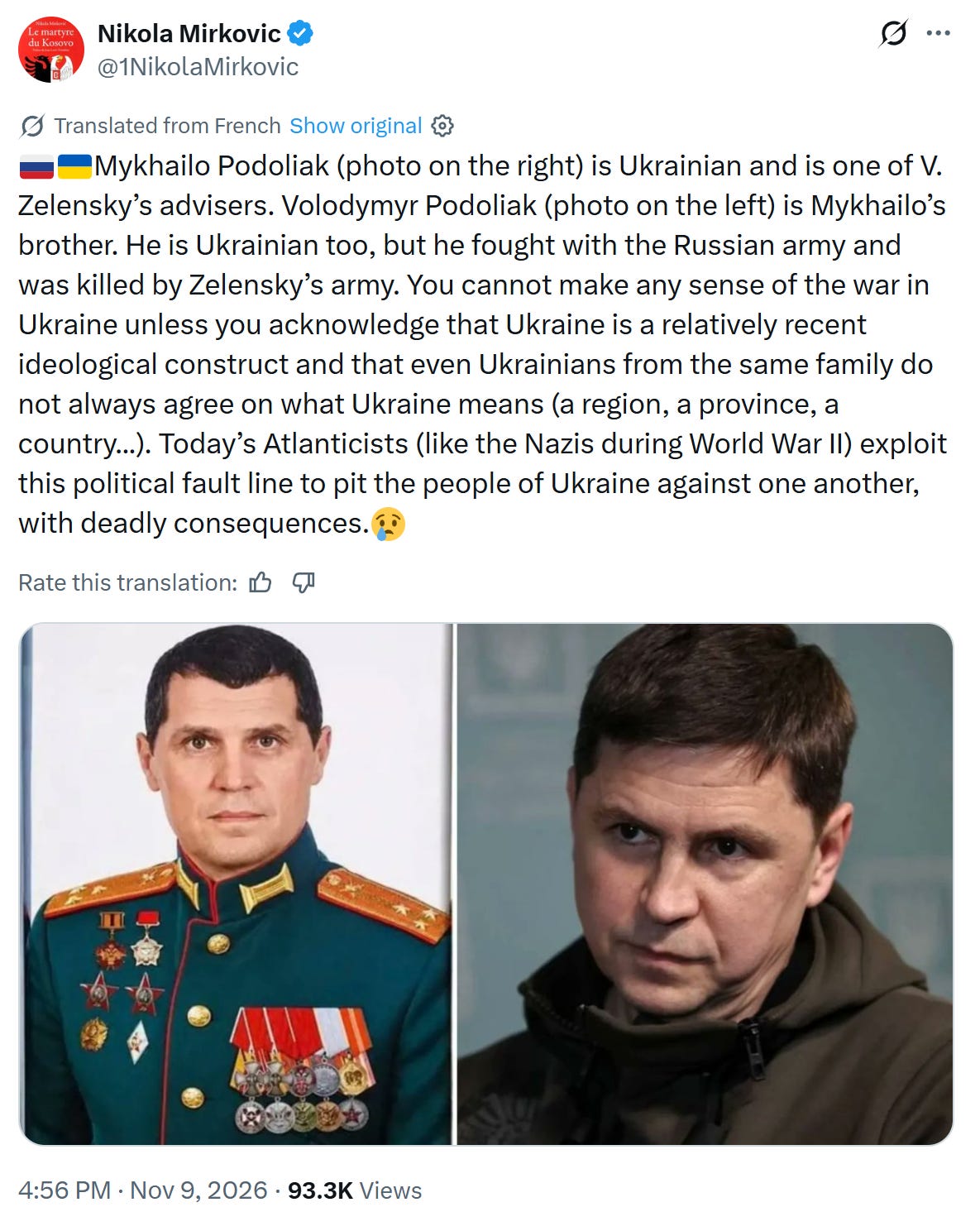
It proves the conflict is much closer to a civil war than anything else, when you really think about it.
But the other more salient revelation from the negotiations is how epistemologically divergent the conflict has become. Zelensky highlighted this fact when he explained how the Russian side believes itself to control all of Donbass, when in fact Ukrainian soldiers are present in large areas of it:
In recent months, both the Ukrainian and Russian sides have utilized AI showing soldiers capturing areas that they did not actually capture. The evolution of “slow-trickle” and dispersion tactics has also created a situation where no one seems to know or agree on who exactly controls what anymore along the front. Top map-makers on both sides have now diverged more than ever before, to the point that understanding the situation of control on the ground is now beholden more to faithful adherence to one side’s “gospel” over the other.
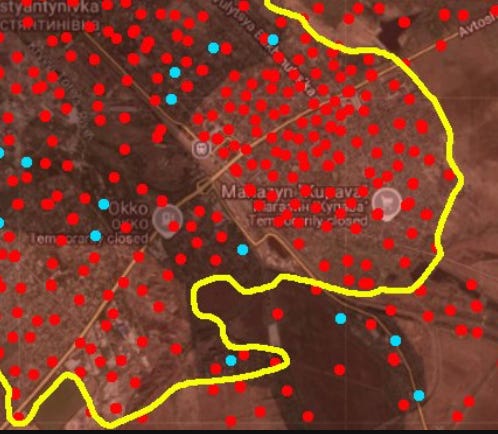
A large part of this issue can arguably be attributed to different definitions of what “control” represents. For instance, some on the Ukrainian side have accused Russia of considering any area to have been infiltrated even by a lone soldier to be under its nominal “control”. The Ukrainian side rejects this definition, and believes control should only be defined by more rigorous standards. Much of the frontline has now devolved into an unprecedented point of no return where “control” becomes a matter of opinion and orientation of one’s loyalties. This is best illustrated by the following post, which indicates Russian and Ukrainian positions intermixed amongst each other in and around Konstantinovka:
AMK Mapping 🇳🇿@AMK_Mapping_
Everyone always talks about how chaotic the frontline is, and what is called the "death of the conventional frontline" in Ukraine, but I thought I should make a visualisation to show you all what that might actually look like. This is a map showing my view of where each side may …
4:28 AM · Oct 17, 2026 · 96.8K Views
24 Replies · 65 Reposts · 818 Likes
It reads in full:
Everyone always talks about how chaotic the frontline is, and what is called the "death of the conventional frontline" in Ukraine, but I thought I should make a visualisation to show you all what that might actually look like.
This is a map showing my view of where each side may hypothetically be holding a position in the Kostyantynivka direction, to give you an idea of how deep this "infiltration zone" goes.
When someone asks "why cant you just map all of Kostyantynivka as under Russian control if the Ukrainian positions there aren't militarily significant anymore", this is what I mean when I say Ukraine still holds too large of a presence. Obviously this map isn't designed to show exact areas where positions are held, but it's based on my interpretation of what the situation could theoretically look like.
I also think this visualisation gives a good idea of the criteria I have for what should be considered a "control zone, a "grey-zone", and an "infiltration zone".
This “death of the conventional frontline” is a turning point hailed by many publications recently:
From the above Business Insider piece:
He described Russia’s tactic as “infiltration by small or very small infantry units — often consisting of just one or two soldiers. They attempt to slip between our positions undetected and reach our rear.”
He described it as a growing tactic, with Russia “increasingly relying on attempts to stealthily penetrate our combat formations” rather than large-scale assaults. Ukraine employs similar tactics against the Russians.
Ukrainian soldiers described these groups to Business Insider last year, characterizing them as an increasingly common tactic that causes chaos behind Ukrainian lines, with Russian troops seemingly appearing from nowhere.
Jack Watling, a land warfare expert at the UK’s Royal United Services Institute, wrote last year that Russia’s infiltration groups, which often consist of two to five soldiers at a time, gradually build up enough forces to disrupt Ukrainian resupply efforts and prevent neighboring positions from supporting one another.
The advent of this tactic was owed in large part to the advancement of drones, which allows these small infiltration pickets to be resupplied indefinitely even when they are entrenched behind enemy lines.
Drones now make it so dangerous to go in the open that an entrenched group can survive for a long time even while surrounded by enemy positions. A large hexacopter-style drone can replenish the entrenched group indefinitely with aerial supply deliveries which can be timed to happen during foggy or bad weather, so that the opposing side’s drones cannot detect the supply drone.
Getting back to the earlier point, some argue that Russia has adopted a looser definition of territorial control based on such infiltrations, often claiming control of an area where only several soldiers have dug in inside a no-man’s land otherwise patrolled by drones from both sides. This has led to great divergences in understanding of the war, and which side is advancing where. This all leads to the greater muddling of the entire basis for who is winning or losing the conflict as a whole. It is one of the reasons that updates on Russian advances and territorial control have become nearly pointless, apart from exceedingly verifiable concrete instances of territorial captures.
This epistemological divergence has created an opportunity for Ukraine to hijack the war’s narrative and push the agenda that Russia is much more stymied and deadlocked than what may really be the case. It creates a large allowance of plausible deniability for either side to claim whatever is beneficial to them, since no one can exactly “prove” who controls what along the front anymore, given that some number of soldiers or assets from either side can now always be found “behind” the positions of the other side. This gives each side the ability to claim “control” over something that may realistically be long captured by the opposing side. The best example is Konstantinovka in the above post by AMK Mapping, wherein Ukraine continues to claim some control over the city simply because one or two soldiers may have been geolocated hiding in a hole somewhere among the city’s ruins.
Such infiltrations have turned the frontline from a game of chess into a distinct game of Go:
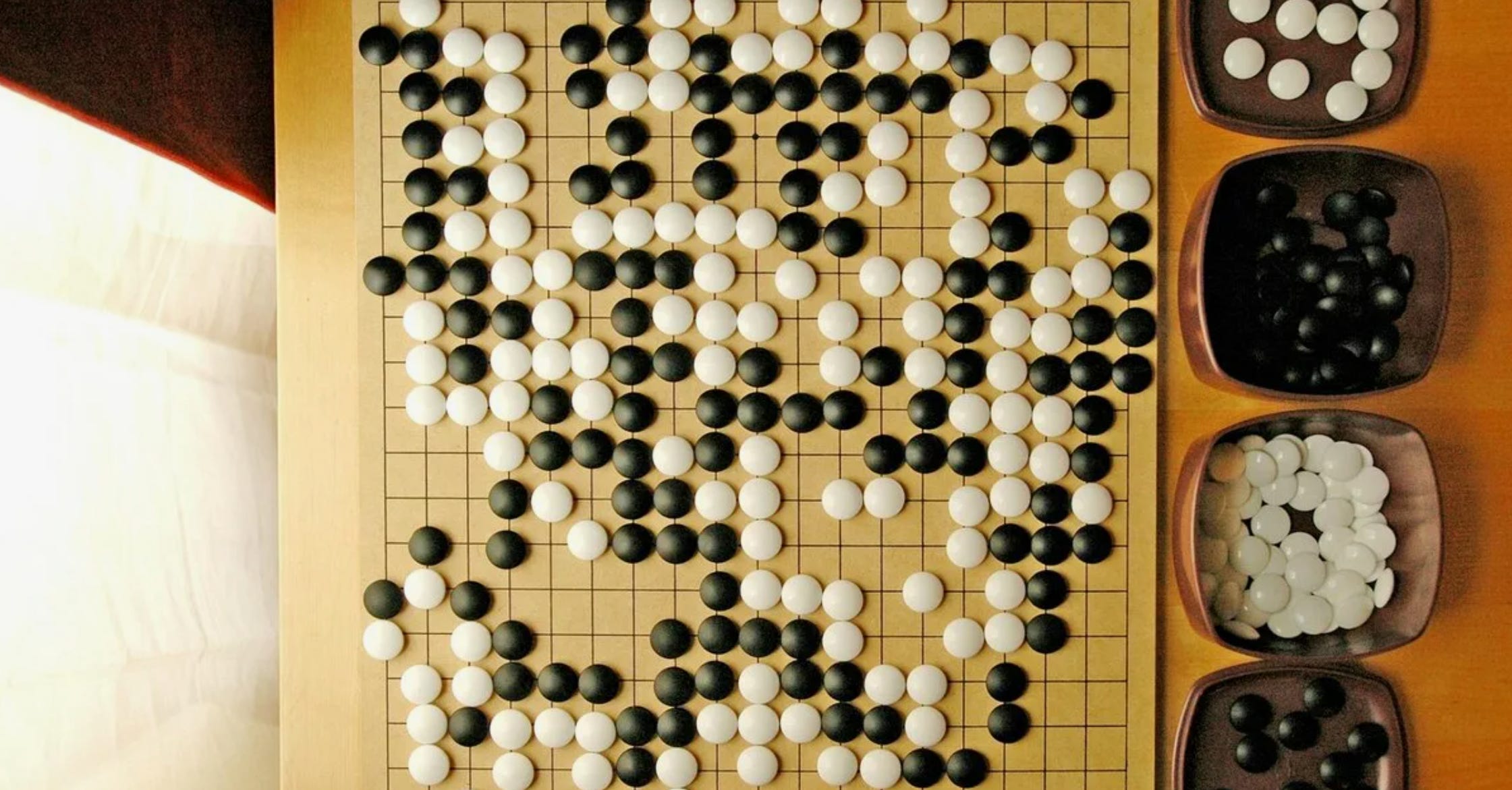
I have hypothesized that AI could now be used to determine best infiltration points in order to “cut” between your opponent’s stones, connect your own in the most strategically advantageous way, etc. For all we know, this could already be in use by Russian commanders.
To get back to the negotiations, we can conclude that they will again lead to nothing more than courtesies and gestures, like the planned increase of prisoner exchanges. That is because these negotiations are done only for political purposes. The Trump admin needs its optics of “ending wars”, while Ukraine needs to appear agreeable so that its European “partners” can continue selling it as the good guy worth funding to their impoverished citizenries.
Russia likewise needs to play along for the purposes of rapprochement with the US, which is always to Russia’s benefit because that rapprochement hurts its true enemies most—those residing in London and Brussels. Those enemies continually vie to sabotage the US-Russian relationship as much as possible because, despite their own braggadocio, they know that the US is the only entity capable of militarily threatening Russia. If the US were friendly or even neutral with Russia, Europe’s threats would be groundless and Europe alone would have no power of deterrence against a Russia that has sharpened its steel in the Ukrainian war.
But since winter is almost here, the efforts to try and slow down the conflict as much as possible will continue because Ukraine will face its harshest winter yet, with little ability to defend against Russia’s growing ballistic missile threat. Every possible “trick” in the book will be used to try and corral Russia into the earlier-mentioned “slow-boil” manner of broadening ceasefires. At this point, Ukraine’s only purpose in even striking Russian refineries is simply to coerce a mutual ceasefire to save itself from Russia’s own attacks.
Those attacks will be the main focus for the next long portion of the conflict. Not only has the conflict slowed for its own oft-discussed reasons, but fall wet season, the onset of winter, and loss of foliage cover will slow it even further, causing Russia to leverage infrastructural strikes even more, rather than focusing on ground advances and territorial captures. That means all the excess reserve missiles and attack drones Russia has been stockpiling for the past half year will soon be unleashed to cripple Ukraine to an unseen degree, which includes the claimed campaign to take out Kiev’s bridges.
MAKS 26 🇺🇦👀@Maks_NAFO_FELLA
❗️Gerasimov ordered the destruction of bridges across Dnipro river, — the officer of the command of the assault troops Yaroslavsky. He also says that if this winter it is not possible to agree on a ceasefire, Russia will make Kyiv, Kharkiv and Odesa uninhabitable.
5:34 AM · Nov 10, 2026 · 50.7K Views
The “infiltration” tactic does not work well in winter when there is no foliage for cover, and drones with heat-sensing infrared cameras can easily detect the two-man pairs advancing on foot. Thus, Russia will be faced with either attempting a few larger mechanized assaults in key areas—which is certainly possible, given its stockpiling of armor—or stalling advances even more while using the entire period to dismantle what remains of Ukraine’s energy grid and other key infrastructural sectors.
As a last note, it can be said that the recent “leak” of Russian Rosstat data that claims to prove 450,000 KIA on the Russian side is clearly timed to coincide with these new peace efforts, to put maximum pressure on Russia in the hopes that citizens “horrified” by the data will rise up and join the anti-war chorus to compel Putin to accept the new ceasefire terms. The campaign of the leak’s release is clearly coordinated, with many media and analytical figures posting 24/7 about it in unison, with even Lex Fridman abruptly awakening from his crypt to interview AFU evangelists Michael Kofman and Preston Stewart about how “badly” the war is going for Russia. Alexei “Lex” Fridman’s own mother and father were born in Kharkov and Kiev respectively, then moved to Moscow, where Lex himself grew up; another in a long line of examples coloring the Ukrainian conflict.
We have noted many times before, that whenever Ukraine gets close to the brink, some new artificial psyop or false flag is generated to immediately rug-pull media attention away from Russia’s successes. Just this past week, the FSB reportedly thwarted another planned terror attack that would have mimicked the Crocus City Hall attacks of 2024:
The timing is again unsurprising. This was likely to be part of the roll-out, along with the phony leaks, meant to maximally pressure Putin and make Russia appear to be undergoing collapse in some way, which conversely tells us everything we need to know about Ukraine’s own true situation.